Alfred Sisley, a key figure in the Impressionist movement, is renowned for his evocative snow paintings and winter landscapes that capture the beauty and tranquility of winter scenes. His ability to portray light, color, and atmosphere is particularly striking in compositions dominated by the serene whites and subtle blues of snow-laden vistas. In this blog post, we will explore the thematic elements and artistic techniques employed by Sisley in his winter landscapes, as well as provide insights into how you can appreciate them more deeply.
1. The Essence of Sisley’s Snow Paintings
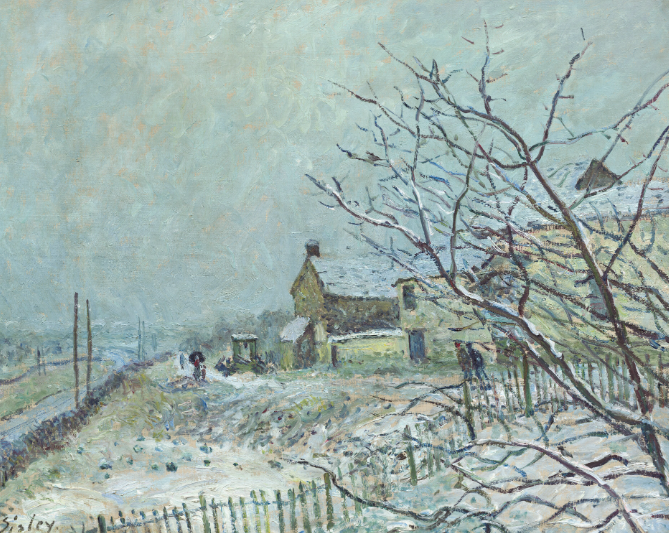
Alfred Sisley’s snow paintings are distinguished by their extraordinary ability to depict snow’s delicate textures and play of light. In works like “Boulevard de la Capucines, 1877,” one can observe how he captures the unique qualities of winter light reflecting off the snow, creating a dreamlike atmosphere. The use of soft brush strokes envelops the scene in a tranquil, almost ethereal haze, demonstrating his masterful command over color and form.
Sisley often selected specific locations, usually in the outskirts of Paris, to frame the tranquil essence of the season. His compositions frequently featured less cluttered urban landscapes, allowing the snowy terrain to become the focal point. The enchanting stillness of a snowy canal or a village blanketed in white serves to evoke a deep emotional response, making his winter paintings timeless pieces of art history.
-
- Visit local art galleries or museums to view Sisley’s works in person.
-
- Study the color palette he uses, focusing on whites and blues.
-
- Attempt to capture your own winter landscapes through photography or painting.
-
- Engage in discussions about Impressionism to deepen your understanding.
2. Techniques That Bring Winter to Life
One of the hallmarks of Sisley’s artistry is his innovative technique for rendering snow, which he accomplishes using layered brushstrokes and an intentional blending of colors. He often combined pale blues, muted greys, and soft whites to create depth, using varying brush sizes to evoke movement and texture. This technique not only gives life to the snow but also enhances the atmospheric perspective of his winter landscapes.
Furthermore, Sisley’s attention to the interplay of light and shadow is crucial to his landscapes. He expertly highlights certain areas while leaving others in soft shadow, creating a dynamic tension that draws the viewer in. The contrast between sunlit snow and shadowed paths not only adds realism but also enhances the emotional impact of the scene, encouraging viewers to connect with the stillness of winter.
-
- Experiment with different brush techniques to create depth in your own art.
-
- Observe how light affects the coloration of your surroundings in winter.
-
- Practice blending colors to see how they can change the mood of your artwork.
-
- Learn about atmospheric perspective to enhance landscape dimensions.
3. The Emotional Landscape of Winter
Beyond technical prowess, Sisley’s snow paintings resonate on an emotional level, offering viewers a moment of reprieve from the hustle of daily life. His winter scenes often evoke feelings of solitude and peacefulness, as the quiet of freshly fallen snow blankets both the landscape and the mind. For many, his work serves as a reminder of nature’s restorative power during the cold, still months of winter.
Sisley’s ability to evoke emotion is also tied to his personal experiences and struggles. Living through the tumultuous backdrop of the late 19th century, his snow scenes can be viewed as a metaphor for resilience and serenity amidst adversity. Each brushstroke embodies not only the physical landscape but also the emotional landscape, allowing audiences to reflect on their interactions with nature and their own inner peace.
-
- Take time to reflect when viewing winter landscapes, allowing emotions to surface.
-
- Try to capture your own feelings about winter in writing or art.
-
- Consider how nature affects your mood and well-being during winter.
-
- Share your thoughts and experiences of winter with friends or family.
In conclusion, Alfred Sisley’s winter landscapes invite us not only to appreciate their beauty but also to delve into the emotions they evoke. By exploring his techniques and themes, we can gain a greater understanding of his work and its relevance to our own experiences. Consider visiting a local gallery or trying your hand at creating your own winter scenes for a more immersive understanding of this captivating subject.