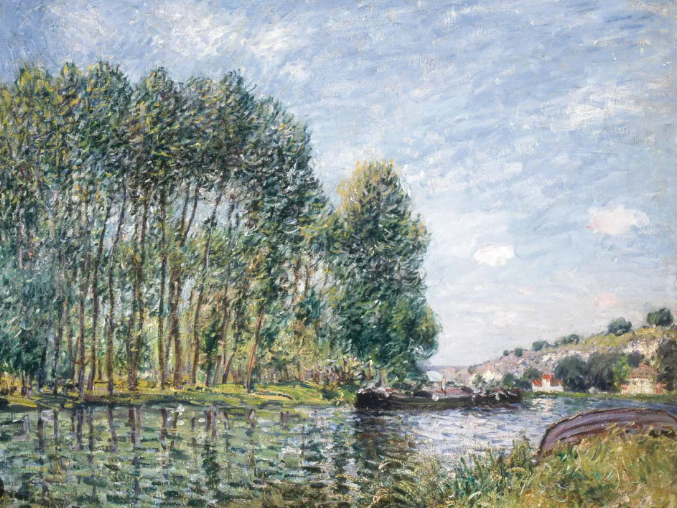
Alfred Sisley is often regarded as one of the most significant figures of the Impressionist movement, particularly known for his stunning river landscapes. His paintings capture the elusive quality of natural light, showcasing how it reflects and refracts across water, trees, and sky. In this post, we’ll delve into Sisley’s river landscapes and explore the techniques he employed to portray light in a way that transformed traditional landscape painting.
1. The Essence of Sisley’s River Landscapes
Alfred Sisley spent a significant portion of his career painting rivers, with the Seine and other waterways serving as his subjects. His works often depict serene scenes with winding rivers framed by lush greenery, depicting the tranquil existence that surrounds these bodies of water. Through careful examination of his compositions, one can truly appreciate how Sisley captured not just the landscape, but the emotion and atmosphere inherent in these scenes.
Often bathed in softer hues, Sisley’s use of color creates a harmonious blend that reflects the changing moods of nature. These hues vary throughout the day, from warm morning rises to cool evening fades. For example, his painting “The Bridge at Villeneuve-la-Garenne” exemplifies his ability to depict the vibrant interplay of light and shadow—a true testament to his skills as an Impressionist artist.
-
- Study Sisley’s use of color in different times of day.
-
- Visit local rivers to capture emotional landscapes.
-
- Analyze the reflections on water in his works.
-
- Experiment with soft hues in your own art.
2. The Impact of Light in Impressionism
Light is often said to be the lifeblood of Impressionism, and Alfred Sisley utilized it in unique ways to convey emotion and movement in his river landscapes. Unlike some of his contemporaries who chose to explore bold contrasts, Sisley favored more subdued, luminous approaches. His technique involved a delicate layering of colors that mimicked the way natural light dances across various surfaces.
One of his noteworthy strategies was using dappled light effects. In works like “The Boat Ride,” Sisley skillfully depicts reflections of trees and sky on the water’s surface, playing with light to create a sense of depth and realism. This not only enhances the overall aesthetic but also draws the viewer into a moment in nature, making them feel part of the scene.
-
- Observe natural light during different times of day.
-
- Practice dappled light techniques in your own paintings.
-
- Experiment with layering colors to reflect light.
-
- Utilize broad brush strokes to capture spontaneous moments.
3. Techniques to Capture Sisley’s Style
To emulate Sisley’s views effectively, one must master some techniques he frequently employed. One is the understanding of perspective, particularly linear perspective. Sisley’s careful placement of trees, boats, and rivers aids in creating depth and drawing the eye inward. This technique not only provides structure to his compositions but also enhances the tranquil feeling that his landscapes embody.
Another technique is the use of broken color, where Sisley applied distinct strokes of various colors side by side to create the illusion of light and shadow. This method engages the viewer’s eye, allowing them to complete the picture in their mind. Mastery of this technique can bring a new dimension to your own work, making landscapes feel alive and vibrant.
-
- Practice using linear perspective in your landscape art.
-
- Experiment with broken color techniques for dynamic effects.
-
- Observe the natural arrangement of elements in landscapes.
-
- Seek inspiration from local scenery and apply Sisley’s methods.
4. Sisley’s Influence on Modern Landscape Painting
Alfred Sisley’s impact on landscape painting can still be felt today. His innovative use of light and color laid foundational concepts for modern landscape artists, shaping how they perceive and depict their surroundings. The emphasis on capturing fleeting moments and the intrinsic beauty of nature resonates in contemporary art forms.
Furthermore, Sisley’s approach has inspired a range of art movements, allowing artists to explore new themes such as environmental awareness and the vibrancy of natural spaces. By channeling Sisley’s techniques, today’s artists can express not only beauty but also a narrative that connects deeply with viewers.
-
- Explore modern interpretations of river landscapes.
-
- Engage with contemporary artists influenced by Sisley.
-
- Consider how nature informs the artwork in your community.
-
- Keep experimenting with Sisley’s techniques for personal growth.
In conclusion, Alfred Sisley’s river landscapes not only invite viewers into serene moments of nature but challenge them to appreciate the interplay of light within these scenes. By studying these techniques, you may discover new ways to express yourself through landscape painting. Take the time to explore the beauty around you, and perhaps find inspiration in Sisley’s exceptional work.