When Pinocchio is mentioned, people often think of his long nose, his wooden joints, and the wondrous transformations he undergoes when lying. Since the creation of this character by the 19th-century Italian writer Carlo Collodi, Pinocchio has gradually moved from children’s literature into illustration, animation, painting, and sculpture, becoming a classic character repeatedly reinterpreted by artists.
The appeal of Pinocchio Art lies not only in the character’s fame but also in its distinctive visual features and rich symbolic meaning. Different artists can use the same puppet character to discuss themes such as honesty, desire, growth, and personal choices.
1. The Origins of Pinocchio Art: From Literary Illustration
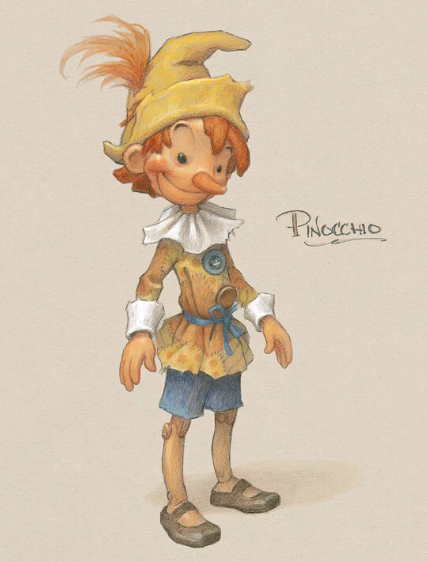
Pinocchio first appeared in Carlo Collodi’s serialized work, *The Adventures of Pinocchio*, which began in 1881 and was published as a book in 1883.
Italian illustrator Enrico Mazzanti created illustrations for the 1883 edition of the original work. His Pinocchio, with his long limbs, prominent nose, and distinct puppet-like features, differs significantly from the later, widely known Disney version.
These early illustrations helped readers transform the fantastical character from the text into a concrete image and provided important references for later character design.
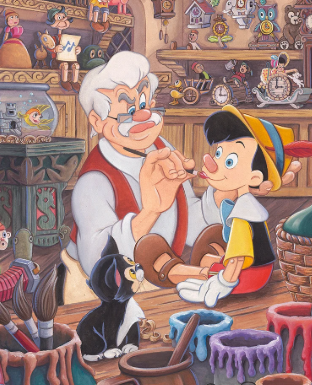
In 1940, Disney’s animated film *Pinocchio* further changed the visual expression of the character. The animated Pinocchio had a round face, brightly colored clothing, and richer expressions, gradually making the character an important part of popular culture.
2. The Artistic Symbolism of the Long Nose and Puppet Joints
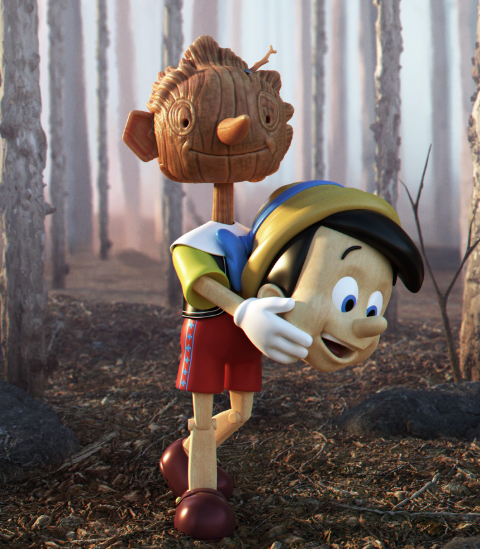
Pinocchio’s most distinctive appearance is the direct connection between his physical features and the story’s themes.
The long nose often symbolizes lies and deception. In the famous episode of the original story, Pinocchio hides the truth from the Blue Fairy, causing his nose to continuously lengthen. Artists can transform the abstract act of dishonesty into an easily understood visual symbol by exaggerating the proportions of the nose.
The puppet joints provide another layer of interpretation. Originally created by a carpenter, Pinocchio possesses artificial physical features yet exhibits his own thoughts and abilities.
Therefore, the puppet figure often evokes images of free will, external control, and personal growth.
In modern painting and sculpture, artists can revisit these symbolic themes by altering the figure’s posture, facial expressions, and body proportions.
3. How has Pinocchio become a subject for contemporary sculpture?
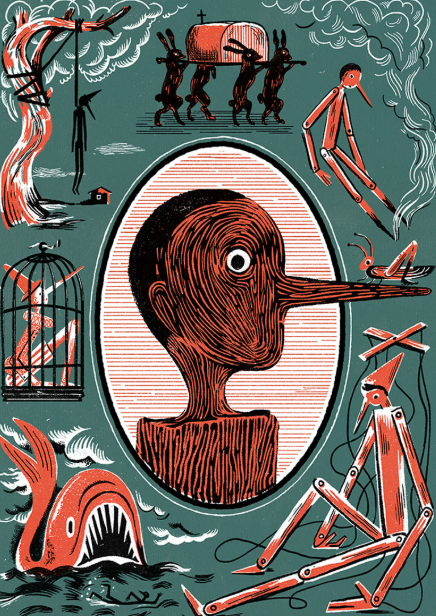
With the development of modern art, the image of Pinocchio is no longer confined to the traditional puppet form of children’s stories.
Artists can retain key features such as the long nose while altering clothing, movements, and the surrounding environment, allowing the figure to participate in new visual narratives.
For example, Dutch artist Wouter Houten’s Life Is a Gamble places a long-nosed figure reminiscent of Pinocchio on dice, combining it with elements such as playing cards to create an artistic expression about luck, temptation, and life choices.
The dice can symbolize chance, the playing cards relate to risk judgment, and Pinocchio’s long nose connects the work to themes of deception and honesty.
The related Bronze Pinocchio Statue case study demonstrates how this character design can be transformed into a physical sculpture through 3D design, metal casting, and surface treatment.
This creative approach illustrates that classic literary characters don’t necessarily need to repeat the original story; they can also acquire new artistic meanings through different props and compositions.
4. How can different art media reinterpret Pinocchio?
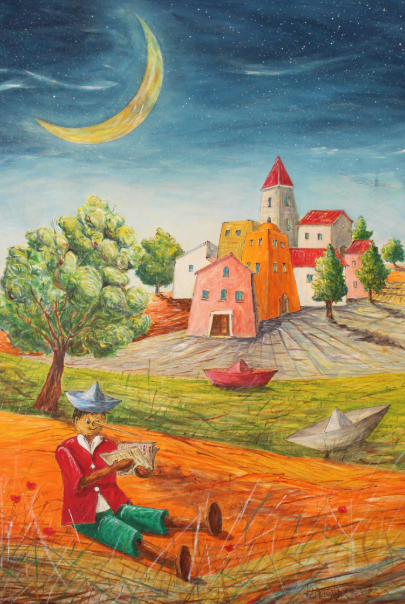
Pinocchio’s visual image is highly malleable, making him suitable for various art media.
In illustration, artists can use line thickness, proportions, and exaggerated expressions to portray the puppet’s innocence or mischief.
In digital art, 3D modeling can reveal the puppet’s joints, clothing structure, and facial details, and different character personalities can be explored by adjusting poses.
Sculpture requires further consideration of the character’s three-dimensional proportions, center of gravity, and structural relationships between props. Especially for works with long, thin noses and complex gestures, both aesthetic accuracy and material strength must be balanced during creation.
Furthermore, the material differences between traditional wood carving and metal casting can also result in different artistic characteristics for the same character.
5. Why Does Pinocchio Art Still Hold Creative Value?
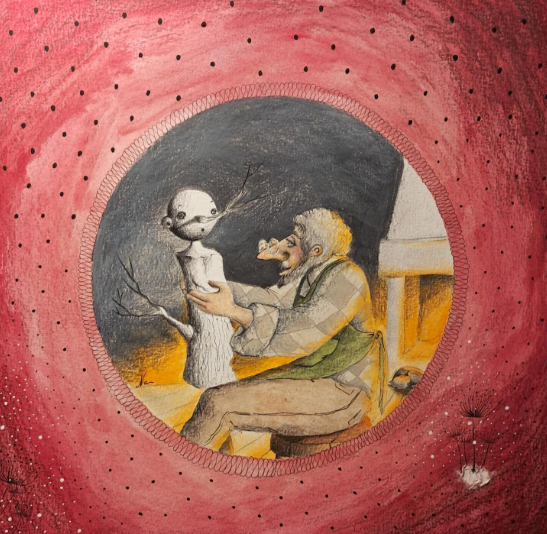
Pinocchio continues to attract artists because his physical characteristics have become inextricably linked to literary connotations.
Viewers often don’t need to see the entire story; their long nose and puppet-like appearance are enough to identify the character and evoke themes of honesty, deception, and growth.
At the same time, classic characters are not immutable, fixed images. Artists can use new materials, poses, and symbolic elements to make Pinocchio respond to cultural issues across different eras.
From 19th-century literary illustrations to 20th-century animated films and contemporary bronze sculptures, Pinocchio Art demonstrates how classic figures can continuously develop new visual languages and artistic expressions while retaining their essential recognizability.