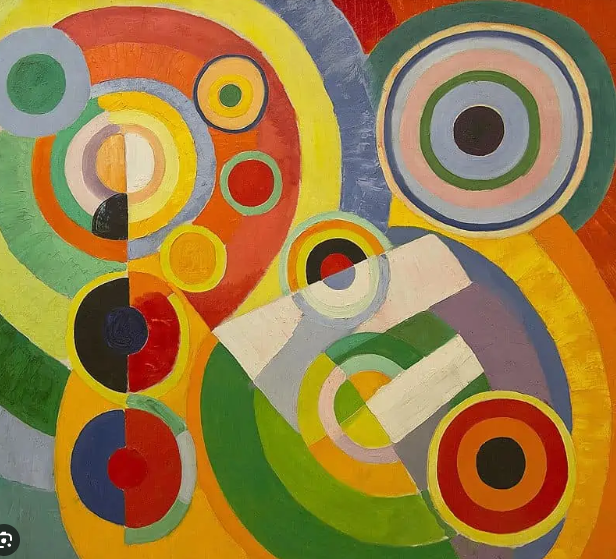
Abstract art is one of the most important transformations in 20th-century art. It broke away from the reliance of traditional painting and sculpture on realistic imagery, allowing lines, colors, geometric shapes, and spatial structures to become independent artistic languages.
From Wassily Kandinsky’s free compositions to Piet Mondrian’s geometric paintings and Constantin Brâncuși’s streamlined sculptures, many famous abstract art works not only changed the way artists created but also redefined how viewers understood art.
1. Wassily Kandinsky: Abstract Painting and Emotional Expression
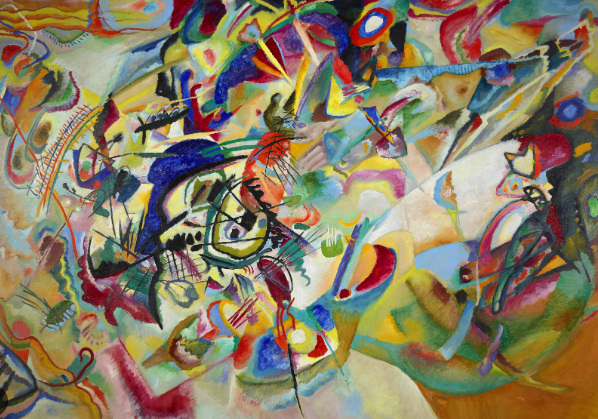
Russian artist Wassily Kandinsky was one of the important pioneers of early abstract art. He believed that painting did not necessarily need to depict specific objects; color and shape themselves could convey emotion.
His 1913 work, Composition VII, is one of his representative works. The painting is filled with interwoven lines, color blocks, and curves, lacking the clear division between subject and background found in traditional painting.
Inspired by music, Kandinsky attempted to make painting, like music, generate emotion and rhythm through the combination of different elements.
When appreciating these works, viewers can observe the relationships between colors, the direction of line movement, and the overall composition of the picture, without having to rush to find a specific object.
2. Piet Mondrian: Establishing Visual Order with Simple Geometric Shapes
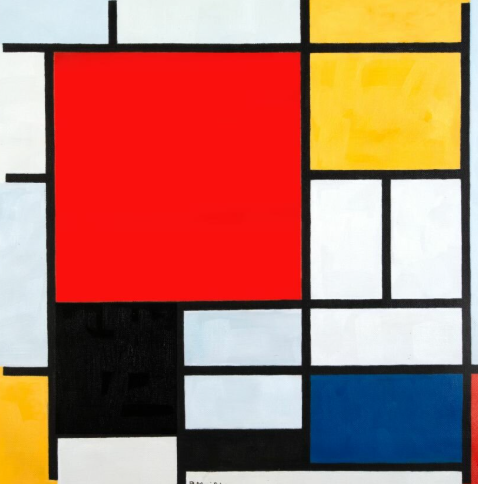
Dutch artist Piet Mondrian is known for his geometric abstract paintings composed of horizontal and vertical lines and basic color blocks.
His representative work, Composition with Red, Blue and Yellow (1930), divides rectangular areas of different sizes with black lines and uses red, blue, yellow, and white to organize the picture.
Although the composition seems simple, the area, position, and proportion of the different color blocks are carefully arranged.
Mondrian’s work is closely related to the De Stijl movement. He hoped to explore a more universal order and balance by simplifying visual elements.
This geometric language later had a significant influence on graphic design, architecture, furniture, and clothing design.
3. Constantin Brâncuși: How Did Abstract Art Enter the Realm of Sculpture?
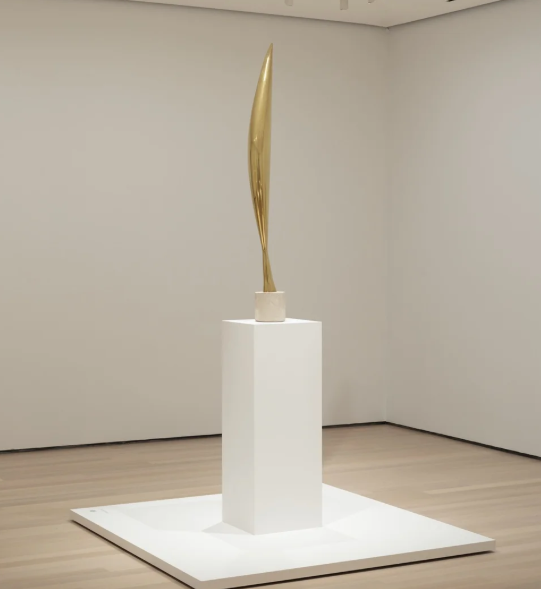
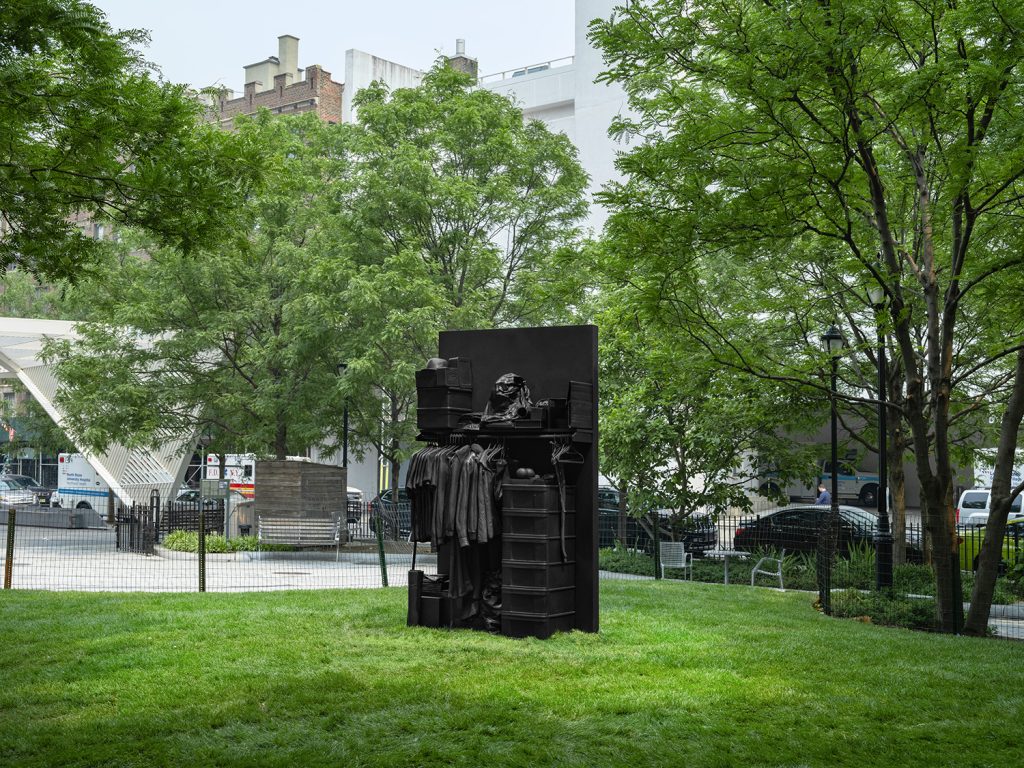
Abstract art not only exists on canvas but has also profoundly changed the development of modern sculpture.
Romanian sculptor Constantin Brâncuși explored how to express the essence of objects with limited form by simplifying natural forms.
His Bird in Space series, beginning in 1923, did not directly sculpt the bird’s wings, feathers, and head, but instead used slender, upward-extending continuous curves to express the feeling of flight.
This approach freed the sculpture from reliance on realistic details, shifting the viewer’s attention to contours, proportions, and space.
The brass production of Bird in Space Sculpture also demonstrates how this classic abstract form can be transformed into a physical work through 3D modeling, metal casting, and surface finishing.
Brâncuși’s work proves that sculpture can convey movement, direction, and emotion even without fully representing the appearance of a natural object.
4. Kazimir Malevich: Why Did a Black Square Become a Classic?
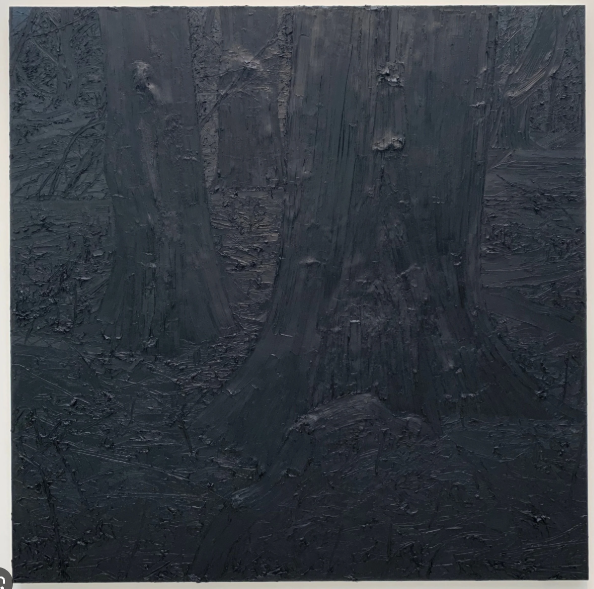
Russian artist Kazimir Malevich was the founder of Suprematism.
In 1915, he exhibited Black Square. The work, featuring black squares on a white background, almost entirely abandons figures, landscapes, and narrative plots found in traditional painting.
Malevich hoped to free painting from the reproduction of real objects, exploring instead the expressive power of basic geometric forms themselves.
The significance of Black Square lies not in the complex techniques required to create the squares, but in its raising new questions about the boundaries of artistic expression: when painting no longer depicts the external world, can the shape itself become a complete artistic content?
This exploration became a crucial turning point in the history of abstract art.
5. Famous Abstract Art: Why Does It Continue to Influence Contemporary Art?
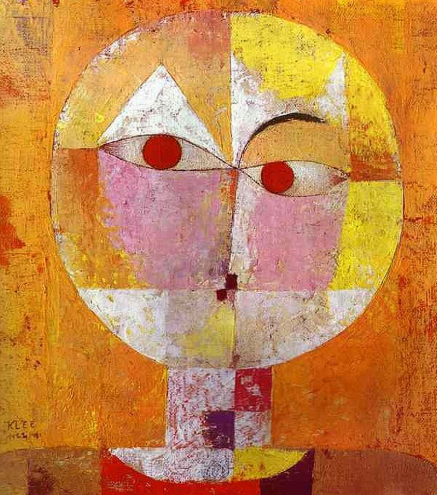
From Kandinsky’s expressive abstraction to Mondrian’s geometric compositions and Brancusi’s abstract sculptures, these works, though using different media, all broke through the traditional art’s dependence on realistic representation.
The development of abstract art has also led artists to place greater emphasis on materials, proportions, color, and spatial relationships.
Today, the influence of abstract art can be seen in digital illustration, graphic design, public sculpture, and modern architecture. For example, geometric compositions are frequently used in brand visual design, while streamlined sculptures offer new design ideas for modern spatial art.
These classic works are worth studying not only because of their important place in art history, but also because they demonstrate how artists can create new modes of expression by reducing, rearranging, or altering visual elements in reality.