Pierre-Auguste Renoir, one of the leading figures of Impressionism, is renowned for his vibrant depictions of Parisian leisure, particularly his dance scenes. Through his brushstrokes, Renoir captures the spirit of joyful social gatherings, highlighting the cultural and social transformations of 19th-century Paris.
1. The Essence of Renoir’s Dance Paintings
Renoir’s dance paintings are more than mere snapshots of social interaction; they encapsulate a joyful celebration of life. His use of light and color creates a lively atmosphere, inviting viewers into the scene. Paintings such as “Dance at Le Moulin de la Galette” exemplify this vibrancy, showcasing a bustling garden filled with elegantly dressed couples enjoying an afternoon of dance and merriment.
The painter’s technique involved applying short, broken brushstrokes to convey movement and liveliness. The dynamic poses of the dancers contrast beautifully with the serene ambiance that Renoir creates. By doing so, he places the viewer in the heart of Parisian leisure, experiencing the joy that fills the air, as seen in both cafés and dance halls of the time.
-
- Study Renoir’s use of color and light to understand his technique.
-
- Analyze how movement is represented in his dance scenes.
-
- Visit museums that hold his artworks to experience them in person.
-
- Read art critiques that discuss his innovative style.
2. Social Context of Parisian Leisure
The dance culture of Paris during the late 19th century was a vibrant reflection of the social changes that were taking place in France. As industrialization transformed urban life, leisure activities gained prominence among the bourgeoisie and the emerging middle class. Dance halls like the Moulin de la Galette became popular spots where people of all classes mingled, showcasing a new social dynamic in a rapidly modernizing city.
In addition to serving as entertainment venues, these spaces offered a glimpse into the changing gender roles of the time. Women began to participate more freely in public life, dancing not just with partners but also enjoying the company of other women. This change is evident in Renoir’s paintings, where female figures are often portrayed in joyful poses, celebrating both their femininity and newfound social freedom.
-
- Research the historical context of Paris in the late 19th century.
-
- Explore how social classes interacted in public spaces.
-
- Learn about the role of women in Parisian society during this period.
-
- Consider attending a dance event inspired by Parisian traditions.
3. Iconic Works Featuring Dance
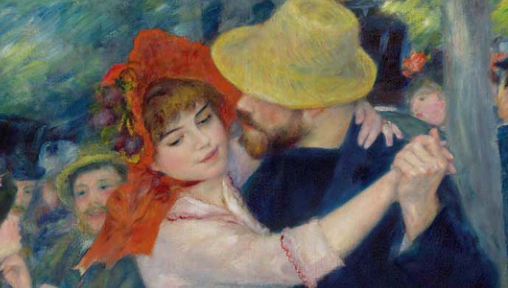
Several of Renoir’s masterpieces capture the essence of dance and leisure in 19th-century Paris. “Dance at Bougival” portrays a charming couple lost in the rhythm of the music, contrasting playful spontaneity with elegant attire. The painting is not just an image of dance, it tells a story of romance and fleeting moments, reflected through the carefree expressions of the dancers.
Another notable piece is “The Luncheon of the Boating Party,” where the notion of leisure expands beyond dance to depict a lively gathering of friends enjoying food, drink, and vibrant conversation. Such works emphasize a culture of sociability unique to the Parisian lifestyle, inviting viewers to appreciate the nuances of friendship and community.
-
- Identify key paintings and their historical significance.
-
- Analyze the themes presented in each work.
-
- Visit exhibitions featuring Renoir’s work to deepen understanding.
-
- Create your own dance-inspired artwork influenced by Renoir.
4. The Impact of Renoir on Modern Art
Renoir’s depictions of dance not only captured the spirit of his time but also paved the way for future artists. His commitment to portraying light, movement, and the joy of human connection has influenced countless generations of painters. Contemporary artists draw inspiration from his vibrant use of color, particularly in how he captures the essence of fleeting moments.
Additionally, his focus on everyday life helped democratize art, making it more accessible to the general public. By depicting scenes of leisure, Renoir encouraged artists to explore the world around them and find beauty in ordinary experiences. This emphasis on the mundane later influenced the development of modern art movements, shifting the focus towards realism and everyday life.
-
- Explore how Renoir’s techniques are used in modern artworks.
-
- Attend art workshops that teach impressionist techniques.
-
- Read literature on the evolution of art from Impressionism to modern styles.
-
- Create a personal project inspired by Renoir’s style and themes.
In conclusion, Pierre-Auguste Renoir’s art encapsulates the essence of Parisian leisure in the 19th century, showcasing joyful dance scenes that resonate with warmth and vibrancy. By understanding the cultural context of his work, we can appreciate the profound impact he had on both his contemporaries and modern artists. Consider visiting an art museum or exploring more about this captivating period to enrich your understanding and appreciation of art.