Pierre-Auguste Renoir, a leading figure of the Impressionist movement, is best known for his vibrant landscapes and captivating portraits. Among his diverse works, his portrayals of children and family scenes stand out, revealing not only his artistic prowess but also his deep appreciation for familial bonds.
1. The Charm of Childhood in Renoir’s Works
Renoir had an exceptional ability to capture the innocence and joy of childhood. His portraits often feature children engaged in simple, everyday activities, such as playing, posing, or interacting with siblings. For instance, in “Lunch at the Boating Party,” we see playful children enjoying leisure time, embodying happiness that resonates with viewers. This mastery of portraying genuine emotions is what sets Renoir apart from many of his contemporaries.
In these children’s portraits, Renoir utilized lively colors and loose brush strokes that evoke a sense of immediacy and life. His works often depict a soft glow surrounding the figures, which seems to amplify their youthful energy and brilliance. A fantastic example is “The Gift of the Roses,” where a young girl holds a bouquet, her expression radiating delight. Renoir’s talent in capturing such fleeting moments allows for a timeless connection to the viewer, letting them feel the joy of childhood years later.
-
- Visit a local art exhibit highlighting Renoir’s work to immerse yourself in the colors and emotions.
-
- Observe the everyday moments in your child’s life; these can inspire your artistic expressions.
-
- Experiment with using bright colors to evoke different feelings in your artwork.
-
- Discuss art with children; ask what they see and how it makes them feel.
-
- Consider recreating a Renoir-inspired scene with your family for a fun artistic day out.
2. Family Scenes: A Glimpse into Domestic Life
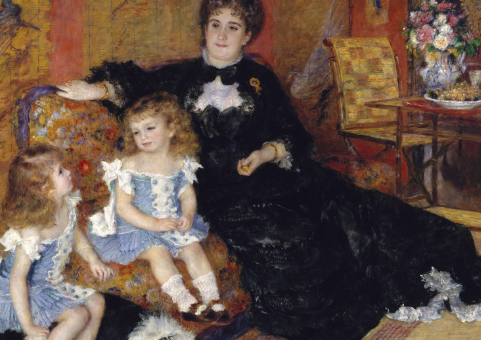
Renoir’s admiration for family is beautifully depicted in his numerous family scenes. His paintings often showcase intimate gatherings where members engage in affectionate interactions—an authentic portrayal of domestic life. For example, in paintings like “The Cradle,” a mother holds her sleeping newborn, a visual testament to love and tenderness. Such scenes encapsulate everyday family moments that many can relate to, making his work universally appealing.
The composition in these family scenes is often warm and inviting, framed by soft lines and pastel hues. This deliberate choice helps create an atmosphere of comfort and closeness that resonates deeply with viewers. A perfect illustration is “The Umbrellas,” featuring adults and children in a shared gathering, highlighting the joy and companionship found in family interactions. Renoir’s ability to juxtapose the lively curiosity of children with the serene presence of adults adds depth to these everyday scenes.
-
- Reflect on your own family traditions; what moments can be captured in art?
-
- Encourage family participation in arts and crafts to create a lively home atmosphere.
-
- Document family gatherings with photographs; they can inspire future artwork.
-
- Use natural light in your paintings to achieve the soft ambiance admired in Renoir’s work.
-
- Share stories behind each family painting with new generations; keep the memories alive.
3. The Techniques Behind Renoir’s Masterpieces
Renoir’s painting techniques greatly contributed to the emotional richness of his children and family scenes. His signature use of light is a defining characteristic that creates a sense of movement, making the scenes feel alive. By layering colors and applying them in quick, sweeping strokes, Renoir achieved a luminosity that brings his subjects into focus while maintaining a soft, dream-like quality.
Moreover, Renoir was not afraid to engage with innovative methods. He often worked with plein air techniques, allowing him to paint outdoors to capture the real-time effects of light and nature on his subjects. This not only lends a vibrant quality to his work but also emphasizes the relationships between his subjects and their environments, adding another layer of narrative to his paintings.
-
- Experiment with both indoor and outdoor lighting to see how it affects your artwork.
-
- Try layering colors in your paintings to create depth and texture.
-
- Study light and shadow using different times of the day for reference points.
-
- Engage in plein air painting; it can enhance your understanding of nature and light.
-
- Learn about different brush techniques to find the ones that resonate with your style.
In conclusion, exploring Pierre-Auguste Renoir’s children portraits and family scenes gives us a glimpse into not just his artistic genius, but also the fabric of familial love and joy. Feel inspired to capture the charming moments in your life or your family’s; perhaps start painting or documenting these memories creatively. Dive into Renoir’s world, and you might discover not only art but the magic in your own celebrations of family.