Pierre-Auguste Renoir’s “Luncheon of the Boating Party” is a brilliant depiction of leisure, friendship, and the joie de vivre of late 19th-century Paris. This iconic painting captures a moment of social pleasure, and examining its elements reveals deeper insights into Renoir’s artistic vision and the cultural context of the time.
1. Composition and Layout
The composition of “Luncheon of the Boating Party” is both dynamic and inviting, showcasing a group of friends reclining around a table on a terrace overlooking the Seine. Renoir employs a semi-circle arrangement, which naturally draws the viewer’s eye across the canvas to the figures engaged in lively conversation and enjoyment. The positioning of the characters conveys a sense of intimacy, as if the viewer is an uninvited guest peering into their cheerful gathering.
Additionally, Renoir’s use of light and shadow plays a crucial role in enhancing the composition. Soft, dappled sunlight filters through the trees, casting a glow on the figures and creating a warm ambiance. The flickering light captures the fleeting nature of the moment, inviting viewers to lean in closer and savor the joyful atmosphere depicted in the painting.
-
- Observe how characters are arranged; notice their interactions.
-
- Pay attention to the use of light and shadow for realism.
-
- Consider what the arrangement says about relationships.
-
- Take note of background elements that complement the scene.
2. Color Palette and Technique
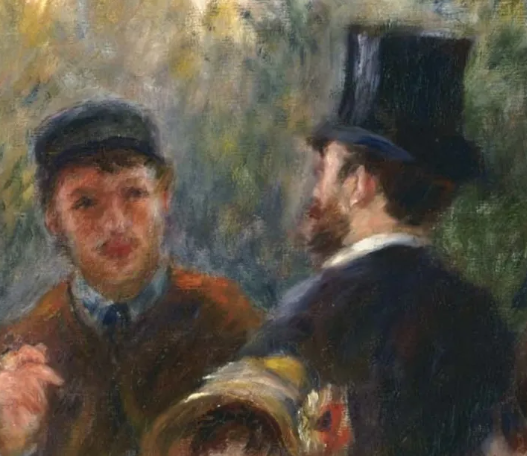
Renoir’s choice of colors in “Luncheon of the Boating Party” exudes warmth and vibrancy. The predominance of warm tones—ranging from yellows to reds—creates a lively atmosphere, reminiscent of a sunlit afternoon. The splashes of color not only enliven the figures but also enhance the emotions conveyed, turning the painting into a beautiful expression of joy and camaraderie.
In terms of technique, Renoir employs loose, fluid brushstrokes that give the painting an impressionistic quality while maintaining a sense of detail. The brushwork adds an element of movement, as if the characters are animated and engaged in a dance of conversation and laughter. This technique allows the viewer to feel the immediacy of the moment, further immersing them in the social energy of the scene.
-
- Analyze the color choices and how they affect tone.
-
- Identify brush techniques used in different parts of the painting.
-
- Look for contrasts in color that highlight characters or elements.
-
- Consider how the color palette evokes a specific season or time.
3. Cultural and Historical Context
To fully appreciate “Luncheon of the Boating Party,” one must consider its cultural and historical context. Painted in 1880-1881, this work is set against the backdrop of post-Impressionist Paris, where artists were beginning to explore themes of leisure and social life among the burgeoning middle class. This painting reflects a shift towards depicting modern life, a topic that was relatively new and exciting in the art world of that era.
Moreover, the painting is filled with symbols of contemporary Parisian life. The use of leisure activities like boating becomes an expression of freedom and relief from the pressures of industrialization. The DIY restaurant culture, along with outdoor social gatherings, showcased a new, vibrant lifestyle that resonated with the rapidly changing society of late 19th-century France.
-
- Research the historical context of Impressionism.
-
- Explore how Renoir’s work reflects social changes.
-
- Identify symbols in the painting related to leisure.
-
- Understand the significance of the figures and their relationships.
Renoir’s “Luncheon of the Boating Party” not only serves as a delightful visual experience but also as a window into the past, revealing the intricacies of the artist’s style and intent. Taking the time to analyze this masterpiece allows for a deeper appreciation of both the artwork and the period it represents.
Engaging with Renoir’s work encourages us to reflect on our relationships and the joys of shared experiences. Whether you’re an art enthusiast or a casual admirer, delve into the world of Impressionism and explore how art captures the essence of life. Consider visiting a museum or reading more about Impressionist artists to expand your understanding and appreciation further!