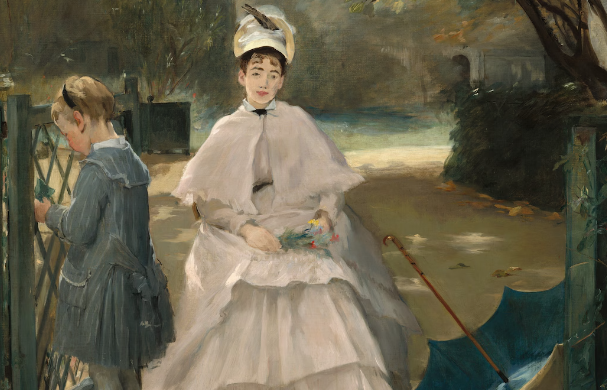
Eva Gonzalès was a remarkable artist whose career flourished during the late 19th century. Trained under the influential painter Édouard Manet, her work not only reflects the impact of his techniques but also adds a unique feminine perspective to Impressionism.
1. The Artistic Relationship Between Eva Gonzalès and Édouard Manet
Gonzalès became a prominent figure in the Parisian art scene after studying under Manet in the 1870s. Their relationship was pivotal; Manet’s modern approach to light and color greatly influenced her style. He encouraged Gonzalès to explore her artistic voice while also providing crucial support in navigating the male-dominated art world of the time.
Manet’s techniques, such as the loose brushwork and focus on everyday subjects, are evident in Gonzalès’s paintings. She embraced these elements, particularly his emphasis on capturing fleeting moments of life, which resonated with the Impressionist movement. Gonzalès admired Manet not only as a teacher but also as a friend, and their admiration was mutual, further enriching her artistic journey.
-
- Explore mentorship opportunities with experienced artists.
-
- Seek constructive criticism to improve your artistic skills.
-
- Attend workshops to understand different artistic techniques.
-
- Engage with local art scenes to build connections.
2. Gonzalès’s Unique Interpretations of Impressionism
While Gonzalès adopted many elements of Impressionism from Manet, she infused her creations with a distinct narrative voice. Her paintings often depicted women in domestic settings, portraying their lives with sensitivity and depth. One notable work, “The Greengrocer,” showcases her ability to combine everyday scenes with refined beauty, capturing the mundane while elevating it through artistic expression.
Moreover, Gonzalès’s use of color and composition offers a different lens on Impressionist themes. While many artists focused on landscapes and still-lives, her focus on women brings attention to social roles and domesticity. This unique perspective invites viewers to reflect on the place of women in society, making her work not only visually appealing but also socially relevant.
-
- Experiment with different subject matters to find your niche.
-
- Use color intentionally to convey emotions and themes.
-
- Analyze the works of established artists to identify their influences.
-
- Consider the social context of your subjects for deeper storytelling.
3. The Legacy of Eva Gonzalès Today
Today, Gonzalès’s contributions to the art world are gaining increased recognition. As scholars and historians reassess the works of female artists, her paintings serve as important touchstones for understanding the evolution of Impressionism. Museums are also beginning to feature her works more prominently, celebrating her unique perspective within the broader narrative of art history.
Moreover, Gonzalès’s techniques and subjects continue to inspire contemporary artists, especially women entering creative fields. As gendered narratives in art continue to unfold, builders of modern art can find inspiration in Gonzalès’s ability to balance personal expression with societal critique.
-
- Research biographies of female artists to inspire your own journey.
-
- Visit exhibitions celebrating women in art to gain fresh perspectives.
-
- Incorporate themes of gender and identity into your artistic practice.
-
- Collaborate with fellow artists to broaden your creative approach.
In conclusion, Eva Gonzalès not only exemplifies the influence of Édouard Manet but also carves her own path within the art world. As you explore your artistic endeavors, consider how powerful mentorship and a unique perspective can shape your journey. Engage with contemporary discussions around art to enrich your understanding and practice.