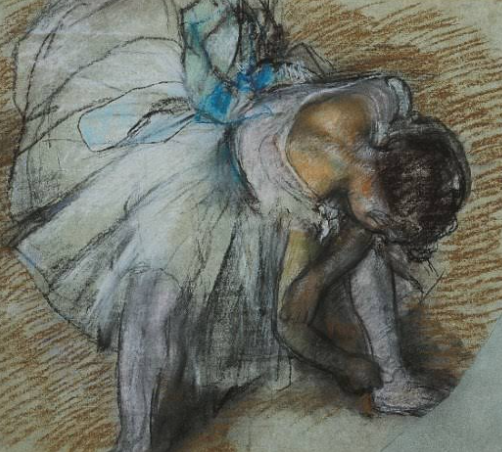
Edgar Degas is renowned for his captivating portrayals of ballet dancers, women at work, and everyday life. His work in pastel drawing is particularly noteworthy, showcasing not only his artistic talent but also his innovative techniques that forever changed the art world.
1. Degas and the Use of Pastels
Edgar Degas was one of the first artists to embrace pastel as a serious medium rather than a mere tool for sketching. He created numerous works using pastel, often layering colors to achieve a depth and vibrancy that captivated viewers. Degas was meticulous in combining this medium with other techniques, such as oil paint and drawing, allowing him to enhance the luminosity and texture of his subjects.
His famous pastel, “The Ballet Class,” is an excellent example of how he employed the medium to create a sense of movement and fluidity. The soft, rich colors of the pastels contribute to the overall harmony of the composition. Degas often used a unique technique of blending pastels with his fingers, giving his works a distinctive, expressive quality. With each strokes, he could control the layering and intensity of colors, which set him apart from many of his contemporaries.
-
- Experiment with different brands of pastels to find what suits your style.
-
- Try blending pastels with your fingers for a softer appearance.
-
- Layer colors to add depth and vibrancy to your artwork.
-
- Don’t hesitate to combine pastels with other mediums for mixed-media effects.
-
- Practice capturing movement in your subjects, inspired by Degas’ techniques.
2. The Experimental Techniques of Degas
Degas was known for his experimental approach to art, often pushing the boundaries of traditional techniques. One of his methods involved using an underdrawing in charcoal or pencil, which he subsequently layered with pastels. This technique allowed him to establish a firm foundation for his work, adding dimensions that accentuated the final pastel layers. By starting with a detailed underdrawing, Degas was able to achieve precise anatomical forms while still allowing freedom in his pastel application.
Additionally, Degas frequently employed the technique of “fixing” his pastels to prevent smudging and ensure the longevity of his work. He would apply a fixative spray, preserving his delicate pastel layers while maintaining the vibrancy of colors. This approach is particularly valuable for artists who want to avoid the common pitfalls of pastel drawing, such as dust and fading. Degas’ innovative techniques serve as useful lessons for modern artists eager to explore the medium further.
-
- Begin with a detailed underdrawing to define your subject.
-
- Use a fixative to protect your pastel layers.
-
- Experiment with different types of paper; textured surfaces often work well for pastels.
-
- Take time to study movement and gesture to enhance your figures.
-
- Be bold in your color choices; vibrant pastels can create stunning effects.
3. The Legacy of Degas’ Pastel Techniques
Degas’ innovative use of pastels left a profound impact on the art community, influencing several generations of artists. His ability to capture fleeting moments—especially in dance—showed a keen understanding of the human form and movement. Many artists adopted his layering techniques, finding both inspiration and practical methods that enhanced their own works. Through his pastels, Degas established a unique identity that intertwined impressionist elements with his signature style, paving the way for future artistic explorations.
The flexibility and immediacy of pastels allow for rapid expression, mirroring the spontaneity that Degas often captured in his drawings. Today, many artists regard pastels not merely as a transitional medium but as a primary tool for serious artistic expression. By studying Degas’ methods and integrating them into their own practices, contemporary artists can find innovative ways to express their ideas and emotions.
-
- Study the movements and figures akin to Degas to inform your drawings.
-
- Attend workshops to gain hands-on experience with pastel techniques.
-
- Explore different color combinations and layering methods.
-
- Reflect on how Degas portrayed movement to inspire your compositions.
-
- Invest in high-quality pastels and paper for a richer artistic experience.
Edgar Degas’ mastery of pastel techniques not only shaped his work but also created a lasting legacy that continues to inspire artists today. By experimenting with these techniques in your own practice, you can unlock new creative potentials and bring your artistic visions to life. Start with what you have and let the vibrant world of pastels inspire you on your artistic journey.