
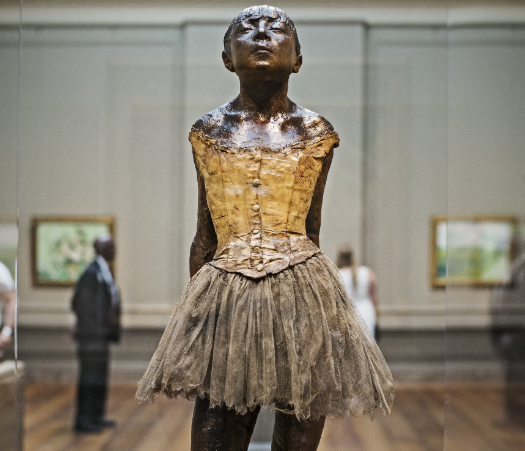
Edgar Degas is often recognized for his mesmerizing paintings, particularly those featuring ballet dancers. Among his creations, the “Little Dancer” sculpture stands out, offering a window into both the artist’s genius and the art historical contexts surrounding it. This blog post will explore the significance of the “Little Dancer” and its place within the broader scope of art history.
1. The Creation of Little Dancer
In 1881, Edgar Degas unveiled his bronze sculpture known as “Little Dancer Aged Fourteen.” It was unique for its time, as it was one of the first sculptures to depict a realist representation of a young ballet dancer. Unlike many sculptures of the era that idealized the human form, Degas showcased the raw essence of youth combined with the physicality of dance, emphasizing both movement and grace. The original sculpture is notable for its wax cast, in which the artist used real fabric for the tutu, making it a blend of fine art and mixed media.
Degas derived inspiration from observing dancers at the Paris Opera, often attending performances and rehearsals. He meticulously studied their poses and movements, capturing the elegance and effort behind the art of dance. His attention to detail not only highlights the physicality of ballet but also serves to tell a broader story of the life and struggles of young performers. The choice to represent a young girl adds complexity, shedding light on the often-overlooked narratives in the world of performance art.
-
- Research the origins of Degas’ inspiration by visiting museums or reading art history books.
-
- Consider how the “Little Dancer” contrasts with traditional sculptures of the time.
-
- Explore the materials Degas used and how they contributed to the realism of the piece.
-
- Think about how modern interpretations of youth and artistry might differ from Degas’ work.
2. The Reception and Impact of Little Dancer
Upon its exhibition at the Sixth Impressionist Exhibition in 1881, “Little Dancer” elicited mixed reactions. Some critics praised its innovative approach, while others dismissed it as unrefined and crude. The use of wax and fabric shocked audiences who were accustomed to traditional bronze sculptures that emphasized idealized beauty. However, this diversity of opinion only served to cement Degas’ status in the art world as a revolutionary figure, one who challenged conventional aesthetics.
Even today, “Little Dancer” is celebrated for its authenticity and emotional depth. It not only exemplifies Degas’ intricate understanding of movement but also addresses themes of youth, ambition, and vulnerability. Other artists have taken inspiration from Degas’ work, showcasing how it continues to influence modern artists and sculptors. The sculpture has become an iconic representation of the intersection between realism and impressionism in art history.
-
- Reflect on how “Little Dancer” can influence modern dance and sculpture.
-
- Analyze various artistic interpretations of youth inspired by Degas.
-
- Consider the critical responses that art pieces can attract and how they shape public perception.
-
- Examine how the piece resonates within the context of feminist art critiques.
3. Degas and the Evolution of Art Movements
Edgar Degas was a significant figure within the Impressionist movement, known for his unique approach to capturing motion and momentary experiences. Although he rejected the rigid rules of traditional painting, he also incorporated elements from past artistic styles, effectively bridging the practices of classical and modern art. His ability to blend different techniques and perspectives set the stage for the evolution of art movements that followed.
The impact of Degas reaches beyond his immediate circle; he influenced the development of 20th-century art. Artists such as Henri Matisse and Pablo Picasso drew inspiration from his use of color, movement, and form. Degas’ work opened the door to new explorations in how the human body could be represented in art, challenging artists to break free from established norms. His legacy continues to inspire practitioners in various fields, extending into dance, photography, and performance art.
-
- Explore how other art movements have been influenced by Impressionism.
-
- Consider why historical context is essential for understanding Degas’ contributions.
-
- Analyze how different artistic techniques can coexist and influence one another.
-
- Look into how contemporary artists are merging classical themes with modern practices.
4. Legacy of Little Dancer in Contemporary Culture
“The Little Dancer” remains a significant cultural icon, often referenced and revisited in various forms of media including ballet, film, and literature. The sculpture invites a conversation about the nature of art and its ability to evoke emotion and convey stories. Many contemporary dances and performances draw on Degas’ exploration of the ephemeral nature of movement, illustrating the timeless connection between art and reality.
Moreover, exhibitions dedicated to or featuring Degas’ work inspire new generations to engage with art history actively. They challenge visitors to reflect on issues such as representation, gender dynamics in performance, and the importance of artist intent. As such, “Little Dancer” enters not only the physical space of museums but also finds its way into the discourse on contemporary art and culture.
-
- Attend exhibitions featuring Degas to deepen your understanding of his impact.
-
- Consider how art can serve as a commentary on societal issues.
-
- Investigate how contemporary artists reinterpret classical works.
-
- Engage with local art scene activities to discover modern takes on historical themes.
In conclusion, Edgar Degas’ “Little Dancer” transcends its form as a sculpture, encapsulating key themes of youth, artistry, and societal expectations. Engaging with this work offers a unique opportunity to reflect on the evolving narratives in art history. Explore more about Degas and the world he portrayed—visit exhibitions, read insightful literature, or delve deeper into the realm of dance and performance arts for a richer understanding.