Edgar Degas, a prominent figure in the Impressionist movement, is well-known for his unique ability to capture motion, particularly in the realm of horse racing. His paintings not only showcase the beauty of the sport but also reflect a deep understanding of movement, bringing the dynamic energy of horse racing to life on canvas.
1. The Essence of Motion in Degas’ Work
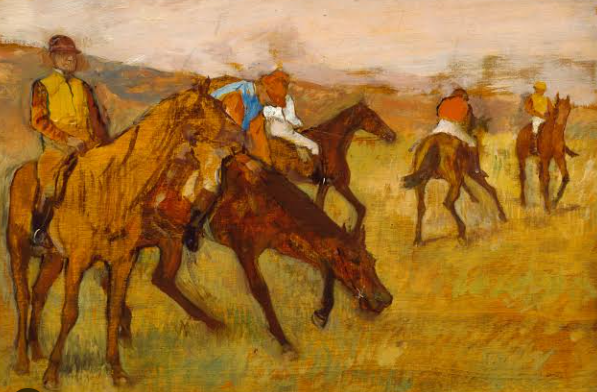
Degas was fascinated by the galloping horses and the tension before a race. In his famous work, “The Racecourse,” he manages to isolate emotionally charged moments, creating a narrative filled with anticipation. The way he captures the horses’ muscles in action and the jockeys’ focused expressions showcases his keen observational skills and understanding of anatomy.
In addition to depicting the horses themselves, Degas also explores the environment of the racetrack. His use of unusual angles and viewpoints, such as from the grandstand or behind the racing horses, invites the viewer into the world of the track, making them feel as if they are part of the action. This innovative approach to perspective adds depth to his work and enhances the sense of movement.
-
- Study horse anatomy for better representations
-
- Experiment with different perspectives to capture movement
-
- Use gesture drawing to practice quick sketches of racing scenes
-
- Visit a racetrack to observe live racing dynamics
2. Techniques Used to Portray Motion
Degas employed several techniques to illustrate motion in his paintings. One of the most notable is his use of pastels, which allowed him to create fluid lines and vibrant colors. The softness of pastels contrasts sharply with the muscular tension of the horses, allowing them to leap off the canvas with energy and vigor.
Another technique Degas often used involves composing the element of time into a single frame. By showcasing multiple overlapping images of horses in varying stages of galloping, he could depict their movement more dynamically. This was revolutionary for the time and paved the way for later discussions on capturing motion in art and film.
-
- Practice with pastels for softer transitions in motion
-
- Explore overlapping images in your art compositions
-
- Analyze motion studies by other artists for inspiration
-
- Experiment with different media to find your perfect style
3. The Impact of Degas on Modern Art and Motion Studies
Degas’ exploration of motion has left a lasting legacy, influencing not only painters but also filmmakers and photographers. His emphasis on capturing the fleeting moments in life aligns closely with concepts in modern motion studies, particularly in how movement is portrayed in contemporary animation and film. This notion of ‘capturing a moment’ continues to resonate today.
<pAdditionally, Degas’ innovative techniques have sparked numerous discussions in academic circles about how to effectively convey motion. Many modern artists look to his work as a source of inspiration, particularly when exploring the dynamics of sport and action in artistic representations. His legacy is a testament to the power of observation, creativity, and skill in art.
-
- Explore the influence of Degas in contemporary art
-
- Study how motion is portrayed in various media today
-
- Join workshops that focus on movement in art for hands-on experience
-
- Engage in discussions about the evolution of motion in art history
In summary, Edgar Degas’ skillful representation of horse racing and motion not only highlights his artistic prowess but also serves as an early exploration of techniques that shape modern art. Whether you are an artist or simply an admirer of Degas’ work, there is much to learn from his innovative approach. Consider applying these insights into your own observations, whether you’re sketching or enjoying your favorite sporting events.