Camille Pissarro, often hailed as the father of Impressionism, brought a unique perspective to landscape and rural scenes that mirrored the beauty and simplicity of everyday life. His ability to capture varying light, atmosphere, and the essence of rural activities has made his works timeless gems in art history. In this post, we’ll explore the key elements that define Pissarro’s Impressionist landscapes and rural scenes.
1. The Essence of Impressionism in Pissarro’s Work
Pissarro’s trademark style is characterized by loose brushwork and a focus on the effect of light on the landscape. By using “broken color,” he created an illusion of shimmering light that plays across surfaces, lending an almost ethereal quality to his scenes. He was particularly fond of painting outdoors, enabling him to capture the true essence of the moment—and it shows in his depictions of light and shadow.
A great example of this technique can be seen in his painting “The Boulevard Montmartre, Spring,” where the interplay of sunlight and shadow gives vibrancy to the street scene. Pissarro often painted the same location multiple times to show variations in light throughout the day and seasons, masterfully illustrating how the ambiance shifts in response to these changes.
-
- Explore Pissarro’s technique of broken color in your own paintings.
-
- Test outdoor painting versus studio painting to grasp light and shadow variations.
-
- Study the daily changes in a familiar landscape throughout different seasons.
-
- Experiment with short, quick brushstrokes to create a sense of immediacy.
2. Rural Life: A Central Theme in Pissarro’s Landscapes
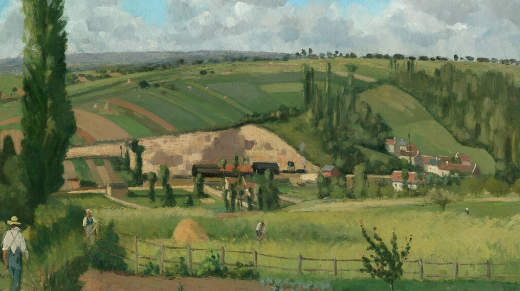
The charm of Pissarro’s work largely lies in his focus on rural life, depicting peasants and farmers engaged in their daily activities. He believed in capturing the dignity and simplicity of these individuals, emphasizing their integral role in the cycle of life and nature. Paintings like “The Harvest” beautifully illustrate his desire to immortalize these ordinary yet poignant moments of labor.
Pissarro also aligned himself with the Impressionist philosophy that art should reflect modern life. His rural scenes often convey a sense of peace, community, and connection to nature, invoking a nostalgic yearning for simpler times. He sought to portray the rhythm of rural existence, whether it was in the stillness of an early morning or the bustling activity during harvest time.
-
- Try to incorporate elements of daily life into your own artwork for authenticity.
-
- Consider the impact of labor and community in your artistic themes.
-
- Capture candid moments in rural settings to reflect genuine human experience.
-
- Use natural elements like crops and trees to enhance your landscape compositions.
3. Color Palette and Composition in Pissarro’s Landscapes
Pissarro’s color palette is notable for its vibrancy, filled with lush greens, earthy browns, and soft pastels. He was adept at using complementary colors to create harmony within his scenes, allowing each hue to resonate with the others. In works like “The Red Roofs, A Corner of a Village, Éragny,” he expertly employed color juxtaposition to bring depth and life to his rural landscapes.
His compositions are often well-balanced, with an emphasis on the foreground to draw the viewer into the scene. He utilized leading lines—like roads or rivers—to guide the eye and create a sense of depth in his paintings. This method not only emphasizes the landscape but also enhances the emotional quality of the artwork.
-
- Experiment with color mixing to understand interactions between hues.
-
- Utilize leading lines in your compositions for enhanced depth perception.
-
- Focus on achieving balance by integrating foreground and background elements.
-
- Analyze Pissarro’s works to develop an understanding of color harmony.
4. Influence and Legacy of Camille Pissarro in Impressionism
Pissarro played a critical role in the Impressionist movement, not only through his artwork but also as a mentor to younger artists like Paul Cézanne and Georges Seurat. His collaborative spirit and willingness to experiment with different techniques influenced the development of modern art. As he ventured into Post-Impressionism later in his career, his explorations paved the way for future avant-garde movements.
Today, Pissarro’s contributions continue to be celebrated and studied. His works serve as a reminder of the possibilities inherent in capturing fleeting moments and the beauty of everyday life. Many contemporary artists still draw inspiration from his approach to depicting landscapes and rural scenes, ensuring that his legacy endures.
-
- Research the influence of Pissarro on later art movements for deeper understanding.
-
- Attend exhibitions showcasing Pissarro’s work to appreciate his techniques firsthand.
-
- Experiment with mentorship by collaborating with aspiring artists.
-
- Study the evolution of art styles inspired by Pissarro’s work.
Camille Pissarro’s Impressionist landscapes and rural scenes offer a slice of poignant beauty and emotion that can inspire anyone interested in art. Whether you’re an aspiring artist or simply an admirer, learning from Pissarro’s techniques can enhance your appreciation of the world around you. Don’t hesitate to explore this vibrant legacy further; delving into Pissarro’s work is sure to enrich your artistic journey.