
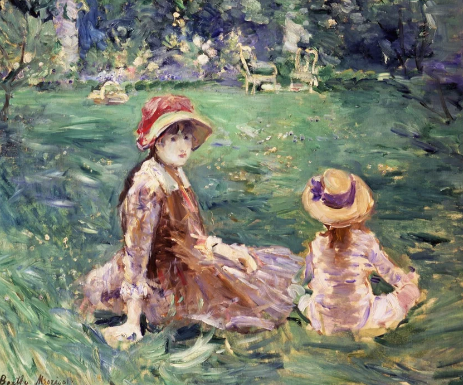
Berthe Morisot was a pioneering female artist in the world of Impressionism, known for her intimate and evocative portrayals of everyday life. Her work captures the essence of femininity and domesticity, offering a unique perspective in a predominantly male art scene.
1. The Life and Times of Berthe Morisot
Berthe Morisot was born in 1841 in Bourges, France, into a well-to-do family. She began her artistic journey at an early age, influenced by her brothers who were also artists. In a time when most women were discouraged from pursuing careers in art, Morisot broke the mold by joining the circle of Impressionist artists, forming close relationships with notable figures like Édouard Manet and Claude Monet. Her unique perspective and experiences profoundly influenced the subjects and styles she chose to depict in her paintings.
Morisot’s work often focused on the lives and emotions of women, capturing intimate moments that resonated with her audience. She excelled in portraying mothers with their children, as vividly seen in her painting “The Cradle” (1872), which successfully illustrates the bond between mother and child in soft pastels and gentle brush strokes. Her attention to light and atmosphere created a sense of immediacy and intimacy that is still cherished today.
-
- Learn about the key events in Morisot’s life to understand her artistic choices.
-
- Explore how societal norms of the time influenced her art.
-
- Look at her connections with other artists and how that shaped her style.
-
- Investigate her unique approach to themes of femininity and domesticity.
2. The Art of Intimacy: Themes in Morisot’s Work
The themes of intimacy and domesticity in Morisot’s paintings are central to her artistic legacy. She painted scenes of women in their homes, engaging in activities such as reading, caring for children, or simply relaxing. This focus on personal moments allows viewers to experience an emotional connection with her subjects. One such piece, “Summer’s Day” (1879), displays two women in a serene outdoor setting, emphasizing their gentle interaction, which evokes a sense of tranquility.
Morisot’s use of light and color further enhances the intimacy of her work. Her brushwork often gives a sense of spontaneous movement, as if the viewer has caught a glimpse of a fleeting moment. For instance, in “The Mother and Sister of the Artist” (1869), her loose brush strokes create a sense of warmth and closeness between the subjects, allowing the viewer to feel part of their quiet world.
-
- Reflect on the feelings that arise from the everyday scenes she painted.
-
- Notice how her choice of light and color contributes to the mood.
-
- Consider how her paintings reveal a different view of women’s roles during her time.
-
- Explore the emotional connections you feel with her subjects.
3. Legacy and Influence: Morisot’s Lasting Impact
Berthe Morisot’s impact on the art world extends far beyond her lifetime. As one of the few prominent female Impressionists, she paved the way for future generations of women artists. Her innovative approach and stylistic contributions were integral to the development of the Impressionist movement. Despite facing gender barriers, her success opened doors for others, ultimately contributing to a broader acceptance of women in the arts.
- Seek out exhibitions featuring Morisot’s work to appreciate her artistry firsthand.
- Read books and articles to grasp her significance in the Impressionist movement.
- Support contemporary female artists inspired by Morisot’s legacy.
- Engage in discussions about gender and art to further explore her impact.
Berthe Morisot remains a seminal figure in art history, representing both the challenges and triumphs faced by women artists. Embracing her legacy encourages us to explore the richness of diverse perspectives in art today. Whether through visiting an exhibition or simply indulging in her paintings at home, there’s always more to learn and appreciate. Take the next step by exploring her work and reflecting on the themes that resonate with you.