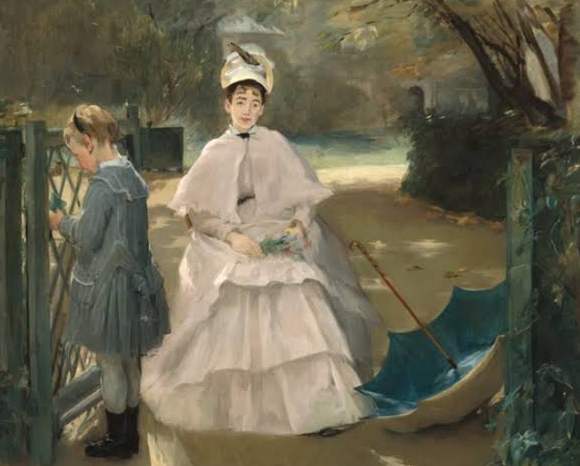
Eva Gonzalès was a remarkable female artist who made her mark in 19th-century Paris, a time when the art world was predominantly male-dominated. Her unique style and dedication to her craft led to significant contributions in the Impressionist movement, often representing a fresh perspective that combined technical skill with a personal touch.
1. Early Life and Influences
Born in 1849 in Paris, Eva Gonzalès grew up in a family that fostered creativity. Her father was a successful painter, which greatly influenced her early exposure to the arts. At a young age, Gonzalès showed promise in her artistic abilities and enrolled at the Académie Julian, a prestigious art school known for accepting women when many traditional institutions did not.
As she honed her skills, Gonzalès became attracted to the revolutionary approaches of the Impressionist artists. Her connections with well-known figures like Édouard Manet, who recognized her talent and encouraged her work, played a vital role in shaping her artistic style. The Impressionist movement’s emphasis on light, color, and everyday life resonated deeply with her, leading her to focus on intimate domestic scenes that often featured women.
-
- Explore the role of art in Gonzalès’s upbringing.
-
- Learn about the Académie Julian and its significance for female artists.
-
- Investigate Gonzalès’s relationships with key Impressionist figures.
-
- Study the characteristics of Impressionist art.
2. Artistic Style and Achievements
Gonzalès’s unique style is a blend of traditional techniques and experimental approaches typical of the Impressionist movement. She often employed loose brushwork and a vibrant color palette to convey emotion and atmosphere in her paintings. Her subject matter frequently focused on women in both domestic and social situations, providing a glimpse into female experiences during her time.
One of her notable works is “The Toilet,” where she captures a moment of everyday life, showcasing a woman preparing herself in a natural, candid manner. This painting not only highlights her technical prowess but also her ability to convey depth in female experience. Gonzalès exhibited alongside her male counterparts, gaining recognition and accolades for her work, including exhibitions at the Salon, a revered art showcase of the time.
-
- Analyze key pieces of art by Gonzalès for style elements.
-
- Discuss the themes prevalent in her work.
-
- Explore her exhibitions and the impact they had on her career.
-
- Understand the significance of female representation in her art.
3. Challenges and Legacy
Despite her talents, Eva Gonzalès faced numerous challenges as a female artist in 19th-century Paris. The art world was rife with sexism and traditionalist attitudes, making it difficult for women to gain the same level of recognition as their male peers. Gonzalès had to navigate these obstacles while maintaining her commitment to her artistry and seeking to break through societal barriers.
Her legacy continues to inspire modern artists and feminists alike, as she represents both the struggle and triumph of women in art. Her work has gradually been rediscovered, suggesting a growing appreciation for her contributions to the Impressionist movement and the arts overall. Institutions and exhibitions today seek to celebrate her trailblazing impact, highlighting the importance of female narratives in art history.
-
- Research how societal norms affected female artists in the past.
-
- Understand the importance of female representation in art history.
-
- Investigate contemporary exhibitions showcasing women artists.
-
- Reflect on personal artistic influences and challenges.
In conclusion, Eva Gonzalès’s journey as a female artist in 19th-century Paris serves as a powerful reminder of the resilience and creativity of women in the arts. By exploring her life, artistic achievements, and the challenges she faced, we can gain valuable insights into not only the historical context but also the ongoing conversation about women in art today. Take time to reflect on the contributions of women artists and consider how you can support and uplift their voices in the contemporary art scene.