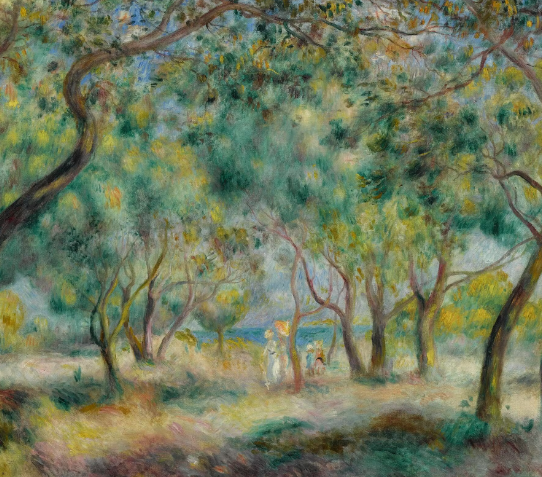
Pierre-Auguste Renoir, a prominent figure in the Impressionist movement, is renowned for his vibrant and emotionally charged paintings. Among his many themes, landscapes stand out as a significant aspect of his work, characterized by soft colors and gentle brush strokes that evoke a sense of tranquility and warmth.
1. The Influence of Soft Colors in Renoir’s Landscapes
Renoir’s use of soft colors is a distinctive feature that sets his landscape paintings apart from those of his contemporaries. Soft yellows, blues, and soft greens dominate his canvases, creating dreamy atmospheres that transport viewers into idyllic scenes. For example, in works like “The River Seine at Chatou,” Renoir employs pastel hues that capture the interplay of sunlight and water, illustrating his keen observation of natural light.
This mastery of color not only enhances the aesthetic appeal of his landscapes but also imbues them with emotional depth. The soft palette serves to evoke feelings of nostalgia and serenity, often making the viewer feel a profound connection to nature. The subtle transition of colors creates an almost ethereal quality, inviting contemplation and tranquility.
-
- Explore color theory: Understand how warm and cool colors interact.
-
- Experiment with a limited palette to see how soft colors can harmonize.
-
- Visit art galleries to observe how different artists manipulate soft colors.
-
- Practice blending techniques with oils or watercolors to achieve softness.
2. Renowned Landscape Works to Explore
Several of Renoir’s landscape paintings illustrate his unique approach to art and color. “The House of the Suicide” is a captivating work featuring soft hues that beautifully depict a sunny outdoor scene, showcasing his talent in conveying warmth and lightness. Similarly, “The Path in the Park” highlights his ability to portray leisure and nature using light touches of color that suggest blooming flowers and leafy canopies.
Each piece not only highlights his love for nature but also his profound understanding of how to manipulate color to create mood. Importantly, studying these masterpieces allows one to appreciate the delicate layers of color and texture Renoir employed to evoke emotion. By examining these works closely, viewers can gain insights into the nuances of color application and composition.
-
- Take time to analyze famous works: Look closely at color, brush strokes, and composition.
-
- Read art critiques or biographies about Renoir’s approach to landscape painting.
-
- Attend art workshops focusing on Impressionism for practical experience.
-
- Join online discussions or forums about Renoir and share insights with fellow art enthusiasts.
3. Capturing the Essence of Nature: Techniques to Learn
Renoir excelled not just in color application, but also in his technique for capturing nature’s essence. One of Renoir’s standout techniques was using loose brushwork to convey the movement within a scene, such as gentle breezes rustling through leaves or the reflections shimmering on water. By using pure, vibrant colors without extensive mixing, he retained the brightness that is characteristic of natural light.
This spontaneous and expressive style can inspire contemporary artists to venture into exploring their interpretations of landscape painting. Techniques such as layering and leveraging light versus shadow help to develop depth and realism in artworks. For those wishing to follow in Renoir’s footsteps, incorporating these techniques can yield beautiful results when painting from nature.
-
- Practice painting en plein air to capture live scenes and natural light.
-
- Experiment with various brush sizes and strokes to find your unique style.
-
- Focus on directly applying paint to the canvas instead of overmixing.
-
- Establish a routine that emphasizes regular practice to improve your skills.
Renoir’s landscape paintings are more than mere depictions of nature; they invite viewers to explore the emotional resonance of soft colors and the beauty of the natural world. His ability to translate light, color, and motion continues to inspire artists and art lovers alike. Embrace your creative journey by experimenting with color and technique, and perhaps capture your vision of a serene landscape.