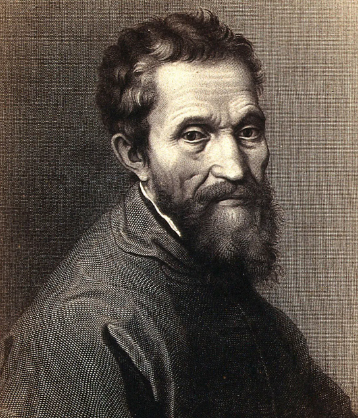
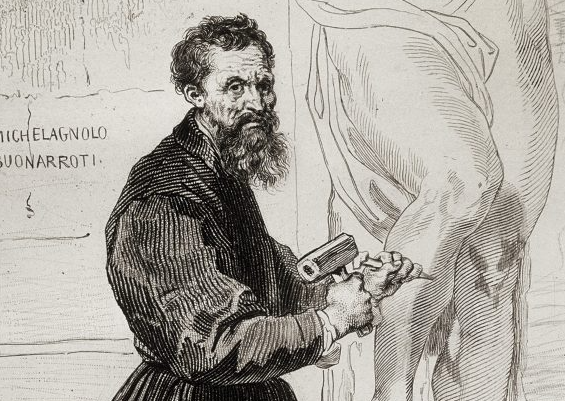
In the history of Renaissance sculpture, Michelangelo’s David has almost become the representative image of the “ideal human body” and Florentine art. Understanding this work through the lens of David, the artist requires not only focusing on the statue itself, but also understanding how Michelangelo reinterpreted the biblical David, and how he connected the figure’s physical structure, psychological state, and urban politics through a large marble slab. Completed between 1501 and 1504, David is an indispensable core work in the study of early, mature Michelangelo statues.
1. Why did Michelangelo choose David before the battle?
The story of David defeating Goliath was not an unfamiliar theme in the Renaissance. Donatello and Verrocchio had previously created statues of David, usually depicting David after his victory, with Goliath’s head visible at his feet.
Michelangelo, however, chose a completely different point in time. He did not sculpt the result of the battle, but rather the moment David prepared to fight. Goliath is not visible in the statue, and David does not make any violent movements. He stands upright, head turned to one side, brow slightly furrowed, left hand gripping the sling near his shoulder, right hand hanging naturally. It is this restrained posture that creates a palpable psychological tension—danger has not yet arrived, but David is already prepared.
2. Why does David’s body possess such a powerful presence?
David employs a typical contrapposto, a standing posture with opposing weight. The body weight rests primarily on the right leg, while the left leg is relatively relaxed, resulting in subtle variations in the pelvis, shoulders, and torso. This posture originates from the ancient Greek and Roman traditions of human sculpture, but Michelangelo further emphasized the muscles, bones, and body transitions.
The statue’s hands and head are relatively prominent, especially the right hand. While this has often been attributed to a miscalculation of proportion by the artist, considering the work’s original plan to be installed high in the Florence Cathedral, these proportional changes can also be understood as adjustments for viewing from a distance.
Furthermore, David is not a bodybuilder with exaggeratedly muscular physiques. The details of the veins on the back of the hands, knees, chest, abdomen, and neck all revolve around the figure’s current physical state, allowing the sense of power to come from structure rather than simply increasing muscle volume.
3. From Discarded Marble to David
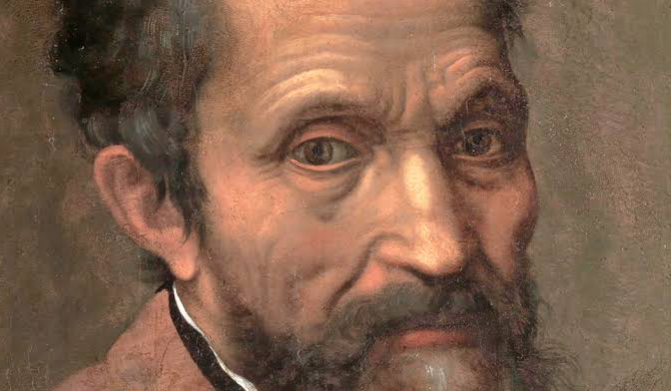
The background of David‘s creation is also unique. The marble Michelangelo used was not a new stone specifically prepared for him. This large Carrara marble had already been attempted to be worked on by other sculptors in the 15th century, but the projects were never completed, and the stone was left unfinished for many years.
In 1501, Michelangelo took over this partially worked marble. The shape of the original stone limited his freedom in designing the figure; he had to rearrange the head, limbs, and torso within the existing volume.
From this perspective, David not only showcases sculpting skills but also exemplifies Michelangelo’s ability to handle the limitations of the material. He did not modify the form by adding material but instead continuously subtracted from the stone, ultimately transforming the originally narrow marble into a complete male figure over five meters tall.
4 Why did David become a symbol of Florence?
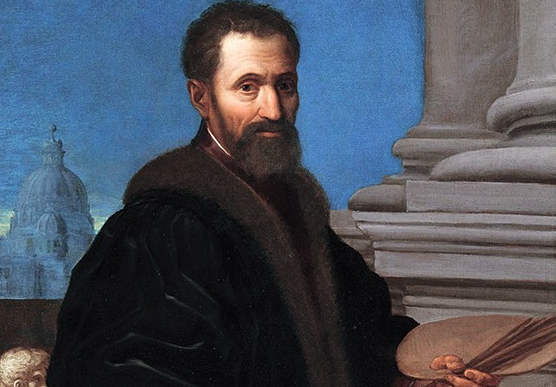
Originally planned for the Florence Cathedral, David was deemed too important for its initial architectural and decorative purpose after completion. Following discussions, the statue was ultimately placed in Piazza della Signoria near the entrance to the Palazzo Vecchio.
This location altered the work’s meaning. David, originally a young biblical hero who triumphed over a stronger adversary, gradually came to symbolize the city-state’s independence and vigilance in the face of powerful rivals within the political context of Florence.
In 1873, to minimize the damage to the original marble sculpture from the outdoors, David was moved to the Accademia Gallery in Florence. The replica seen today in front of the Palazzo Vecchio is a reproduction.
From its materials and the human form to its political symbolism, David is far more than just a famous nude male sculpture. It embodies how Michelangelo used the static human form to create tension and illustrates how Renaissance sculpture entered real urban spaces, acquiring new meanings beyond the religious narrative itself. For this reason, David remains one of the most important works for understanding Michelangelo’s sculptural art.