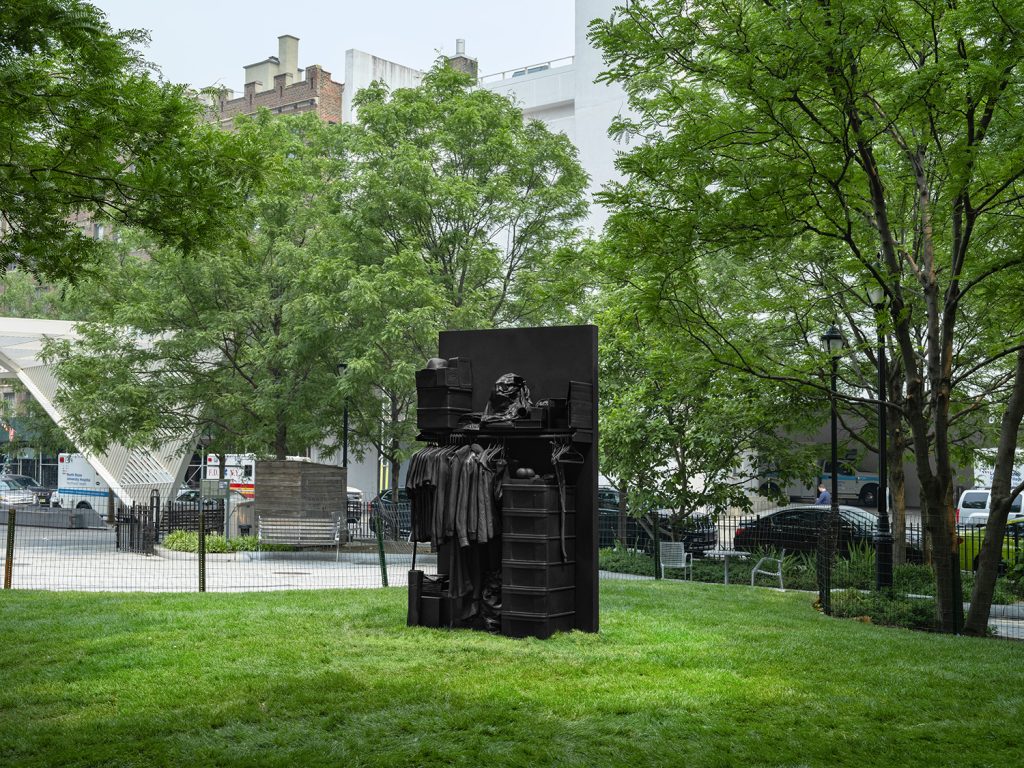
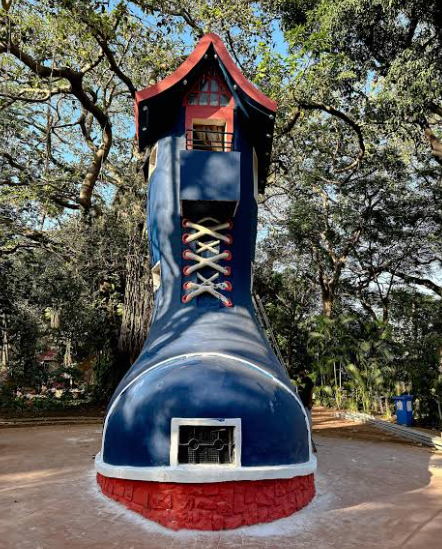
Shoes are among the most common household items, but in artistic creation, they represent more than just their function of wearing. Footwear is closely related to the human body, identity, profession, gender, consumer culture, and personal memories, and is therefore often transformed by artists into sculptures, installations, and public art works. A shoe statue typically refers to a three-dimensional artwork based on a shoe, which can maintain the proportions of a real shoe or, through enlargement, deformation, or recombination, give familiar objects new visual meaning.
Unlike ordinary footwear products, shoe sculptures do not need to consider the comfort of actual wear. Creators can freely change the structure of the heel, sole, and upper, making the work emphasize contour, volume, and spatial relationships. From delicate small ornaments to large outdoor installations, shoe statues have become a unique form connecting fashion design and sculptural art.
Why Can Shoes Become a Sculptural Subject?
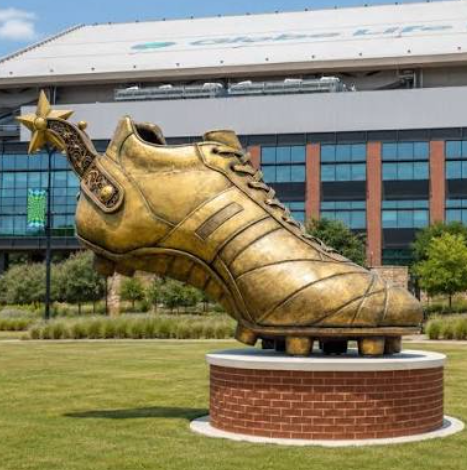
The shape of shoes is closely related to human activity. Even without a person in the artwork, a shoe can evoke images of walking, standing, traveling, or an absent wearer in the viewer’s mind. The wear and tear on old shoes can suggest time and experience, while elegant dress shoes easily evoke images of status, ceremony, or specific occasions.
From a stylistic perspective, shoes themselves possess a complete sculptural structure. The toe guides the visual direction, the upper forms the main volume, the sole provides horizontal support, and the heel controls the overall center of gravity. Artists can retain these basic structures or exaggerate certain parts. For example, they can elongate the heel, open the upper, or create an effect similar to an architectural cantilever.
This familiar yet easily changeable form provides ample interpretive space for artistic creation.
Visual Characteristics of High Heel Shoe Statues

Among different footwear styles, high heels are particularly well-suited for transformation into sculptures. High heel shoe statues typically retain the upward arch, sloping sole, and prominent heel, giving the work a strong sense of direction. Even when the sculpture is still, its upward curves can still generate a light, extended, or unstable visual tension.
The form of high heel shoe sculptures is not limited to realistic reproduction. Some works accurately depict the proportions of the shoe’s upper, laces, and heel, approaching the scale of a real shoe; others simplify the upper, retaining only the most recognizable outline. Heels can also be designed as plants, figures, geometric frames, or abstract curves, allowing for a freer sculptural language.
When high heels are magnified to near human or architectural scale, the normally everyday object becomes unfamiliar. Viewers no longer consider whether it’s suitable for wearing, but focus more on its structure, materials, and viewing angle.
How Materials Influence the Expression of Shoe Sculptures
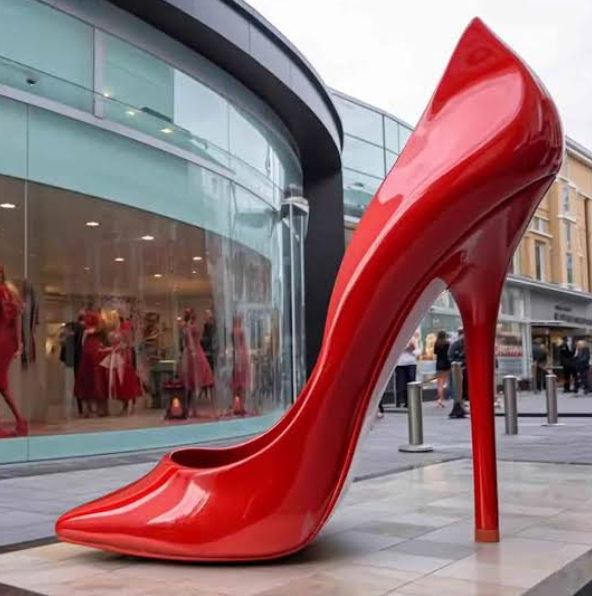
Shoe sculptures can be made using a variety of materials, each altering the structure and artistic character of the work. Bronze is suitable for expressing a heavy, stable volume and also preserves the texture, folds, and decorative details of the shoe upper. Stainless steel can create clear, modern outlines, suitable for geometric or large-scale public art pieces.
Fiberglass is relatively lightweight, easy to mold complex curved surfaces, and often used in exhibitions, shopping mall displays, and brand events. Wood, ceramics, resin, and recycled shoe materials are more suitable for smaller works or experimental creations. Some artists even use old shoes directly in combination, exploring consumption, identity, and social experience through wear patterns, different sizes, and styles.
Materials should not merely be a technical means of achieving form. Ideally, shoe sculptures connect the material with the theme, allowing viewers to understand the work’s meaning through its surface, weight, and structure.
Application of Shoe Statue in Art Spaces
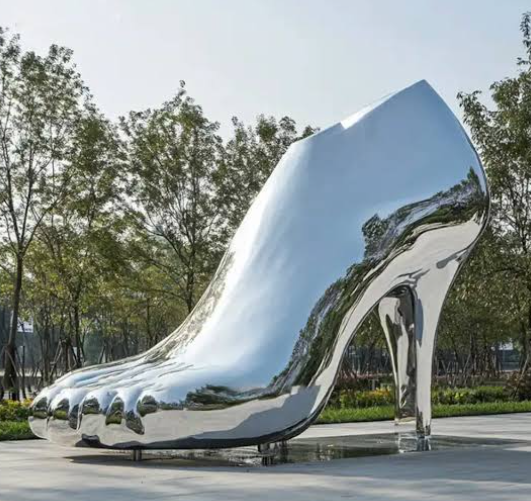
Shoe sculptures can appear in art galleries, fashion exhibitions, commercial spaces, and urban public areas. Smaller works are better suited for close viewing, allowing viewers to observe the texture of the shoe and the details of its construction; larger works establish a relationship with architecture, plazas, and crowds, becoming a visual focal point in the space.
In public art, the advantage of footwear is its high recognizability. Viewers typically do not need a professional art background to quickly understand the basic image of the work. At the same time, shoes possess rich cultural connotations, which can further spark discussions about the body, labor, fashion, identity, and consumption.
In commercial spaces, shoe sculptures are also frequently used in fashion exhibitions, footwear brand events, and window displays. However, works of artistic value should not rely solely on exaggerated size to attract attention; they also need to establish a clear relationship between proportion, materials, and spatial placement.
From Everyday Objects to Artistic Symbols
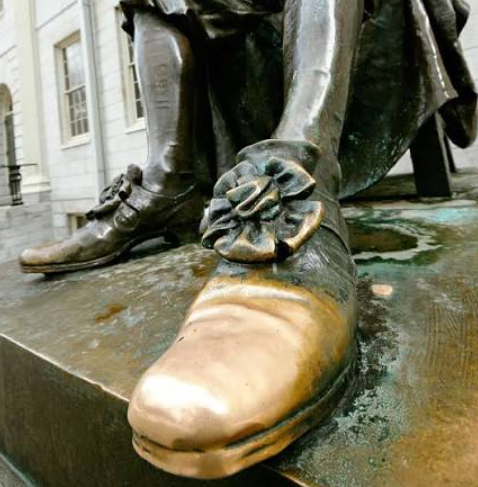
The value of a shoe statue lies not in simply replicating a shoe, but in changing the way people view everyday objects. When shoes are detached from the human body, lose their functional purpose, and enter art spaces, their shape and cultural meaning become more prominent.
A shoe sculpture can record personal experiences and discuss social identity; it can showcase the structural beauty of fashion design and reflect on consumption and popular culture. From ordinary flat shoes to large high-heeled shoe sculptures, the form of footwear can always shift between function and symbolism.
It is this openness that makes shoes a subject with enduring vitality in contemporary sculpture. They are closely connected to life experiences and can be reshaped into artistic images worthy of viewing and reflection through proportion, materials, and spatial relationships.