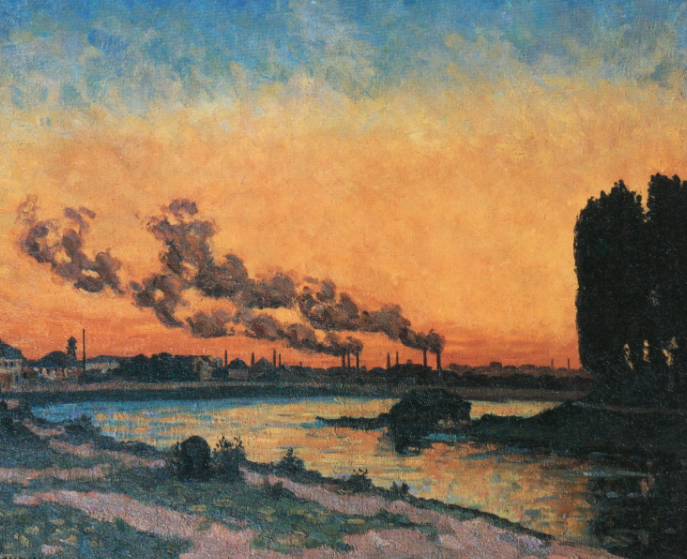
Armand Guillaumin, a pivotal figure in the Impressionist movement, left a legacy through his vibrant landscapes that capture light and color in extraordinary ways. Although often overshadowed by contemporaries such as Monet and Renoir, Guillaumin’s work exhibits a unique flare that has drawn growing appreciation from art lovers and historians alike.
1. The Evolution of Guillaumin’s Style
Guillaumin’s artistic journey began in the late 19th century, during a time when Impressionism was just starting to take shape. Initially inspired by the natural beauty surrounding him, he focused on creating works that highlighted the effects of light and atmosphere on his subjects. Over the years, his style evolved significantly, incorporating bolder colors and more dynamic compositions, ultimately setting him apart from his peers.
One of his standout works, “The Seine at Chatou,” showcases how Guillaumin harnessed the power of color to evoke emotion and intensity. The use of vivid blues and greens captures the essence of the river, while his brushwork brings movement to the scene, exemplifying his mastery of light. His unique ability to blend realistic scenes with emotional resonance has made his landscapes not just beautiful, but profoundly impactful.
-
- Study the evolution of Guillaumin’s technique by examining his various works.
-
- Compare his color palette with that of other Impressionists to appreciate his uniqueness.
-
- Try painting a landscape using bold colors to understand his approach.
-
- Visit exhibitions or museums showcasing his work for a firsthand experience.
2. Guillaumin and Color Psychology in Landscapes
Guillaumin’s innovative use of color has significant psychological implications, altering how viewers perceive landscapes. Colors convey emotions and moods, and Guillaumin was adept in utilizing warm hues to evoke feelings of joy and serenity. For example, his work “Boulevard de Clichy” is drenched in yellows and oranges that radiate warmth and energy, sparking a sense of liveliness in the viewer.
By combining complementary colors, Guillaumin enhanced visual tension and harmony in his landscapes. This technique not only captivates the eye but also immerses the viewer in a sensory experience. Each brushstroke serves a purpose, guiding the viewer’s emotional journey through the painting. Through studying his color combinations, one can gain insight into the broader implications that color has on perception.
-
- Experiment with color mixing to see how different shades impact emotion.
-
- Analyze how Guillaumin uses color in relation to light and shadow.
-
- Create a color wheel inspired by Guillaumin’s palettes.
-
- Practice painting landscapes focusing on emotional impacts of colors.
3. The Influence of Light in Guillaumin’s Work
Light is a fundamental element in Guillaumin’s landscape paintings, transforming ordinary scenes into extraordinary visual experiences. His technique involved capturing natural light at various times of day, resulting in dynamic atmospheres. The play of light on water and through trees in pieces like “The Seine at Argenteuil” dazzle the viewer, drawing them into the moment.
Guillaumin often ventured outdoors to paint en plein air, a practice that allowed him to observe the shifting qualities of light firsthand. This direct experience informed his brushwork and use of color, enabling him to capture fleeting moments of beauty. As a viewer, understanding Guillaumin’s relationship with light reveals how significant it is for capturing nature’s essence effectively.
-
- Practice en plein air painting to connect with nature and observe light changes.
-
- Study the effects of different times of day on colors in landscapes.
-
- Use photographs to analyze the impact of light in various settings.
-
- Experiment with light-themed art challenges to enhance your skills.
4. Guillaumin’s Legacy and Influence on Future Artists
Armand Guillaumin’s contributions to the Impressionist movement have profoundly influenced a whole generation of artists. His innovative exploration of color and light paved the way for modern abstract and color field artists. Future generations have drawn inspiration from his daring use of hue and dynamic composition to convey emotion and atmosphere.
Besides influencing visual art, Guillaumin’s philosophy on painting encourages budding artists to express their unique perspectives. His emphasis on emotional content over strict realism reminds us that art serves to evoke feelings and provoke thought rather than merely to depict reality. Today, many artists continue to explore themes he championed, keeping his spirit alive in their work.
-
- Explore Guillaumin’s influence on modern artists by comparing their works.
-
- Reflect on how personal expression can shape your own artistic journey.
-
- Create art inspired by Guillaumin’s unique techniques and themes.
-
- Join an art community to discuss and share insights about Impressionism.
In conclusion, Armand Guillaumin’s colorful landscapes and mastery of Impressionism continue to captivate audiences worldwide. By studying his techniques and philosophies, artists can enrich their own practices and deepen their understanding of the emotional power of color and light. Embrace this journey and find your own artistic voice, inspired by Guillaumin’s legacy.