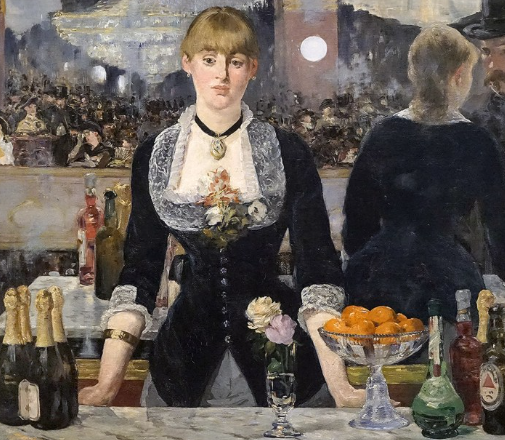
Édouard Manet, a prominent figure in the transition from Realism to Impressionism, captured the essence of urban life in his café scenes. These works vividly illustrate the dynamics of modernity in 19th-century Paris, reflecting both social interactions and the changing cultural landscape.
1. The Urban Café: A Microcosm of Society
Manet’s café scenes serve as a window into the social fabric of Paris during his time. The cafés were not merely places for refreshments; they were vibrant hubs for engaging in conversation, observing fellow patrons, and partaking in the atmosphere of leisure. In paintings like “The Café Concert,” Manet elegantly portrays individuals from varied social backgrounds, all coexisting in these lively venues. The bustling scene demonstrates how cafés were pivotal in shaping modern social life.
Moreover, the diverse clientele depicted in Manet’s works represents a shifting social hierarchy. The cafés showcased both the bourgeoisie and the working class, blurring the lines of class distinction. This democratization of space is a hallmark of urban modernity, illustrating how physical environments can foster social interactions across class barriers.
-
- Visit a local café to observe social interactions.
-
- Engage with people from different backgrounds over coffee.
-
- Reflect on your favorite café scene in artwork or literature.
-
- Document the types of conversations happening around you.
2. Artistic Techniques: Capturing Fleeting Moments
Manet’s innovative approach to painting aligns with the fleeting nature of urban life. He utilized quick brush strokes and a lighter palette to capture the spontaneity of moments spent in the café. His technique allowed him to portray subjects with a sense of immediacy and realism, inviting viewers to engage with the work on a personal level. For example, in “The Luncheon,” the palette and composition draw the eye directly to the interaction between figures, encapsulating the essence of their shared experience.
Additionally, Manet’s use of light plays a crucial role in emphasizing the café’s atmosphere. The interplay of light and shadow creates a lively ambiance, showcasing the vibrant energy often felt within these spaces. By adopting an impressionist touch, Manet revolutionized the way artists thought about capturing modern life, making it not just about the subject but the context surrounding it.
-
- Experiment with quick sketching to capture moments.
-
- Observe how light changes in public spaces throughout the day.
-
- Try painting or photographing a café scene in natural light.
-
- Study Manet’s use of color and composition for inspiration.
3. Symbolism and Social Commentary
Beyond their surface appeal, Manet’s café scenes often contain layers of social commentary. His works highlight the tension between the ideals of modernity and the realities faced by urban dwellers. In paintings like “Olympia,” he contrasts the leisurely life of café patrons with underlying themes of social inequality and objectification. This duality prompts viewers to question the authenticity of the social interactions taking place in these settings.
Moreover, Manet’s choice of subjects—often depicted with an air of detachment—serves as a critique of the superficiality of modern urban life. The characters in his café scenes may appear involved in conversation but often embody moments of isolation and disconnection. This invites reflection on our current social dynamics, encouraging audiences to ponder the ways urban environments influence human relationships.
-
- Analyze modern art for social commentary.
-
- Discuss urban life themes with friends or in a community group.
-
- Visit local galleries to observe contemporary interpretations.
-
- Write a piece reflecting your observations of modern social behavior.
4. The Legacy of Manet’s Café Scenes in Modern Art
Manet’s café scenes continue to influence contemporary artists and their approach to urban life. His ability to blend art and social commentary has paved the way for subsequent movements such as urban realism and street photography. Many modern artists draw inspiration from the café as a space of interaction, exploring themes of community, solitude, and the human experience in an urban context.
Furthermore, institutions around the world study Manet’s work in relation to modernity, showcasing his significant impact on how art reflects societal changes. By analyzing his approach, artists are encouraged to consider their own environment and the meanings embedded within everyday interactions, propelling forward a legacy that intertwines art with life.
-
- Explore exhibitions featuring urban contemporary artists.
-
- Start a personal project focusing on urban landscapes.
-
- Join a local art class to learn about modern techniques.
-
- Engage with peers to discuss Manet’s influence on current art.
In conclusion, Édouard Manet’s café scenes are more than mere representations of urban life; they capture the complexities of social interaction and modernity. Exploring these works can deepen our understanding of both art and the dynamics of contemporary society. Take your time to discover the nuances in Manet’s art and consider how these themes resonate in today’s urban environments.