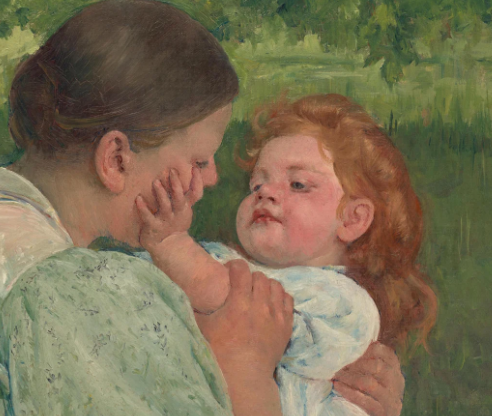
Mary Cassatt is widely celebrated for her intimate portrayals of motherhood, particularly in her series of mother and child paintings. These works not only reflect the bond between mothers and their children but also showcase Cassatt’s unique perspective as a female artist in a male-dominated art world. This blog post delves into the themes, techniques, and significance of her mother and child paintings.
1. The Themes of Maternal Bonding
One of the most prominent themes in Cassatt’s mother and child paintings is the intimate bond shared between mothers and their children. She captured these moments in various settings, from quiet home environments to playful outdoor scenes. In works like “The Bath,” we see a mother tenderly bathing her child, reflecting the nurturing aspect of motherhood and the care that goes into raising a child.
Cassatt’s portrayal of motherhood goes beyond a sentimental view; it underlines the emotional and psychological complexities of being a mother. She often depicted mothers engaged in everyday activities, suggesting that these mundane moments carry deep emotional weight. Through her art, Cassatt invites viewers to contemplate the myriad experiences and emotions involved in motherhood.
-
- Look for symbolism in the artworks, such as colors and poses.
-
- Consider the setting and environment portrayed in each piece.
-
- Reflect on how the subjects’ expressions convey emotions.
-
- Examine how these paintings resonate with your own experiences of motherhood.
2. Artistic Techniques and Style
Cassatt’s technique in her mother and child paintings is characterized by her innovative use of color, light, and composition. She employed a vibrant color palette, which enhanced the emotional resonance of her subjects. In particular, her use of soft pastels and bright colors contributed to the warmth and tenderness of mother-child interactions, inviting viewers into their private world.
Furthermore, her compositions often feature unique perspectives and angles that reflect modernist influences. Cassatt skillfully utilized patterns and textures, with fabrics and interiors depicted in detail, enriching the context of her subjects. This combination of technique and modernist aesthetics helped establish her as a distinctive voice in the Impressionist movement.
-
- Pay attention to color choices and their emotional implications.
-
- Analyze the composition and framing of each painting.
-
- Identify the influences of Impressionism in her style.
-
- Consider how technique contributes to the themes of intimacy and warmth.
3. The Legacy of Mary Cassatt’s Work
Mary Cassatt’s contributions to art extend beyond her own paintings. She played an essential role in the acceptance of women artists in the late 19th and early 20th centuries. By focusing on subjects like motherhood, she offered a fresh perspective that challenged traditional views of art. Cassatt’s influence is still felt today, as her works continue to inspire contemporary artists and the feminist art movement.
Moreover, her paintings have sparked discussions about gender roles, societal expectations, and the portrayal of women in art. The way she captured the nuances of motherhood resonates with many, making her artwork a relevant topic for study and discussion even today. Cassatt’s legacy reminds us that art can reflect and shape cultural narratives.
-
- Explore exhibitions featuring Cassatt’s work to gain deeper insights.
-
- Discuss her impact with friends or in art appreciation groups.
-
- Investigate how her themes are echoed in modern feminist art.
-
- Consider writing or creating a project inspired by her work.
4. Emotional Resonance in Mother and Child Interactions
Cassatt’s work excels at capturing the emotional depth of mother and child interactions. Whether it’s a moment of joy during play or tenderness in comforting, her paintings serve as emotional narratives. In “Mother and Child,” for example, the soft embrace and gentle gaze between the subjects create a sense of security that resonates with parents and caregivers everywhere.
Through her brushwork and the expressiveness of her subjects, Cassatt evokes feelings of warmth and nostalgia. This emotional resonance is key to understanding why her works continue to appeal to audiences. They remind us of the universal experiences of love, sacrifice, and joy that come with motherhood, bridging the gap between art and real-life emotional experiences.
-
- Reflect on the emotions that the paintings evoke in you personally.
-
- Share your own experiences of parenthood or caregiving with others.
-
- Engage in discussions about emotional connections in art.
-
- Consider keeping a journal of your thoughts after viewing her art.
5. The Impact of Society on Cassatt’s Art
The societal context of Mary Cassatt’s life significantly influenced her artistic choices. Living in a time when women’s roles were largely defined by domesticity, Cassatt chose to focus on the lives of women and mothers, providing a counter-narrative to the prevailing themes of her contemporaries. Her choice to spotlight domestic scenes not only celebrated women’s experiences but also subtly critiqued societal expectations.
By choosing motherhood as her main subject, Cassatt highlighted the importance of women’s contributions to family and society. Her work invites viewers to reconsider the perceptions surrounding domestic roles. The significance of her work is amplified when viewed in light of the suffragette movements and early feminist ideals, reinforcing the message that women’s lives and experiences deserve recognition and celebration.
-
- Research the social conditions of women in the late 19th century.
-
- Consider how societal norms influenced her subject matter.
-
- Discuss the connection between art and societal expectations.
-
- Encourage conversations about women’s roles in art history.
Mary Cassatt’s mother and child paintings offer a rich tapestry of themes exploring the emotional complexities of motherhood. By understanding her techniques and the societal influences that shaped her art, we can gain a deeper appreciation of her legacy and its relevance today. Whether you are an art enthusiast or simply intrigued by the themes of motherhood, exploring Cassatt’s work might inspire you to reflect on your own relationships and experiences. Engaging with art offers a pathway to understanding ourselves and our connections better; don’t hesitate to delve into this compelling world!