Claude Monet, the quintessential Impressionist painter, is celebrated for his luminous seascapes and coastal scenes that capture the ever-changing light of nature. His work revolutionized how landscapes could be depicted, bringing a new vibrancy and emotional resonance to the genre. In this post, we will explore Monet’s seascapes and the influence of coastal Impressionism on his artistry.
1. The Essence of Monet’s Seascapes
Monet’s seascapes are characterized by an intense exploration of light and color, showing his fascination with how the sun affects the view of the water and sky. Works like “Impression, Sunrise” demonstrate his unique approach to capturing fleeting moments, employing quick brush strokes and vivid palettes that evoke the atmospheric qualities of the sea. His time spent along the French coast, especially in places like Étretat and Normandy, played a crucial role in the development of his style.
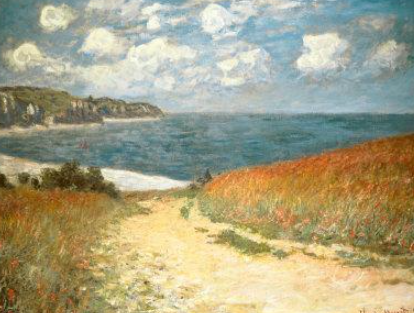
These works often feature the juxtaposition of the ocean’s movement against solid coastal features. Monet had a keen eye for detail, allowing him to portray different times of day and seasons through subtle variations in color and form. His innovative technique has significantly influenced contemporary landscape painting, emphasizing the emotional aspect of nature as much as the physical.
-
- Visit Monet’s key locations, such as Étretat or the French Riviera.
-
- Study works like “The Cliff Walk at Pourville” to appreciate his use of color.
-
- Experiment with your own seascapes using light and shadow techniques.
-
- Attend local exhibits that showcase Impressionistic works for deeper insights.
2. Coastal Impressionism: Techniques and Materials
Monet’s approach to coastal Impressionism involved a unique palette and stroke techniques that vividly captured the essence of the coast. He frequently used colors directly from the tube, applying them quickly and in thick impasto layers. This technique created an energetic surface that mirrored the dynamism of the sea and sky. By working outdoors (plein air), Monet could interact intimately with natural light, resulting in a fresh perspective on his coastal subjects.
Monet often depicted the same scene at different times to study variations in light and weather. His series of paintings, such as “The Rouen Cathedral” series, exemplifies this approach, highlighting how a seemingly constant subject could transform dramatically. These repeated studies encouraged artists to embrace the transient beauty of nature, fostering a style that remains distinct and beloved in artistic circles.
-
- Try plein air painting to connect more deeply with your subjects.
-
- Invest in good quality, vibrant paints to experience the effects Monet achieved.
-
- Utilize palette knives and brushes for creating texture in your work.
-
- Observe the changing light at various times of the day for inspiration.
3. The Legacy of Monet’s Coastal Works
Monet’s mastery of seascapes greatly contributed to the recognition of Impressionism as a vital art movement. His ability to capture atmospheric changes had a lasting influence on subsequent artists, motivating them to experiment with light, color, and subject matter. Notably, later artists, such as the American Impressionists, adopted similar techniques, pushing boundaries further and exploring individual interpretations of nature.
Today, Monet’s coastal paintings continue to inspire admiration and curiosity from art lovers around the world. Major exhibitions often showcase his works, inviting audiences to experience the emotive power ingrained in his seascapes. As a result, his artworks serve not just as paintings but also as historical records of the evolving relationship between humanity and the environment.
-
- Read biographies and critiques of Monet’s works for a deeper understanding.
-
- Join art classes focusing on Impressionism to develop your own style.
-
- Follow modern adaptations of Impressionism in contemporary art.
-
- Visit museums that have dedicated sections to Impressionist works.
In conclusion, Claude Monet’s seascapes and embrace of coastal Impressionism exemplify a transformative journey in the art world, capturing the subtleties of light and emotion in nature. Engaging with these concepts can enrich your appreciation of art and potentially inspire your own creative endeavors.