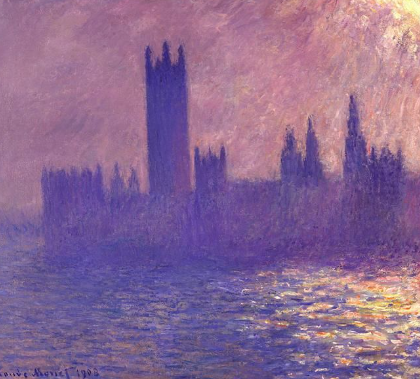
Claude Monet, a pivotal figure in the Impressionist movement, spent a notable time painting in London during the late 19th century. His London paintings are celebrated not just for their beauty but also for the remarkable atmospheric effects that encapsulate the city’s changing weather and light.
1. The Significance of London in Monet’s Work
Monet visited London multiple times, particularly in the years 1899 to 1901, attracted by its foggy weather and dynamic lighting. Unlike his earlier works, which were primarily focused on the serene French countryside, his London paintings reveal an interest in urban life and its effects on nature. The bridges, buildings, and Thames River became his subjects, transformed by the ephemeral quality of light unique to the city.
One notable example is his series of paintings of the Houses of Parliament, where he captured the ever-changing atmospheric conditions. These works illustrate not only the structures but also how the light and haze can cloak and reveal them simultaneously. This focus on atmosphere marked a significant evolution in his artistic style, blending realism with impressionist techniques.
-
- Explore Monet’s London paintings at local galleries or exhibitions.
-
- Research the historical context behind his visits to London.
-
- Consider how urban environments differ from rural subjects in art.
-
- Experiment with your own paintings, focusing on effects of light.
2. Atmospheric Effects in Monet’s London Paintings
Monet’s innovative approach to capturing atmospheric effects involved a keen observation of light and color. His use of broken brush strokes and a vibrant palette allowed him to represent the transient qualities of fog and reflection on water. In paintings such as “The Bridge at Argenteuil,” Monet portrays how light interacts with clouds and fog, creating layers of color that evoke a sense of movement and depth.
The atmospheric effects—whether it’s the soft haze of a morning fog or the vibrant glow of sunset—are critical to understanding Monet’s impressionistic style. For instance, he often used complementary colors to create a sense of vibrancy, allowing the eye to blend the hues, which makes the painted scene feel alive and dynamic. This technique not only enhances the visual appeal but also mirrors the moods of the changing environment.
-
- Pay attention to how light changes throughout the day.
-
- Document different weather conditions and their effects on views.
-
- Try to mix your colors to find harmonious combinations.
-
- Study photographs of famous landmarks under various atmospheric conditions.
3. Techniques Monet Employed to Capture Light
Monet’s mastery extended beyond subject matter to innovative techniques that profoundly enhanced his ability to capture light. He utilized the “plein air” painting technique, which involved painting outdoors to observe the changing light first-hand. This practice allowed him to react instinctively to atmospheric conditions, capturing the essence of a moment in time.
One of his techniques was “flicking” or “dabbing” the paint onto the canvas, which led to the textured appearance for which he is known. This method allowed him to layer colors quickly, creating an almost shimmering effect that mimicked the flicker of light on water. Understanding these techniques provides insight into how artists can manipulate elements to convey emotion and atmosphere.
-
- Try plein air painting to experience light firsthand.
-
- Practice flicking or dabbing techniques using various brushes.
-
- Experiment by painting under different natural light conditions.
-
- Analyze Monet’s lighting in detailed print reproductions.
4. The Influence of Weather on Composition
The ever-changing London weather became a central element in Monet’s compositions. The fog, rain, and light all contributed to a unique atmosphere that not only transformed the appearance of his subjects but also the emotions they conveyed. Monet often sought to depict the same scene under different weather conditions, showcasing the profound effects of climate on perception.
By painting the same subjects in varying conditions, such as bright sunlight and dense fog, Monet illustrated how temporal factors influence our understanding of a scene. This exploration creates a conversation between the viewer and the painting, inviting them to experience the emotional essence of the weather as much as the physical representation.
-
- Observe how changes in weather affect local landscapes.
-
- Photograph your environment during different seasons.
-
- Note how the mood of a place shifts under various climatic conditions.
-
- Challenge yourself to paint the same scene multiple times in different weather.
In conclusion, Claude Monet’s London paintings stand as masterpieces of atmospheric representation. They invite viewers to appreciate the delicate interplay between light, color, and weather in a city that inspired an iconic artist. Whether you’re an art enthusiast or a budding painter, take the time to explore these techniques and allow the ethereal qualities of atmosphere to influence your own work.