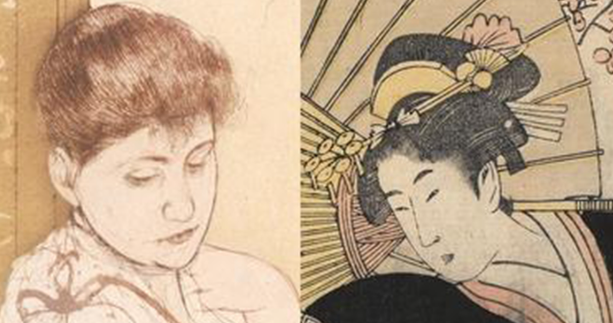
Mary Cassatt was an American painter who made significant contributions to the Impressionist movement, largely influenced by her fascination with Japanese art. This blog post will explore the ways in which Japanese prints shaped her work and the broader context of Impressionism.
1. The Impact of Japanese Prints on Cassatt’s Art
Japanese woodblock prints, known as Ukiyo-e, were introduced to the Western world in the mid-19th century, coinciding with the rise of Impressionism. Artists like Cassatt were profoundly inspired by the vibrant colors and flat perspectives found in these prints. The influence is particularly evident in her subject matter and composition, where intimate scenes of domestic life mirror the tranquility found in Japanese art.
One of Cassatt’s hallmark techniques borrowed from Japanese prints is the use of asymmetrical compositions. By positioning her subjects off-center and employing bold, clear outlines, she created depth and movement that breathe life into her canvases. Works like “The Child’s Bath” epitomize this integration, showcasing a serene, maternal connection framed within simple, elegant lines reminiscent of Japanese aesthetics.
-
- Research Japan’s Ukiyo-e prints to understand the aesthetic.
-
- Experiment with asymmetrical compositions in your own artwork.
-
- Visit galleries or museums showcasing Cassatt’s work for direct observation.
-
- Incorporate vibrant colors inspired by Japanese art into your palette.
2. Themes of Intimacy and Domestic Life
Another key influence of Japanese prints on Cassatt’s work is her focus on the themes of femininity, family, and domesticity. Japanese art often depicted everyday life with a sense of calm and beauty, which Cassatt adopted in her own paintings. She portrayed women and children in tender moments, celebrating the beauty of familial bonds. This is especially observable in her paintings of mothers with children, echoing the sentiment often found in Japanese prints.
Cassatt’s choice to emphasize intimate domestic scenes not only challenges conventional subject matter in art but also invites viewers into private worlds. By capturing moments like a mother reading to her child or engaging in simple household activities, she made everyday experiences feel dramatic and poignant. Her work invites viewers to contemplate the beauty inherent in routine life, mirroring the Japanese ideal of finding beauty in the ordinary.
-
- Consider themes of domesticity when creating your artwork.
-
- Focus on capturing emotional connections in family scenes.
-
- Reflect on the everyday experiences that might resonate with viewers.
-
- Draw inspiration from your own life for authentic portrayals.
3. The Use of Color and Light
Mary Cassatt’s adoption of color and light techniques from Japanese prints notably distinguishes her work within the Impressionist movement. In many of her pieces, she uses bold, flat colors that recall the striking hues of Ukiyo-e. This approach allows her to create visual harmony, emphasizing form rather than the detailed realism found in traditional European art. She embraced the use of complementary colors and often set her subjects against vibrant backgrounds, adding depth to her compositions.
The unique treatment of light is another characteristic that links Cassatt to Japanese art. The softer, diffused light that she often depicted reflects the serene nature of Japanese aesthetics. By employing this softness, she adds an element of intimacy and warmth to her work, reminiscent of the delicacy found in Japanese prints. Her method invites a sense of stillness, making her paintings almost meditative in their quality.
-
- Experiment with bold, flat colors to create impact in your pieces.
-
- Observe how light interacts with your subjects and environment.
-
- Study how color relationships can evoke specific emotions.
-
- Incorporate softer, diffused lighting in your work for a gentle feel.
4. The Cultural Exchange Between East and West
The rise of Japonisme in the late 19th century played a crucial role in the Impressionist movement, with Cassatt at the forefront of this cultural dialogue. This exchange altered the course of Western art, introducing new aesthetics that would redefine traditional approaches. Cassatt not only embraced these influences but also infused her cultural background into her work, allowing for a unique synthesis of Eastern and Western art practices.
This cultural crossover expanded the range of topics and techniques in Impressionism. Cassatt’s respectful exploration of Japanese themes encouraged other artists to similarly engage with non-Western influences. Likewise, her works became a bridge for understanding, promoting an appreciation of diversity in artistic expression. This fluid incorporation of different artistic traditions solidified the canvas as a space for cross-cultural dialogue.
-
- Explore non-Western art forms and their influences on local styles.
-
- Engage with cultural traditions as a source of inspiration.
-
- Attend exhibitions celebrating cross-cultural artistic exchanges.
-
- Encourage broader perspectives in your artistic community.
Mary Cassatt’s engagement with Japanese prints brought a fresh perspective to the Impressionist movement. Her innovative approach blended Eastern aesthetics with Western themes, creating timeless works that invite appreciation and reflection. By exploring these influences in your own art, you, too, can discover a unique voice that resonates across cultures.