Gustave Caillebotte, a lesser-known figure among the Impressionists, carved a significant niche in the depiction of urban life and Parisian scenes. His works showcase not only the beauty of Paris but also the intricacies of everyday life during the late 19th century.
1. Caillebotte’s Unique Perspective
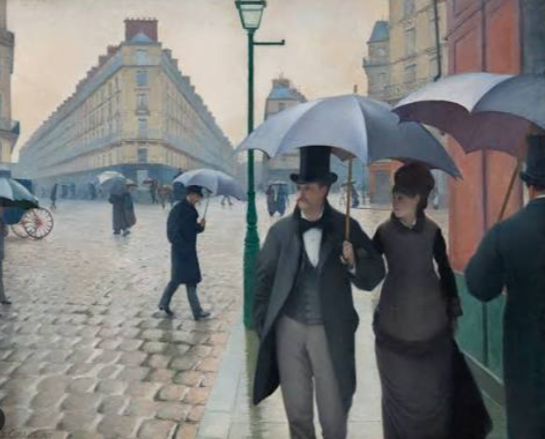
Caillebotte’s artistic style sets him apart from his contemporaries. Employing a realistic approach, he often used unusual perspectives that drew viewers into the scene, creating a sense of immediacy and engagement. Works like “Paris Street; Rainy Day” engage the viewer with vivid detail and striking angles, capturing the hustle and bustle of Paris while emphasizing the emotional atmosphere of the city.
- Explore Caillebotte’s works for unique perspectives on everyday life.
- Analyze how his compositions draw you into the scenes.
- Note his use of light and shadow for emotional impact.
- Consider the emotional undertones in urban subjects.
2. The Influence of the Urban Environment
The transformation of Paris during the Haussmannian era heavily influenced Caillebotte’s artistry. The city underwent extensive modernization, with wide boulevards, parks, and modern architecture emerging, which Caillebotte captured beautifully. His paintings reflect this evolving landscape, portraying not only the buildings but also the routines of city inhabitants.
In works such as “The Floor Scrapers,” Caillebotte showcases ordinary laborers, depicting the human aspect of industrialization. This focus on the working class adds depth and narrative to his paintings, emphasizing the societal changes that accompanied modernization. Caillebotte’s keen observation allows viewers to appreciate the details of urban life and the complexities inherent in it.
- Research the architectural changes in Paris during Caillebotte’s time.
- Examine how these changes are reflected in his work.
- Think about the roles of different social classes in urban settings.
- Consider how Caillebotte’s themes relate to today’s urban landscape.
3. Technique and Innovations in Impressionism
Caillebotte’s technical mastery and innovative methods greatly contributed to the Impressionist movement. His brushwork combined detailed realism with the loose strokes typical of Impressionism. This dual approach enables viewers to savor both the finer details of a subject while also appreciating the movement and dynamic energy of the scene.
Moreover, Caillebotte’s experiments with perspective and composition helped to redefine what Impressionist painting could represent. He often played with cropping, as seen in “The Parisian Street; Rainy Day,” where figures at the edges of the canvas invite viewers to consider a larger world outside the painted scene. This technique has encouraged countless artists to think beyond traditional compositions and explore new narrative possibilities.
- Practice different painting techniques to find your own style.
- Experiment with perspectives in your artworks.
- Analyze how brushwork influences the mood of a painting.
- Explore how cropping can create a sense of ongoing narrative.
Gustave Caillebotte’s contributions to the Impressionist movement and his exploration of urban Paris offer a fascinating lens through which to understand 19th-century France. His unique approach to perspective, focus on realism, and innovative techniques redefine the narratives that can be told through art, inspiring generations of artists and art-lovers alike.
For a deeper appreciation of Caillebotte’s work, consider visiting galleries that exhibit his paintings or reading books on Impressionism. Engaging with art actively can broaden your perspectives and deepen your understanding of these complex themes.