Equestrian horse statues are an important art form combining human and animal sculpture. They typically feature historical figures riding horses, using the rider’s posture, the horse’s movement, and the overall composition to depict specific historical events or figures. From ancient Roman emperors’ bronze statues to Renaissance military commanders’ monuments, equestrian sculpture has gradually become an important category of public art and commemorative sculpture. It tests the sculptor’s understanding of human and equine anatomy and reflects the sculptural techniques and aesthetic characteristics of different eras.
1. Historical Origins and Artistic Development of Equestrian Sculpture
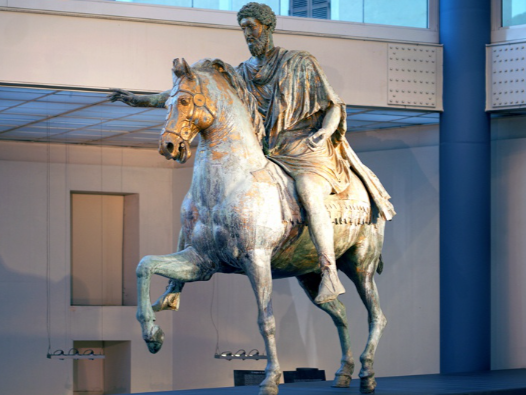
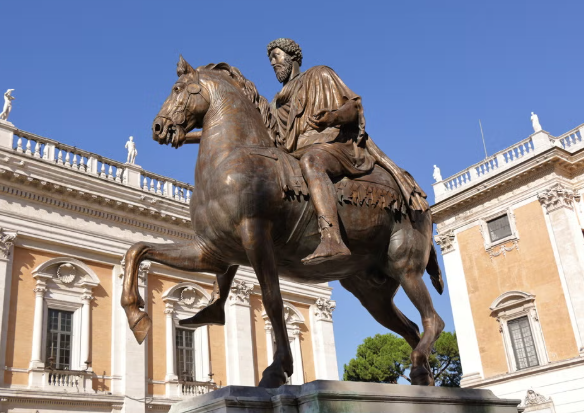
Equestrian sculpture has a long history of development in ancient civilizations, with one of the most famous early works being the Roman Equestrian Statue of Marcus Aurelius.
This bronze sculpture, created in the 2nd century AD, depicts a Roman emperor on horseback. The figure’s right hand is outstretched, and the horse raises one foreleg, creating a stable overall composition. The sculpture does not employ fierce fighting movements but rather expresses the authority of the ruler through the figure’s posture.
During the Renaissance, Italian sculptor Donatello created *Gattamelata*, an equestrian statue located in Padua, which continued the classical tradition of equestrian sculpture by depicting a military commander on horseback.
Subsequently, equestrian sculptures gradually appeared in European city squares, palaces, and memorial sites, and spread to the Americas and other regions, developing into different artistic styles.
2. World-Famous Equestrian Sculptures and Their Artistic Characteristics
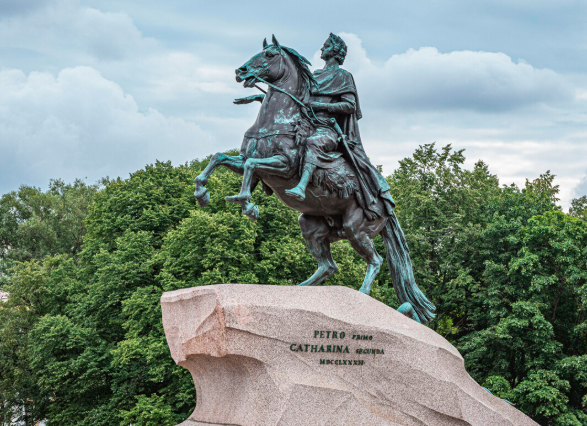
Equestrian sculptures from different historical periods show significant differences in the depiction of the figures and the dynamics of the horses.
*The Bronze Horseman*, located in St. Petersburg, Russia, was designed by sculptor Étienne Maurice Falconet to commemorate Russian Emperor Peter the Great. The horse’s forelegs are raised, and the rider’s arms are outstretched, presenting an overall dynamic of forward propulsion. The massive natural stone base further enhances the work’s visual tension.
The *Equestrian Statue of Bartolomeo Colleoni*, located in Venice, Italy, was designed by Andrea del Verrocchio. The sculpture depicts a horse striding forward, the rider upright, with a serious expression; the horse’s muscular structure and the figure’s clothing are meticulously sculpted.
In the United States, equestrian sculptures of historical figures are equally representative. For example, the Sam Houston Monument in Hermann Park, Houston, created by Italian-American sculptor Enrico Cerracchio, depicts the Texas historical figure Sam Houston on horseback in bronze.
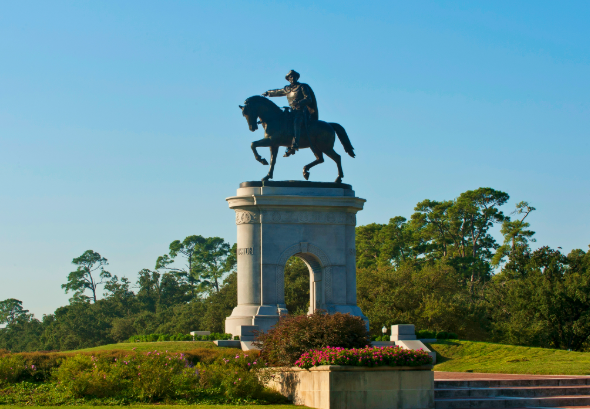
Sam Houston also has other commemorative sculptures in various forms, including colossal standing statues and portraits. By comparing these Sam Houston sculptures, one can observe the different ways the same historical figure is represented in equestrian sculptures, full-length statues, and busts.
3. The Posture of the Figure and the Horse in Equestrian Sculptures
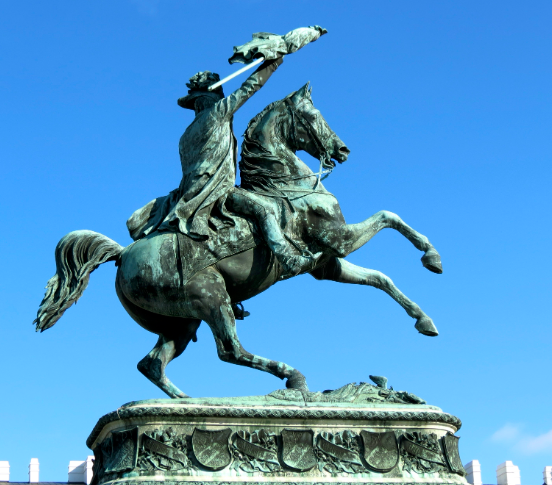
For artists, the challenge in creating equestrian sculptures lies in coordinating the structure and movement of two independent subjects.
First, there’s the anatomical structure of the horse. Sculptors need to study the horse’s head-neck proportions, chest muscles, limb joints, and center of gravity. A standing horse typically has a stable supporting structure, while a running or leaping horse requires consideration of more complex dynamic balance.
Second, there’s the relationship between the rider and the horse. The rider’s posture, leg position, arm movements, and body tilt angle all need to be coordinated with the horse’s posture. If the movements of the figure and horse lack connection, the sculpture can easily appear stiff.
Clothing is also an important detail in historical equestrian sculptures. Uniforms, capes, saddles, reins, and harnesses not only recreate the era in which the figure lived but also influence the overall outline and local layers of the work.
Different sculptors choose different forms of expression based on the figure’s status and the artistic theme. For example, a horse standing steadily is suitable for a solemn commemorative theme, while a striding or leaping horse more easily conveys a sense of movement.
4. Materials, Casting Techniques, and Public Art Value of Equestrian Sculptures
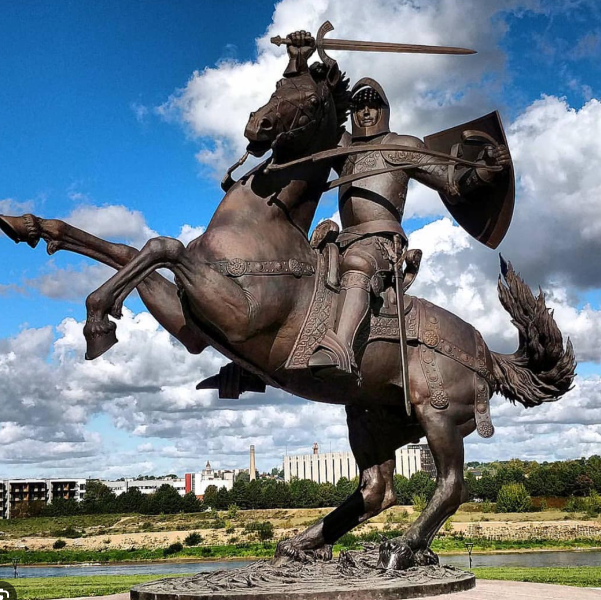
Bronze is one of the most common materials for traditional equestrian sculptures. It possesses excellent casting properties, enabling the depiction of details such as human facial features, horse muscles, mane, and clothing folds.
Large bronze equestrian sculptures are typically first made into prototypes using clay or other materials, then completed through molding, lost-wax casting, segmented welding, and surface finishing. For structurally complex works, internal support structures are also required to ensure the safety of long-term display.
Besides bronze, historical equestrian sculptures have also utilized materials such as stone. Different materials influence the sculpture’s structural design, detail representation, and maintenance methods.
In contemporary public art, equestrian sculptures remain widely present in historical squares, city parks, and around memorial buildings. They not only showcase the sculptor’s artistic abilities but also provide concrete material for the public to understand historical figures and sculptural art.
By studying Equestrian Horse Statues from different countries and periods, a deeper understanding of the connections between human sculpture, animal anatomy, metal casting, and memorial art can be achieved.