Alfred Sisley and Claude Monet are two prominent figures in the Impressionist movement, both celebrated for their captivating landscapes. While their styles share similarities, they exhibit distinct characteristics that set them apart. This exploration will highlight the differences in their approaches and artistic philosophies.
1. Use of Color and Light
One of the most striking aspects of Sisley’s landscape style is his nuanced use of color and light. Sisley often employed a softer palette, which included lighter and more subdued tones, creating a sense of tranquility and harmony in his works. For instance, paintings like “The Bridge at Villeneuve-la-Garenne” invoke calmness through gentle pastel colors that evoke warmth and intimacy.
In contrast, Monet’s approach to color and light was more dynamic and varied. His famous series, including “Water Lilies,” showcases his ability to capture the changing effects of light on water and landscape. Monet was not afraid to use vibrant colors, often juxtaposing complementary hues to create depth and movement in his works. The energy in Monet’s landscapes is palpable, driven by his quick brushstrokes that convey a sense of immediacy.
-
- Choose a color palette that reflects the mood you want to convey.
-
- Experiment with different light sources to see how they affect your work.
-
- Use soft transitions for a calming effect, similar to Sisley.
-
- Incorporate bold colors for energetic pieces, inspired by Monet.
2. Composition and Perspective
In terms of composition, Sisley typically favored more balanced and structured scenes. His landscapes often feature wide, open spaces with clear focal points, like the serene water in “The Flood at Port Marly.” His careful composition draws viewers in, inviting them to explore the natural surroundings and appreciate the beauty of the landscape.
Monet, on the other hand, embraced a more innovative and sometimes unconventional approach to perspective. He often cropped scenes or used unusual angles to create a sense of intrigue and spontaneity. For example, in “Impression, Sunrise,” the composition feels fleeting and captures a moment in time rather than a carefully constructed view. This approach allows the viewer to feel as though they are experiencing the moment alongside the artist.
-
- Consider the balance of elements when composing your landscape.
-
- Explore different angles to make your work more engaging.
-
- Use clear focal points for structured scenes like Sisley did.
-
- Experiment with cropping to create a sense of spontaneity, as Monet did.
3. Subject Matter and Themes
When examining the subject matter, Sisley often concentrated on rural scenes, focusing on the gentle beauty of nature around him. His landscapes typically depict serene rural settings, with an emphasis on the harmonious relationship between land and water. For Sisley, these scenes represented not just beauty but an emotional connection to the material world and nature’s tranquility.
Conversely, Monet’s subjects were broader and often included urban landscapes alongside natural scenes. He was fascinated by the interplay between man-made structures and nature, evident in works like “The Houses of Parliament, Sunset.” Monet’s themes often explored the effects of light and atmosphere on different landscapes, from bustling city scenes to peaceful garden views, inviting viewers into diverse experiences of nature.
-
- Select landscapes that resonate with your emotions for more impactful art.
-
- Blend natural and urban elements to explore the relationship between humanity and nature.
-
- Study compositions from both artists for inspiration on subject matter.
-
- Reflect on personal experiences with nature to develop unique themes.
4. Technique and Brushwork
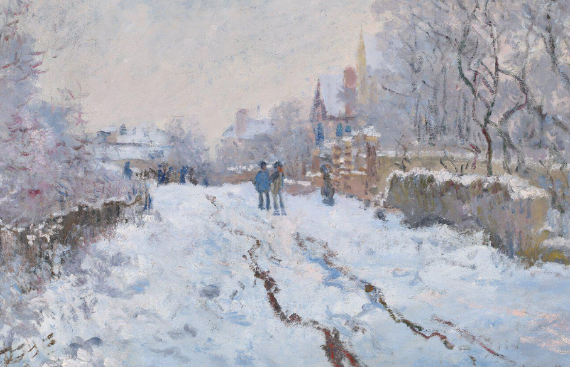
Sisley’s brushwork is characterized by meticulous attention to detail. His technique involves layering colors to create depth and texture, which often results in soft, dreamy landscapes. This careful application, seen in artworks like “Snow at Louveciennes,” emphasizes the tranquil feel of his scenes. His brushstrokes tend to be smooth and deliberate, entrancing viewers into the peaceful world he portrays.
In sharp contrast, Monet’s brushwork is instantly recognizable for its boldness and spontaneity. He often applied paint with loose, rapid strokes that capture the transient effects of light and color. This energetic application can be seen in “The Japanese Bridge,” where the vibrant colors and expressive brushwork evoke a lively interaction with the surroundings. Monet’s technique encourages a more emotional response from viewers, embedding a sense of movement within the stillness of the landscape.
-
- Practice layering colors gently to achieve Sisley’s softness.
-
- Experiment with rapid strokes for a more dynamic feel, similar to Monet.
-
- Study the effects of brushwork on mood and feeling in your artwork.
-
- Don’t hesitate to embrace spontaneity in your techniques.
In conclusion, while Alfred Sisley and Claude Monet share a common ground in the Impressionist movement, their unique styles reflect different approaches to landscapes. Exploring their methods can inspire your artistic journey, allowing you to develop your techniques and themes. Whether you’re drawn to the tranquility of Sisley’s works or the vibrancy of Monet’s, embracing these influences can enrich your creative expression.