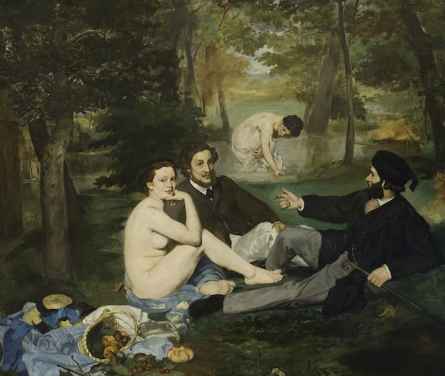
Édouard Manet’s “Luncheon on the Grass” is not just a painting; it’s a remarkable contribution to the evolution of modern art. Created in 1863, this work stirred controversy and sparked dialogues about art, society, and morality. In this blog post, we will explore the painting’s historical context, composition, and lasting impact.
1. Historical Context of the Painting
When Manet unveiled “Luncheon on the Grass,” it was met with shock and criticism. The year 1863 was significant in the world of art as it marked the inception of the Salon des Refusés, an exhibition in Paris where works rejected by the official Salon could be displayed. Manet’s painting was a part of this exhibition and served as a catalyst for the Impressionist movement, challenging traditional artistic conventions.
Additionally, the socio-political environment in France during the 1860s influenced Manet’s work. The rise of the bourgeoisie and the shifting moral landscape of post-Napoleonic France prompted artists to re-evaluate their subject matter and techniques. Manet sought to break away from the historical and religious themes prevalent at that time, leading to the bold choice of depicting contemporary life with a focus on modern subjects.
-
- Research the historical trends during the 19th century in Europe.
-
- Explore the significance of the Salon des Refusés.
-
- Understand how societal changes influenced artistic expression.
-
- Consider the reactions of critics and art lovers during that time.
2. Composition and Artistic Techniques
The composition of “Luncheon on the Grass” is striking and deliberate. Manet places a nude woman at the center of the painting, surrounded by fully clothed men, challenging the conventions of the time where nudity was often relegated to myths and allegories. This juxtaposition raises questions about gender, objectification, and the status of women in society.
Manet’s use of light and shadow is also noteworthy. The contrast between the bright foreground and the darker background draws the viewer’s eye directly to the figures. His brushwork is loose, and the colors are applied boldly, creating a sense of immediacy and realism that was innovative for its time. This technique would later influence the Impressionists and further the evolution of modern art.
-
- Analyze the placement of the figures within the painting.
-
- Discuss the significance of nudity in art history.
-
- Examine Manet’s brushwork and color palette.
-
- Identify how various elements lead the viewer’s attention.
3. Themes and Symbolism
<p”Luncheon on the Grass” serves as a rich tapestry of themes and symbolism. One of the prominent themes is the critique of contemporary society. Manet invites the viewer to interrogate the relationship between leisure, gender roles, and morality. The painting’s nude figure is not merely an object of beauty; she embodies freedom and defiance against societal norms, questioning the viewer’s perceptions of propriety.
Another important aspect is the idea of modernity. Manet’s focus on everyday life contrasts sharply with traditional artistic depictions of idyllic scenes. By placing ordinary characters in a pastoral setting, he emphasizes a new vision of reality, which resonates with the burgeoning societal changes of his time. This revolutionary idea of “art for art’s sake” laid the groundwork for future art movements, including Expressionism and Cubism.
-
- Identify the key themes present in the painting.
-
- Discuss how Manet challenges societal norms through his work.
-
- Evaluate the symbolic meanings of various elements.
-
- Consider the implications of modernity in art.
4. Lasting Impact and Legacy
The consequences of Manet’s “Luncheon on the Grass” extend far beyond its initial reception. It has inspired countless artists and movements in the years following its creation. By challenging conventional aesthetics and subject matter, Manet paved the way for bold experimentation in art. His influence can be observed in the works of later artists such as Claude Monet, Pablo Picasso, and Jackson Pollock, all of whom embraced aspects of modernism that Manet introduced.
Moreover, the painting has become an essential part of the discourse surrounding feminism in art. The portrayal of the nude woman challenges notions of the male gaze and represents a shift towards more complex representations of female subjects. Today, “Luncheon on the Grass” is celebrated not merely as a piece of art but as a cultural landmark that continues to engage discussions about gender, power, and the role of the artist.
-
- Investigate other artists influenced by Manet.
-
- Explore the evolution of feminist interpretations of the painting.
-
- Assess how modern artists draw from Manet’s themes.
-
- Reflect on the painting’s role in modern art education.
In conclusion, Édouard Manet’s “Luncheon on the Grass” remains a pivotal work that invites us to reflect on creativity, society, and gender norms. By understanding its historical context, composition, and themes, we can appreciate its impact on the art world and beyond. Whether you are an art enthusiast or a casual observer, take some time to explore this masterpiece and consider its relevance in today’s discourse.