
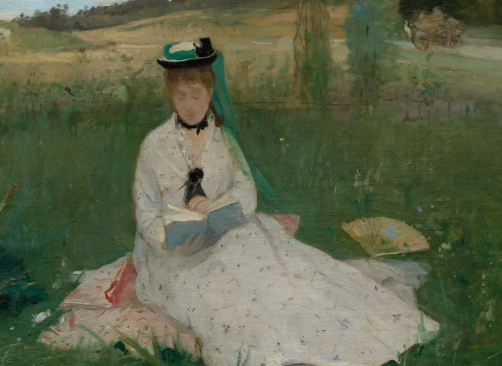
Berthe Morisot, an influential figure in the Impressionist movement, is well-known for her captivating depictions of women and their domestic lives. Through her unique style, she captures the intimate moments and subtleties of female experience in a rapidly changing society.
1. Capturing Intimacy in Domestic Spaces
Morisot’s paintings often focus on women engaged in daily activities within the home. For example, in works like “Women at Their Toilette,” she beautifully illustrates the serenity and elegance of women’s morning rituals. This not only reflects the societal expectations of women during the late 19th century but also highlights their quiet strength and agency within these domestic settings.
The use of light and shadow in her paintings enhances the sense of intimacy and realism. Morisot employs soft, fluid brushstrokes and a lighter color palette to create an ethereal atmosphere that draws the viewer into the scene. The domestic spaces she portrays often feel both personal and universal, making her work relatable across generations.
-
- Observe the use of light and color in Morisot’s works.
-
- Consider how her subjects engage in everyday tasks.
-
- Notice the emotional expressions of the women depicted.
-
- Reflect on the cultural context of the domestic setting.
2. The Role of Women in Society
Morisot’s art reflects a keen awareness of the changing roles of women during her time. As society began to recognize women as individuals with their own identities, Morisot’s paintings often capture this evolution. In her work “The Mother and the Child,” the bond between a mother and her child is presented as a powerful relationship—one that goes beyond mere domesticity to reflect love, responsibility, and emotional depth.
Her portrayal of women is nuanced; they are not merely subjects in a static environment but are fully realized characters with their own stories and emotions. The complexity of women’s lives in her paintings invites viewers to reflect on the broader implications of gender roles and societal expectations. This serves to elevate the everyday experiences of women, making them worthy of artistic representation.
-
- Explore how Morisot illustrates the dynamics of female relationships.
-
- Think about how her work comments on societal expectations of women.
-
- Consider how the role of women has evolved since her time.
-
- Engage with the emotional depth conveyed in her paintings.
3. Techniques and Brushwork: A Study of Impressionism
Morisot’s technique is a hallmark of Impressionism, characterized by quick brushstrokes and a focus on capturing the fleeting effects of light. Her method contrasts with the more detailed and meticulous approaches of her predecessors. For instance, in “The Cradle,” the soft, quick strokes create an almost dream-like quality, emphasizing the tender connection between the mother and her sleeping child.
This loose brushwork invites viewers to immerse themselves in the ambiance of the moment rather than focus on minute details. The emotional resonance of her subjects becomes more significant than perfect representation, encouraging a more personal connection between the viewer and the painting. Understanding her technique can help aspiring artists appreciate the importance of mood and emotion in their work.
-
- Analyze how brushwork affects the mood in Morisot’s paintings.
-
- Experiment with quick, loose strokes in your own art projects.
-
- Focus on capturing light and atmosphere in your paintings.
-
- Reflect on how technique influences emotional expression in art.
4. Morisot’s Influence on Modern Art
Berthe Morisot’s contributions to the art world extend far beyond her own lifetime. Her bravery in portraying women and domestic life has paved the way for future generations of female artists. Notably, her work influenced modern and contemporary art movements, where personal narratives and women’s experiences are increasingly central themes. Artists like Frida Kahlo and Georgia O’Keeffe drew inspiration from her emotional depth and focus on domesticity.
Moreover, recent exhibitions and retrospectives have revived interest in Morisot’s legacy, highlighting her innovative approaches and the importance of gender perspectives in art history. This recognition empowers contemporary artists to explore their own experiences and challenges, reminding them that their stories matter and deserve to be shared.
-
- Explore exhibitions or books that celebrate Morisot’s legacy.
-
- Consider how her themes resonate in today’s art scene.
-
- Support contemporary female artists inspired by Morisot.
-
- Engage in discussions about gender in art contexts.
In conclusion, Berthe Morisot’s paintings of women and domestic life serve as vital reflections of the complexity of female experiences in the 19th century. Her work continues to inspire and encourage viewers to appreciate the beauty and significance of everyday moments. Explore her art further and consider how it can enhance your own understanding of women’s roles both historically and in contemporary society.