Exploring Carl Andre’s Linear Abstract Sculptures
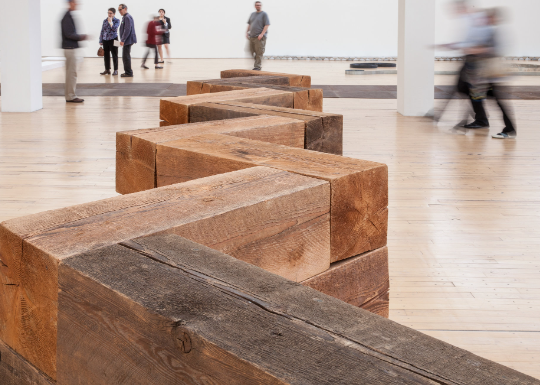
Carl Andre, an influential figure in the minimalist art movement, is best known for his linear abstract sculptures that challenge traditional notions of art and space. His works invite viewers to engage physically and mentally with their environments, rethinking the relationship between art, architecture, and everyday life. Understanding Andre’s sculptures can deepen our appreciation for modern art and its ability to transform perceptions.
1. The Essence of Minimalism in Andre’s Work
At the heart of Carl Andre’s philosophy is minimalism, which emphasizes simplicity and the reduction of elements to their core essentials. His sculptures often consist of basic geometric shapes and industrial materials like steel, wood, and concrete. This focus on minimalism is not merely an aesthetic choice but a means of stripping away excess to highlight the interplay of space and form. For Andre, the simplicity in his art invites viewers to consider their surroundings in a new light, fostering a deeper connection with the environment.
2. Interaction and Viewer Experience
One of the most intriguing aspects of Andre’s linear sculptures is their invitation for viewer interaction. Unlike traditional art pieces that are often framed and displayed on walls, Andre’s sculptures are designed for physical engagement. Audiences can walk around, over, and sometimes even on these works, blurring the lines between art and life. This tactile experience encourages spectators to actively participate, turning passive observation into an immersive encounter with the artwork.
3. Notable Works and Their Impact
Among Carl Andre’s most significant works is “Equivalent VIII,” composed of 120 firebricks arranged in a rectangular shape. This piece epitomizes Andre’s signature style—simple materials arranged in a way that provokes thought about form, function, and the value of art itself. Another famous piece, “Steel Row,” consists of linear rows of square plates, showcasing the beauty of repetition and symmetry. These works not only redefine sculptures’ physical presence but also challenge viewers to contemplate the nature of art, questioning the importance placed on uniqueness and the aura of traditional art objects.
Conclusion
Carl Andre’s linear abstract sculptures are a testament to the power of simplicity in art. By encouraging engagement and rethinking our relationships with materials and space, his works continue to inspire and provoke thought. For those interested in modern art and its interpretations, exploring Andre’s contributions offers a fresh perspective. Dive deeper into the world of minimalism, and you might find the transformative experience you’re looking for!