Praxiteles and the Classical Turn
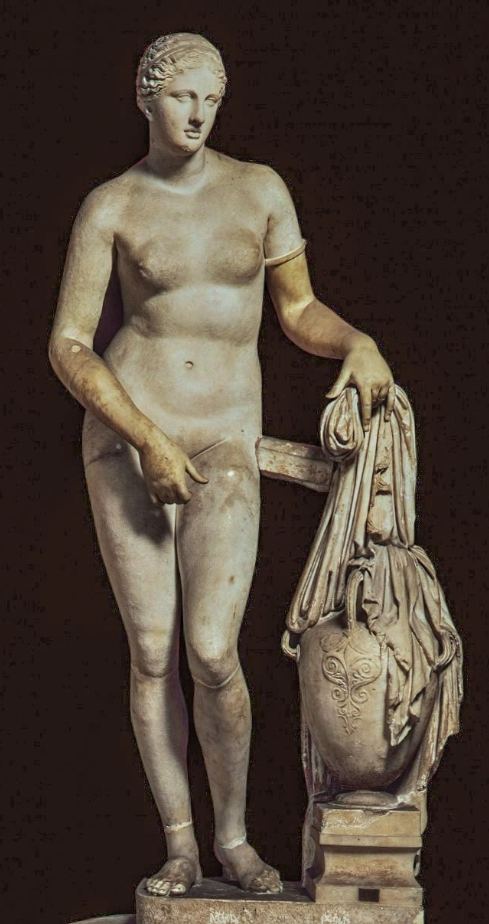
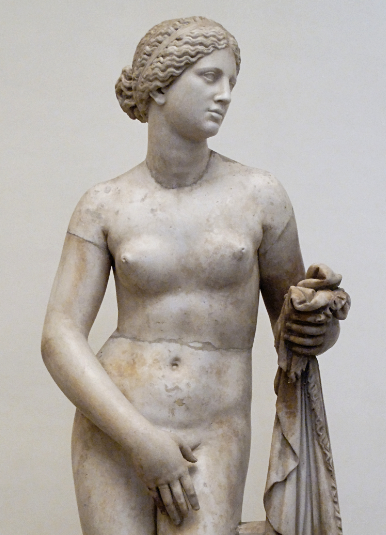
“Aphrodite by Praxiteles” usually refers to the Aphrodite of Knidos, a work considered a significant turning point in the history of ancient Greek sculpture. Sculptor Praxiteles broke with tradition by depicting the goddess in a fully nude form, a groundbreaking move at the time. Previously, deities were often depicted with solemn, veiled forms; this aphrodite goddess statue directly combined divinity with the beauty of the human body, opening a new aesthetic path.
Formal Language: Soft Curves and “Contrastive Balance”
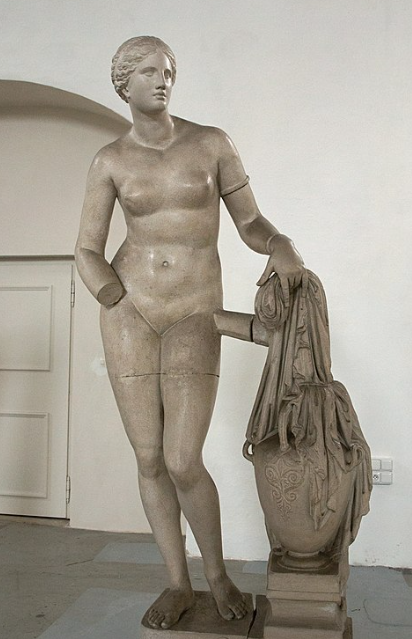
The most striking feature of this work is its soft and natural treatment of the body. Praxiteles employed the classic “contrapposto” technique, placing the body’s center of gravity on one side while the other side relaxes naturally, creating a slight S-curve. This treatment frees the sculpture from stiffness, presenting a relaxed feel close to the real human form.
In this type of aphrodite goddess statue, the body is no longer merely a display of proportions, but becomes an expression of rhythm and flow. The viewer’s gaze follows the curves naturally, extending from the head to the torso and then to the lower limbs, forming a coherent viewing experience.
“The Shy Pose”: The Relationship Between Viewer and Viewed
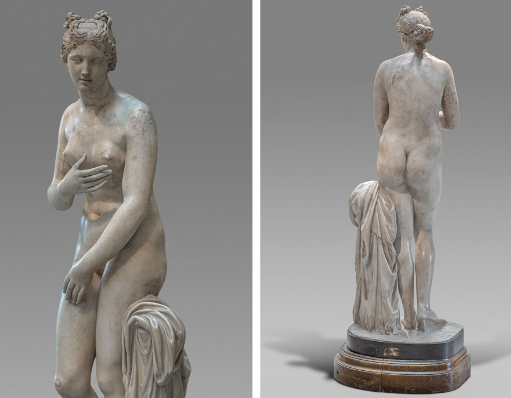
The most iconic detail of the Aphrodite of Cnidos is the goddess’s gesture of lightly covering her body with her hand. This pose is often called “Venus Pudica” (Shy Venus). It is not a simple act of concealment, but rather establishes a tension between “display” and “avoidance.”
This treatment alters the relationship between the viewer and the sculpture. The viewer is not only watching, but also being guided to contemplate: Is this moment an interrupted bath, or a deliberate pose? It is precisely this uncertainty that gives this aphrodite goddess statue a stronger narrative and psychological depth.
Influence and Continuation: From Classical to Later Paradigms
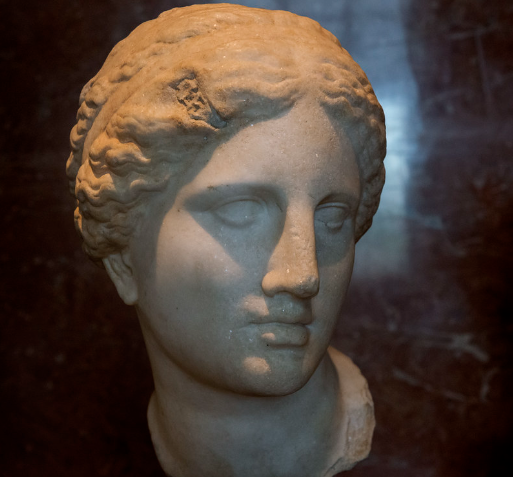
Although the original is lost, we can still feel its profound influence through Roman-era copies. From the Venus de Milo to Renaissance female nude sculptures, this type of work has been continuously referenced and reinterpreted.
“Aphrodite by Praxiteles” not only defined the standard of classical female beauty but also established an artistic method: through subtle postures, rhythms, and negative space, the sculpture conveys a continuous sense of life within its static form. This method remains an important entry point for understanding classical sculpture.
Conclusion
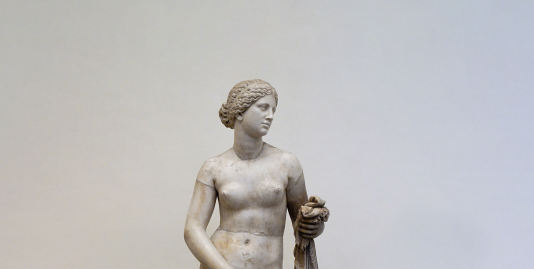
As one of the earliest fully nude goddess figures, this work represents not only a formal breakthrough but also a conceptual shift. It transformed “beauty” from a sacred symbol to a perceptible and contemplative existence, providing a foundation for the continued development of later art.