Gustave Caillebotte, often underappreciated compared to his Impressionist contemporaries, played a pivotal role in shaping art’s evolution during the late 19th century. His unique perspective and innovative approach to perspective, particularly influenced by photography, can provide valuable insights for artists and photography enthusiasts alike.
1. Caillebotte’s Unique Perspective in Painting
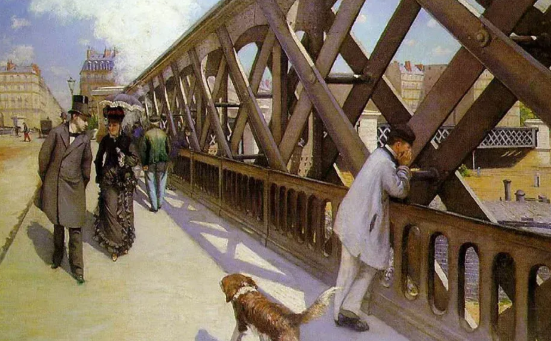
Caillebotte’s distinctive approach to perspective set him apart from his peers, combining a realistic representation of urban life with a keen sense of depth and dimension. Rather than adhering to the traditional techniques of foreground and background separation, he often employed a more complex perspective that created dynamic spatial relationships within his compositions. This technique is evident in works like “Paris Street, Rainy Day,” where the receding lines of the pavement draw viewers into the scene.
By capturing scenes as if viewed from unconventional angles, Caillebotte effectively challenged the norms of composition in art. His perspectives often transform the ordinary into something extraordinary, presenting everyday scenes — from bustling streets to quiet interiors — in a fresh light. Artists can learn the importance of experimenting with angle and viewpoint to make their work visually engaging and thought-provoking.
-
- Experiment with different angles when composing a scene.
-
- Try painting or photographing everyday activities from unexpected perspectives.
-
- Use leading lines to guide the viewer’s eye through your work.
-
- Study Caillebotte’s paintings to understand his perspective choices.
2. The Influence of Photography on Caillebotte’s Art
Caillebotte’s fascination with photography significantly influenced his painting style. Like many artists of his time, he was captivated by the arrival of photography and its ability to capture fleeting moments with great precision. He often incorporated photographic techniques, such as cropping and the use of dramatic lighting, to enhance the realism and emotion in his works. His painting “The Floor Scrapers,” for instance, reflects the framing and focus typical of a photograph, showcasing the physical labor in raw detail.
This intersection of painting and photography invites artists to consider how they can incorporate modern techniques into their practice. Caillebotte’s work suggests that embracing photographic qualities can yield fresh and impactful artwork. By merging traditional and contemporary methods, artists can open new avenues for creativity and expression.
-
- Explore photography basics to enhance your understanding of composition.
-
- Experiment with capturing candid moments through a camera before painting.
-
- Consider how lighting in photographs can influence your painting techniques.
-
- Use cropping techniques from photography to refine your compositions.
3. The Legacy of Caillebotte’s Techniques in Modern Art
The principles established by Caillebotte continue to resonate in contemporary art and photography. Modern artists and photographers often draw inspiration from his ability to blend realism with innovative perspective, pushing the boundaries of traditional mediums. Today, artists influenced by Caillebotte might incorporate digital techniques alongside conventional methods to create visually arresting work that speaks to contemporary audiences.
Moreover, Caillebotte’s work invites a broader dialogue about how art can represent social issues, particularly the changing landscape of urban life. His keen observations and representation of society have inspired new generations of artists to explore themes of modernity and human experience in their work. In doing so, they honor his legacy while adapting his techniques for the modern viewer.
-
- Reflect on how your environment influences your artistic perspective.
-
- Engage with contemporary techniques to keep your work relevant.
-
- Analyze urban life through art, inspired by Caillebotte’s observational style.
-
- Collaborate with photographers to broaden your artistic approach.
In conclusion, Gustave Caillebotte’s innovative perspectives and the influence of photography have left a lasting impact on the art world. By exploring his techniques and merging them with modern practices, artists can elevate their work and create pieces that resonate deeply with viewers. Dive into his work, experiment with these ideas, and allow Caillebotte’s legacy to inspire your artistic journey.