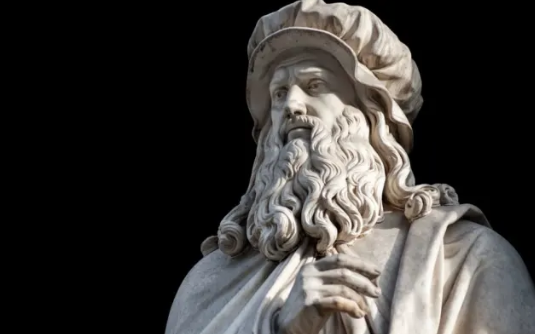
Leonardo da Vinci, a polymath of the Renaissance, has captivated audiences not only through his paintings but also his sculptures. His works reveal a profound intellectual curiosity that goes beyond visual aesthetics. In this blog post, we will explore how this curiosity manifests itself in his sculptures and what we can learn from this extraordinary artist.
1. The Fascination with Anatomy
One of the hallmarks of Leonardo’s intellectual curiosity is his deep understanding of human anatomy. His sculptures, like the famous “Vitruvian Man,” showcase not just artistry but also a scientific approach to the human body. By studying cadavers, Leonardo gained insights that allowed him to create more lifelike and proportionally accurate representations, transforming the way anatomy was viewed in art.
His anatomical sketches reveal intricate details of muscles, bones, and physical movements. These works of art demonstrate how Leonardo’s passion for understanding the human form influenced his three-dimensional creations. While conventional artists focused on superficial beauty, Leonardo’s commitment to behind-the-scenes science enriched his sculptures immeasurably.
-
- Study anatomy through both books and practical experience.
-
- Incorporate lifelike movement and posture into your art.
-
- Analyze the works of predecessors while adding your unique perspective.
-
- Engage in collaborative projects with medical professionals to enhance your understanding.
2. The Role of Nature in Sculpture
Nature played a crucial role in shaping Leonardo’s sculptures. His keen observation skills allowed him to mimic natural forms in his creations. For instance, he often drew inspiration from the natural world, studying the flow of water, the structure of plants, and the anatomy of animals. This not only resulted in captivating sculptures but also demonstrated his aim to capture the essence of life itself.
Leonardo’s notebooks are filled with sketches and notes that delve into the dynamics of natural processes. By doing so, he emphasized that a true artist must connect with their environment to create authentic art. This relationship with nature extended beyond mere replication; it was an exploration of deeper philosophical questions about existence and beauty.
-
- Spend time outdoors observing various forms of life.
-
- Keep a nature journal to document your findings and sketches.
-
- Experiment with materials that reflect natural textures and forms.
-
- Use nature as a backdrop for conceptualizing new projects.
3. Curiosity as a Catalyst for Innovation
Leonardo’s intellectual curiosity was more than just an academic pursuit; it served as a catalyst for innovation in sculpture. He was not afraid to break away from traditional methods and explore new techniques. For example, his experiments with different materials, from clay to bronze, underlined his desire to push artistic boundaries and achieve unprecedented results.
His willingness to explore uncharted territory produced remarkable innovations, including the use of chiaroscuro (the treatment of light and shadow) to create depth and dimension in sculpture. This new approach illuminated the emotive qualities of his works, elevating them from mere representations to expressive forms that could convey complex narratives and emotions.
-
- Challenge existing methods by experimenting with unconventional materials.
-
- Embrace a mindset of continuous learning and exploration.
-
- Attend workshops or classes outside your primary focus to gain diverse skills.
-
- Seek feedback and share your work with fellow artists to spark new ideas.
Leonardo da Vinci’s sculptures serve as a testament to the power of intellectual curiosity in the creative process. By closely examining human anatomy, integrating natural forms, and innovating techniques, he has left a legacy that continues to inspire artists today. As we engage with our own artistic practices, let us tap into that same spirit of inquiry and wonder that characterized his work. Foster your curiosity, and you may discover new realms of creativity waiting to be unveiled.