
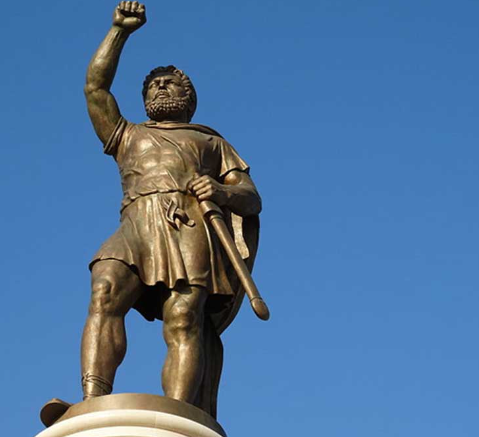
Artistic sculpting, especially when it comes to historical figures such as Alexander the Great, is fraught with unique challenges. The blend of historical accuracy, interpretative expression, and technical skill demands not only artistic talent but also a deep understanding of the subject. In this blog post, we will explore the artistic challenges faced in sculpting Alexander the Great, providing insights and actionable tips for aspiring sculptors.
1. Capturing Historical Accuracy
One of the foremost challenges in sculpting Alexander the Great is ensuring historical accuracy. Sculptors must rely on ancient texts, artifacts, and existing sculptures to gather as much information as possible about his appearance. Ancient texts often provide descriptions of his physical attributes, such as his notable fair complexion, curly hair, and strong build. However, these descriptions can be subjective and vary from author to author, making it vital for sculptors to cross-reference multiple sources.
Moreover, artistic interpretations have varied over the centuries. For instance, the famous statue of Alexander by Lysippus emphasized a youthful yet heroic physique, while later Roman copies might reflect regional variations in style. To tackle the challenge of historical accuracy, sculptors often conduct thorough research and even collaborate with historians to ensure they respect the nuances of Alexander’s identity.
-
- Research various historical texts for descriptions of Alexander.
-
- Study existing sculptures and busts for artistic interpretations.
-
- Consult with historians to gain deeper insights.
-
- Consider cultural tendencies in different eras regarding representation.
2. Balancing Realism and Artistic Interpretation
While historical accuracy is crucial, sculptors must also balance it with artistic interpretation. An overly literal interpretation may lead to a lifeless sculpture, while too much abstraction might result in a piece that feels disconnected from Alexander’s true character. This balance is particularly important for a figure like Alexander, who was a larger-than-life personality and is often portrayed with an air of heroism and grandeur.
Sculptors often benefit from creating preliminary sketches or small maquettes to experiment with poses and expressions. Using different materials can also inspire new techniques and aesthetics, which can help convey the emotional resonance of Alexander’s legacy, be it through a fierce gaze or a noble stance. Consequently, it is essential for sculptors to remain flexible and willing to revisit their concepts throughout the sculpting process.
-
- Create early sketches to visualize ideas.
-
- Experiment with various poses that reflect Alexander’s character.
-
- Gather feedback from peers to refine artistic interpretations.
-
- Be open to evolving your design based on new insights.
3. Material Selection and Techniques
The choice of material can dramatically influence the sculpting process and the final product. Traditional materials for sculpting historical figures include marble, bronze, and clay, each posing its own set of challenges. For example, marble, while classical and timeless, requires precise carving techniques that can be unforgiving for novice sculptors. On the other hand, clay allows for greater flexibility and easier modifications but requires a different approach for the final hardening process.
Additionally, understanding the behaviors of different materials is crucial. Each medium interacts uniquely with tools and environments; ambient humidity can affect clay, while marble dust can create breathing hazards. Therefore, sculptors must not only select a material that conveys their vision but also ensure they are equipped to handle it safely and effectively.
-
- Choose materials based on the intended final effect.
-
- Research the technical requirements for each medium.
-
- Consider safety precautions when working with materials.
-
- Practice carving or shaping techniques on smaller projects first.
4. Understanding Proportions and Scale
The accurate representation of proportions is a critical aspect of sculpting Alexander the Great. Misjudging the scale can lead to a piece that feels off-balance or unrealistic. Artists often utilize a method called “sighting,” where they measure their reference points against one another with a simple string or stick. This technique helps maintain consistent proportions throughout the sculpting process.
Another effective technique involves creating a grid system either on the reference image or directly on the block of material you’re working with. This can guide proportions and ensures that the sculpture is dimensionally coherent. For figures like Alexander, who are often depicted in action poses or with regal clothing, capturing variations in scale—like that of armor or equestrian features—adds to the overall realism.
-
- Utilize a sighting system for accurate measurements.
-
- Implement a grid method to maintain proportions.
-
- Pay attention to the scale of accessories and clothing.
-
- Regularly step back and assess overall proportion during the process.
In conclusion, sculpting historical figures such as Alexander the Great involves a multitude of challenges, from ensuring historical accuracy to mastering material properties and proportions. By embracing these artistic hurdles and implementing practical techniques, aspiring sculptors can create works that honor both the legacy and essence of iconic figures. Embarking on such a rewarding journey is not only about honing craft but also about weaving stories into the very fabric of art. Consider actively practicing these approaches, and who knows? Your next sculpture could be the next tribute to history.