Camille Pissarro is often regarded as one of the pivotal figures in the world of impressionism and pointillism. His experiments with color and technique marked a significant evolution in art, especially within the Neo-Impressionist movement. In this post, we’ll delve into Pissarro’s venture into pointillism, how he adopted and adapted the techniques of his contemporaries, and the impact his work had on the art world.
1. The Foundations of Pointillism
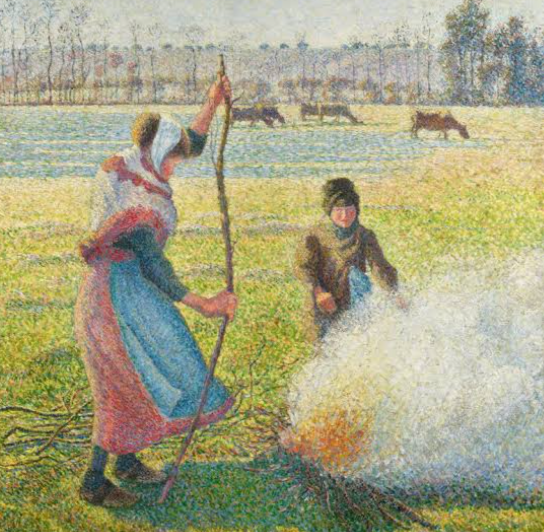
Pointillism, developed by Georges Seurat and Paul Signac, involves painting with small dots of color that, when viewed from a distance, blend together to create a cohesive image. Pissarro was intrigued by this technique, as it allowed for a more scientific approach to color theory and the interaction of light. He began experimenting with pointillism around the 1880s, integrating the method into his landscapes and scenes of rural life. This marked a transition from his earlier Impressionist style, showcasing his adaptability and willingness to explore new artistic avenues.
Pissarro’s work during this time combined his adeptness in capturing atmosphere with the precision of pointillism. One of his notable contributions is the painting “The Boulevard Montmartre, Spring,” which exemplifies his dedication to this technique. The painting radiates vibrancy, showcasing how small color dots can create a major atmospheric effect. His innovative approach brought a unique depth to the surfaces he painted, highlighting the changing qualities of light and movement.
-
- Understand the basic principles of color theory.
-
- Experiment with dot painting on small canvases.
-
- Observe how colors interact under different lighting conditions.
-
- Practice blending colors effectively with separate dots.
2. Pissarro’s Dedicated Experimentation
Pissarro didn’t just borrow techniques from his peers; he actively questioned and adjusted them. He believed that pointillism could enhance emotional expression without sacrificing the core principles of Impressionism. By approaching each painting as a unique project, Pissarro used the dot technique to explore greater textures and hues. His flexible approach helped him to create not just visually striking works but also ones imbued with social commentary and a deeper connection to nature.
<p“Boulevard Montmartre, Spring” is a perfect illustration of his labor-intensive process. Pissarro spent numerous hours applying color dots, resulting in a dynamic work that captures the hustle and bustle of urban life while also reflecting the serene qualities of nature. His drive for experimentation encouraged an open dialogue among artists, which enriched the artistic community of the time.
-
- Keep a sketchbook to record ideas and color combinations.
-
- Take your time to develop observational skills through studies of nature.
-
- Engage with fellow artists to exchange techniques and thoughts.
-
- Participate in workshops focused on pointillism and Neo-Impressionism.
3. The Legacy of Pissarro’s Pointillism
The impact of Pissarro’s foray into pointillism was far-reaching, influencing not only his contemporaries but also future generations of artists. His dedication to the method contributed significantly to the evolution of modern art. Artistically, he embodied a bridge between Impressionism and Post-Impressionist styles, making his work appealing to a wide range of audiences. The conversations he fostered around technique and expression have shaped the careers of countless artists, both in his time and today.
Pissarro’s influence can be seen in the works of artists who tried to break from traditional representations and embrace individual perspectives. His techniques encouraged greater experimentation with color and form, revealing pathways that led to movements like fauvism and abstraction. This legacy continues to resonate, reminding artists to explore different perspectives and techniques in their creative processes.
-
- Study Pissarro’s techniques and strategies for a deeper understanding.
-
- Explore your own subject matter using pointillism techniques.
-
- Develop a unique style that resonates with your personal experiences.
-
- Reflect on how color influences mood and atmosphere in your art.
In conclusion, Camille Pissarro’s commitment to pointillism and Neo-Impressionist experimentation deeply impacted the trajectory of modern art. By blending traditional techniques with innovative approaches, he created a rich legacy that continues to inspire artists. If you’re an artist or an art enthusiast, consider diving deeper into these techniques and let your creativity flourish!