Eva Gonzalès, a prominent figure in the Impressionist movement, is often overshadowed by her contemporaries, most notably Édouard Manet. Her unique approach to portraiture not only reflects her influences but also showcases her distinctive style that contributed significantly to the art world. This blog post will delve into Gonzalès’ Impressionist portraits and her relationship with Manet, providing insights into her techniques and artistic evolution.
1. The Artistic Influence of Édouard Manet on Eva Gonzalès
Eva Gonzalès was profoundly influenced by Édouard Manet, who served as her mentor and a pivotal figure in her artistic journey. Manet’s approach to light and color can be seen in Gonzalès’ portraits, where she embraced a vivid palette and innovative techniques that mirrored the essence of Impressionism. His encouragement and critiques helped her refine her style and gain a deeper understanding of modern subjects in art.
In addition to his mentorship, Manet introduced Gonzalès to various artistic circles, allowing her to engage with prominent Impressionists. This exposure not only broadened her artistic horizons but also provided her with vital networking opportunities. Consequently, Gonzalès honed her skills and began producing works that combined Manet’s realism with her unique feminine perspective.
-
- Seek mentorship from established artists to gain insights and guidance.
-
- Participate in art exhibitions and gatherings to expand your network.
-
- Experiment with different styles to find your unique voice.
-
- Study the techniques of influential artists to improve your skills.
2. Eva Gonzalès’ Distinctive Portrait Style
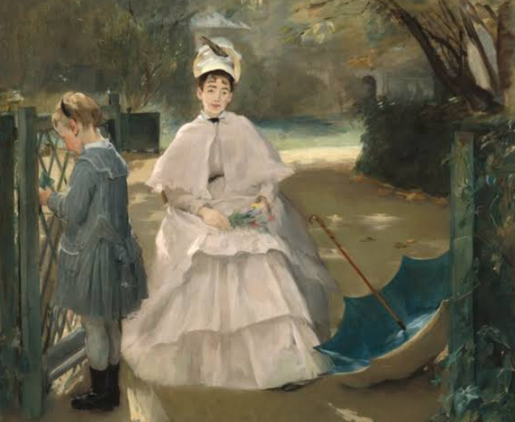
Gonzalès’ portraits are characterized by their vibrant colors and dynamic compositions. Unlike her male contemporaries, she crafted her subjects with a female gaze, often portraying them in intimate or contemplative moments. This sensitivity towards her subjects allows viewers to connect deeply with the emotions conveyed through the artwork. One noted example is her painting “The Source,” which perfectly encapsulates the softness and warmth she brought to her portraits.
Moreover, Gonzalès often painted her subjects in natural settings, using light to enhance their features and expressions. This connection to nature is a hallmark of the Impressionist movement, where capturing fleeting moments and the play of natural light take precedence. Her portraits resonate with modern themes while embodying the ephemeral qualities that define Impressionist art.
-
- Focus on capturing emotions to create relatable portraits.
-
- Experiment with lighting to enhance the mood of your work.
-
- Consider the background and setting to add depth to your subject.
-
- Use vibrant colors to convey emotions and vitality.
3. The Legacy of Eva Gonzalès in Modern Art
Despite being underappreciated during her lifetime, Eva Gonzalès’ contributions to portrait art have gained recognition in recent years. Her innovative techniques and unique perspective continue to inspire artists today, highlighting the importance of female voices in the art world. Galleries and museums are slowly embracing her work, acknowledging the substantial impact she had on the Impressionist movement.
The resurgence of interest in Gonzalès’ art also speaks to an evolving understanding of art history, where the contributions of women artists are no longer overlooked. As contemporary artists delve into historical contexts, Gonzalès’ work is often referenced as a pivotal point in discussions around femininity and representation in art. Her legacy serves as a reminder that diverse voices enrich the cultural tapestry of any artistic movement.
-
- Explore works of overlooked artists to deepen your understanding of art history.
-
- Engage in discussions about gender dynamics in art with peers.
-
- Visit exhibitions that feature female artists to broaden your perspective.
-
- Support organizations dedicated to the promotion of women artists.
In conclusion, Eva Gonzalès stands as a testament to the importance of mentorship and the influence of peers in artistic development. Her Impressionist portraits not only reflect her talent but also highlight the unique contributions women can make in the art world. By exploring her work and the influence of Edouard Manet, you can gain insights into both historical and contemporary perspectives in the arts.