
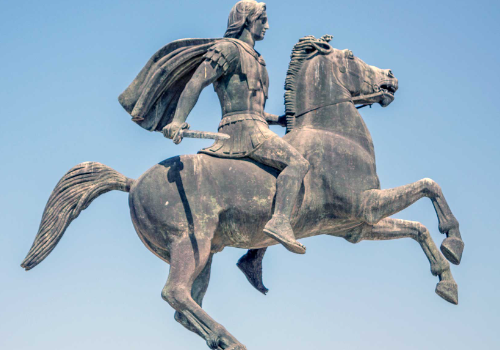
Alexander the Great, a figure of immense historical significance, is often celebrated for his military prowess and visionary leadership. Statues dedicated to him not only commemorate his achievements but also embody the broader idea of world expansion that characterized his conquests. In examining these statues, we can glean insights into how societies view space, power, and legacy.
1. The Legacy of Alexander’s Statues
Statues of Alexander the Great can be found across the globe, serving as markers of his enduring legacy. Many of these monuments depict him in heroic poses, often riding a horse, emblematic of his military conquests and leadership qualities. For instance, the statue of Alexander in the Vatican Museums showcases him in full armor, symbolizing his role as a warrior king who united diverse cultures under one empire.
These statues serve more than decorative purposes; they reflect the cultural and artistic influences of their times. In ancient periods, statues were often created as forms of homage to gods and influential leaders. In regions far from his birthplace, such as Afghanistan and Egypt, Alexander’s image also symbolizes the blending of cultures that occurred during his reign. He did not just conquer territories; he facilitated exchange between Greek and Eastern civilizations, which continue to resonate in history.
-
- Explore local museums for exhibits featuring Alexander.
-
- Research the historical context of different statues.
-
- Visit monuments in your area and learn about their significance.
-
- Engage with scholarly articles on Alexander’s influence.
2. The Symbolism of World Expansion
Statues of Alexander often embody the concept of world expansion, as they signify not only his territorial conquests but also the dissemination of culture, language, and governance practices. His campaigns stretched from Greece to India, and his likeness became a symbol of Hellenistic culture, influencing the areas he conquered. This expansion is represented in the way he is often depicted surrounded by symbols of various cultures, showcasing the diversity that arose during his time.
Furthermore, the idea of world expansion through these monuments extends beyond mere geography. Statues of Alexander often evoke his role as a unifier of disparate cultures into a cohesive empire. This concept can inspire modern leaders and societies to pursue unity through cooperation and respect for cultural diversity, promoting peace and mutual understanding among nations.
-
- Reflect on how Alexander’s conquests influenced modern borders.
-
- Consider the cultural exchanges that arose from his campaigns.
-
- Think about the implications of cultural assimilation in today’s context.
-
- Discuss with friends how leaders can promote unity today.
3. Modern Interpretations and Relevance
In contemporary times, statues of Alexander the Great can also be seen as a source of debate regarding cultural appropriation and colonialism. While these figures celebrate his achievements, they can also prompt discussions about the implications of his conquests on the native cultures he encountered. This duality serves as a reminder that history is complex, often characterized by triumphs and tragedies.
Many modern artists and historians reinterpret Alexander’s legacy within the context of nationalism and cultural identity. This has led to a renewed interest in reframing his story in ways that focus on reconciliation and understanding rather than unidirectional expansion. Through art and literature, new narratives emerge, exploring the multi-faceted impact of Alexander’s reign and its implications for contemporary society.
-
- Engage with modern artworks inspired by Alexander.
-
- Read diverse literary interpretations of his conquests.
-
- Participate in discussions about historical legacies in community forums.
-
- Reflect on how history shapes our present cultural identity.
Statues of Alexander the Great encapsulate complex themes of legacy, world expansion, and cultural exchange. They remind us of the far-reaching impacts of his reign and invite us to rethink the narratives of history. To fully grasp Alexander’s significance, consider delving deeper into both historical texts and artistic expressions that illustrate his multifaceted legacy.