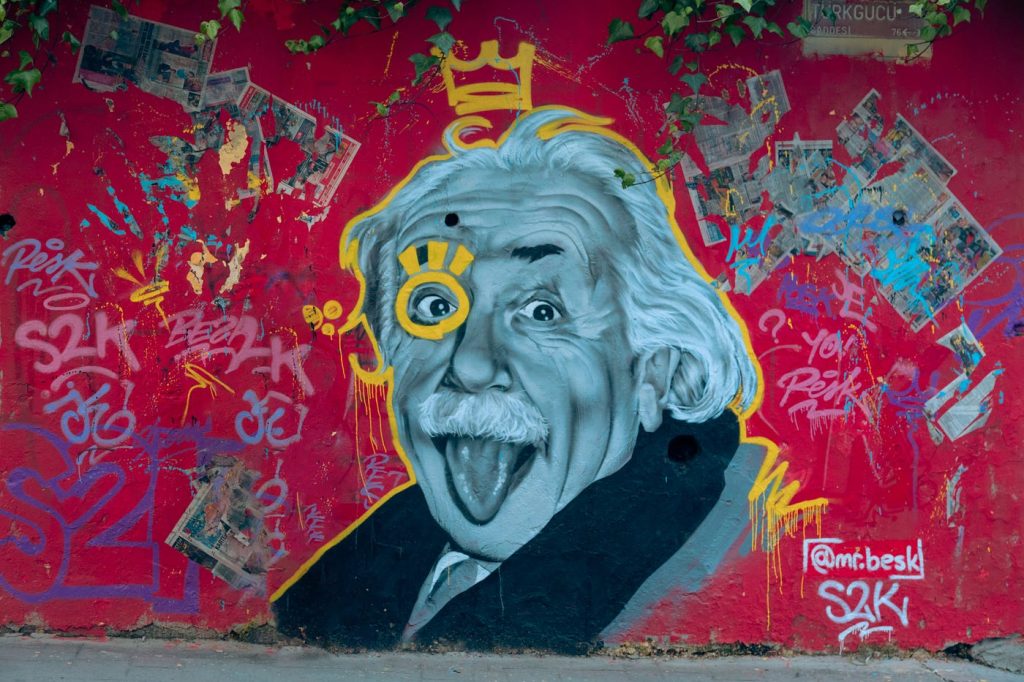
In contemporary urban art, Albert Einstein street art is gradually becoming a compelling theme. As one of the most influential scientists of the 20th century, Einstein’s image has long transcended physics itself, evolving into a cultural symbol of wisdom, contemplation, and human reason. When this image is introduced into the context of street art, a fascinating dialogue emerges between science and public art.
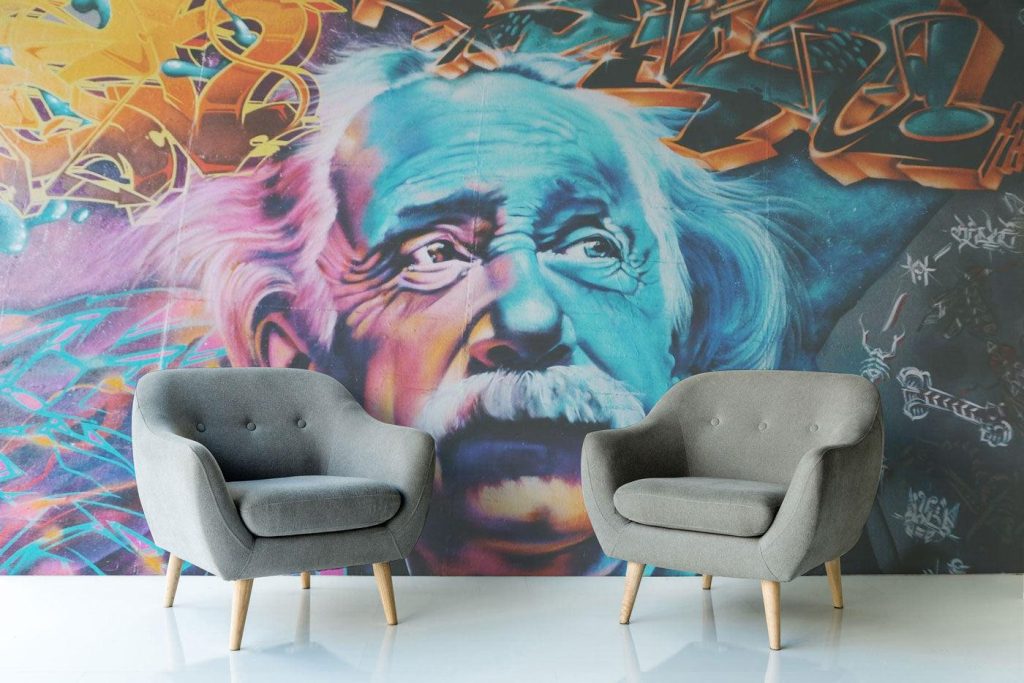
In many city murals, installations, or temporary art projects, artists often use exaggerated lines, deconstructed facial expressions, or symbolic motifs to reinterpret Einstein’s image. This type of street art is not a serious academic representation, but rather emphasizes intellectual freedom and a questioning spirit, aligning perfectly with the rebellious and open nature of street art. Some works even directly borrow from the sculptural language of Einstein sculpture, transforming the contours of three-dimensional sculptures into two-dimensional visuals, giving the classic image a new contemporary feel.
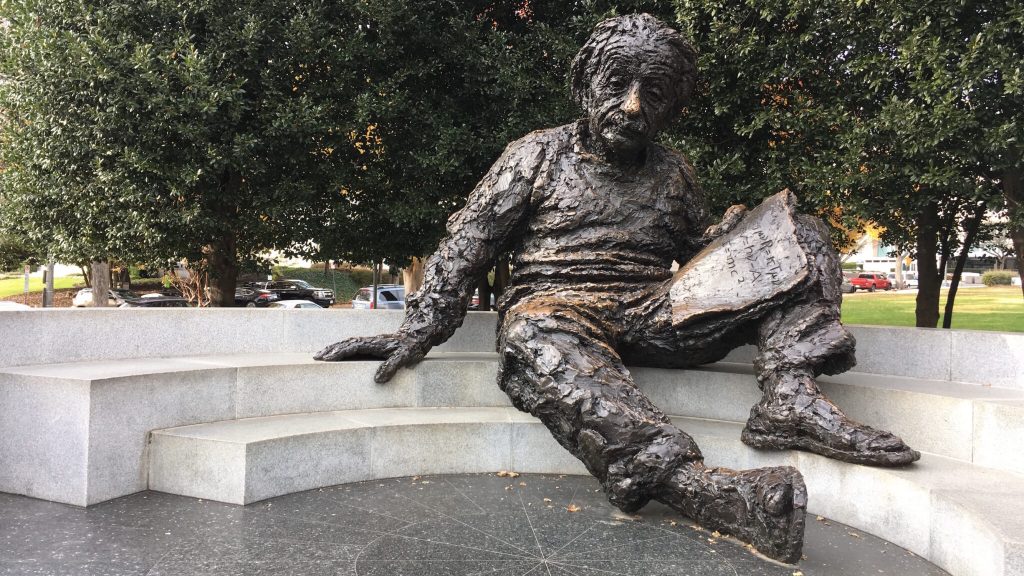
The charm of Albert Einstein street art also lies in its public nature. Unlike artworks in museums, street art allows ordinary people to encounter scientific symbols in their daily lives. This “barrier-free” art experience reduces the perceived distance of science, making Einstein more than just a name in a textbook, but a part of urban culture.

From an artistic perspective, these works are not merely portraits, but rather expressions of ideas. They remind viewers that thinking, questioning, and creativity also belong in the public space. For this reason, Albert Einstein street art has become an important medium in contemporary art, connecting science, humanities, and urban life.