
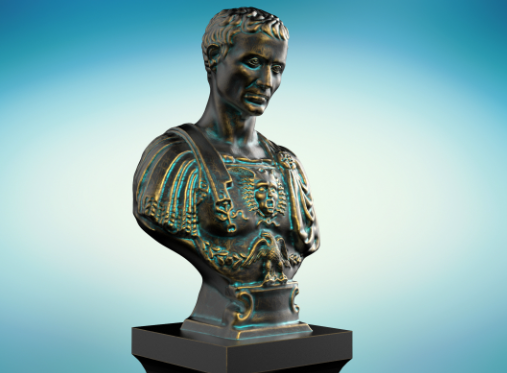
Understanding the rich tapestry of Roman history often requires delving into its sculptures, particularly those depicting pivotal figures like Julius Caesar. These artistic representations serve not only as aesthetic objects but also as valuable historical documents that offer insight into the social, political, and cultural climate of ancient Rome.
1. Julius Caesar: The Man Behind the Myths
Julius Caesar was more than just a military leader; he was a complex individual whose life and death had profound impacts on Roman society. Sculptures of Caesar capture both his physical presence and his political persona, allowing historians to analyze how he was perceived during his lifetime and beyond. For instance, the famous bust of Caesar known as the “Veristic Portrait” emphasizes his rugged facial features and age, reflecting Rome’s preference for realism in art and portraying the wisdom gained through experience.
Moreover, Caesar’s sculptures often reflect the propagandistic tools that ancient leaders used to manipulate public perception. The manner in which these sculptures emphasize his authority, virtue, and military accomplishments is telling of how he wanted to be remembered. Through findings like the “Pontifex Maximus” statue, one can see not just the man, but the value system he represented as a leader.
-
- Explore various busts of Caesar to understand different artistic interpretations.
-
- Consider the materials used in the sculptures; marble was often chosen for its durability and beauty.
-
- Research the historical context in which these sculptures were created.
-
- Analyze how subsequent leaders utilized similar artistic styles to convey power.
2. The Role of Sculpture in Ancient Roman Culture
Sculpture played a significant role in conveying ideals and inspiring citizens in ancient Rome. Statues were commonly erected in public spaces and served as focal points for social and political gatherings. Julius Caesar’s representations often adorned temples and forums, instilling a sense of loyalty and reverence among the populace. These sculptures were not merely decorative but were a means of communicating authority and divine favor.
Additionally, the craftsmanship and meticulous detail of Roman sculptures are noteworthy. Artisans employed a technique known as “contrapposto,” lending a sense of realism and dynamism to the figures. In Caesar’s case, the way his statue is posed often indicated his readiness for action, symbolizing the active role of the leader in society. This artistic approach played a vital role in embedding historical narratives within the minds of the people.
-
- Visit museums to see original or replica sculptures of Caesar.
-
- Take note of the varying artistic styles used across different eras.
-
- Understand the significance of public statuary in expressing political ideologies.
-
- Recognize the craftsmanship involved and its impact on the viewer’s perception.
3. Interpreting Power and Propaganda Through Art
Julius Caesar’s sculptures exemplify the intersection of art and propaganda in ancient Rome. After his assassination in 44 BCE, the portrayal of Caesar underwent a transformation, as sculptors aimed to immortalize his legacy. Prominent examples include statues showing him as a larger-than-life figure, often with divine associations, echoing the sentiments of his adopted heir, Augustus, who sought to position himself within the same legacy.
The propagation of Caesar’s image as a god-like figure was instrumental in shaping public perception. For instance, the statue of Caesar seated in a toga not only emphasized his authority but also sought to link him with the gods, suggesting that his rule was divinely ordained. This artistic technique made it easier for the masses to accept the transition from a republic to an imperial rule under Augustus.
-
- Look for examples where Caesar’s image was adapted after his death.
-
- Compare sculptures from different periods to note shifts in style and meaning.
-
- Investigate how propaganda influenced public perception of leaders.
-
- Reflect on how modern political figures use similar tactics through imagery today.
4. Technical Aspects of Roman Sculpture
The craftsmanship behind Roman sculptures is both fascinating and key to understanding their significance. Sculptors employed a variety of techniques, such as the use of tools like chisels and drills to create intricate details. The choice of materials, chiefly marble, conveyed not only beauty but also an image of permanence, elevating the status of the subjects depicted, including Julius Caesar.
Another significant aspect is the practice of casting in bronze, which allowed for additional textures and a sense of liveliness that static marble couldn’t always provide. The varying techniques used in creating sculptures showcase the advanced knowledge that Roman artists had regarding human anatomy and proportion, making Caesar’s representations feel lifelike and relatable. Understanding these technical facets enhances one’s appreciation for Roman art and its role in historical storytelling.
-
- Research different sculptural techniques used in ancient Rome.
-
- Attend workshops or courses focused on sculpture to appreciate craftsmanship.
-
- Visit archaeological sites to see how sculptures were originally positioned.
-
- Document your own interpretations through sketches or models inspired by Roman art.
In conclusion, by studying Julius Caesar’s sculptures, we delve into an enriching narrative of Roman history that combines art, politics, and culture. These sculptures provide critical insights and encourage us to explore further into the intricate relationships between historical figures and the artistic representations that shaped their legacies. Make a plan to explore local museums or historical sites to witness these art pieces firsthand and deepen your understanding of this fascinating topic.