
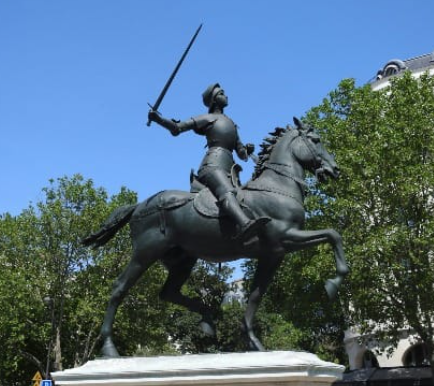
Joan of Arc, a historical figure who has captivated hearts and minds through centuries, is often symbolized by statues that depict her courage and divine mission. These statues do not merely serve as art but convey the essence of sacred courage, inspiring many to reflect on their own bravery and convictions.
1. The Historical Importance of Joan of Arc
Joan of Arc, born in 1412, played a crucial role in the Hundred Years’ War between France and England. Posing as a peasant girl, she claimed to have received divine guidance urging her to support Charles VII and reclaim France from English control. Her leadership during key battles, such as the Siege of Orléans, resulted in significant victories and eventually crowned Charles VII as King of France. This 15th-century heroine became a national symbol, representing hope amidst despair.
The significance of Joan’s life extends to her martyrdom. Captured and tried for heresy, she was burned at the stake in 1431. Later canonized in 1920, she is recognized not only as a saint by the Catholic Church but also as a prominent figure in French history and culture. The stories of her courage continue to inspire and resonate in various forms, including literature, art, and specifically, statues.
-
- Research the historical context of Joan of Arc.
-
- Explore different interpretations of her character in art.
-
- Consider the societal impact she had during her time.
-
- Look into her canonization process for insight on her legacy.
2. The Symbolism of Joan of Arc Statues
Statues of Joan of Arc are scattered throughout the world and serve as powerful symbols of courage and tenacity. Typically, she is depicted in armor, often holding a sword or a banner, representing her role as a warrior but also as a visionary driven by faith. Each statue captures her essence differently, reflecting the time and place in which it was created.
The materials and locations of these statues also contribute significantly to their symbolism. For instance, the famous statue in Paris located at the Place des Pyramides showcases her heroic stature amid the busy city life, reinforcing the message that courage can thrive in urban environments. In contrast, rural statues might depict her in more serene settings, inviting contemplation of her spiritual dimensions. Every statue reminds us of the importance of inner strength and resilience.
-
- Visit local monuments dedicated to Joan of Arc.
-
- Analyze the artistic elements of the statues you find.
-
- Think about how different materials affect the statue’s message.
-
- Discuss the impact of placement on public perception of courage.
3. Modern Interpretations and Their Impact
In contemporary society, Joan of Arc’s legacy continues to evolve, impacting discussions around gender, leadership, and activism. Modern artists and activists honor her by transforming her symbol into a rallying point for movements advocating for women’s rights and empowerment. This movement challenges stereotypes and encourages individuals to take a stand, just as Joan did in her time.
Many contemporary artworks draw parallels between Joan’s courage and current social issues, underscoring the timelessness of her message. For example, feminist art installations often depict her in a more relatable manner, as an emblematic figure representing the struggles women face today. These interpretations breathe new life into her legacy, showing that sacred courage is not limited to historical contexts but remains relevant in our current social fabric.
-
- Identify modern movements inspired by Joan of Arc.
-
- Engage in conversations about gender and leadership.
-
- Attend lectures or exhibitions focused on her influence.
-
- Use social media to share your insights about her modern relevance.
4. Visiting Joan of Arc Statues
Taking the time to visit statues of Joan of Arc can be a reflective and enriching experience. Many cities have dedicated parks and plazas that honor her memory, providing an opportunity to soak in the history while contemplating her impact. Such visits can also serve as a way to gather community and create dialogue around the themes of courage and conviction.
When visiting, consider engaging with the location on a deeper level. Bring a journal to jot down your reflections or engage in conversations with fellow visitors. Many statues are accompanied by informative plaques, so read up on their history and significance to deepen your understanding. Capturing your experiences through photography can also allow you to share her inspiring legacy with others.
-
- Plan visits to multiple locations for a broader perspective.
-
- Bring materials for note-taking or sketching.
-
- Organize group visits to foster discussion.
-
- Document your thoughts through photography.
Learning about the statues of Joan of Arc and the image of sacred courage they embody provides a pathway toward personal reflection and growth. Embrace the lessons of courage and resilience that Joan personifies, and consider how these values can inspire you in your daily life. Whether through visiting statues or engaging in community discussions, let the spirit of Joan guide you on your journey.