Tony Smith’s Monumental Abstract Forms
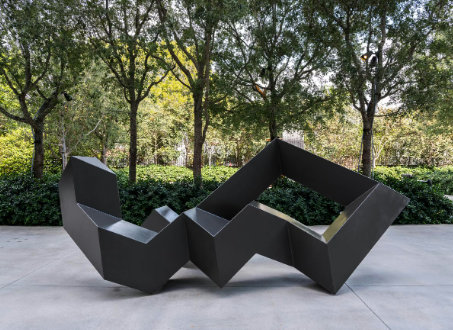
Tony Smith, a celebrated figure in the world of modern sculpture, is renowned for his monumental abstract forms that have left a significant mark on the landscape of contemporary art. This topic is particularly relevant as Smith’s work continues to inspire artists and art lovers alike, highlighting the interplay between geometry, space, and perception. Understanding his contributions can deepen our appreciation of abstract art and its impact on public spaces.
1. The Artist’s Vision
Tony Smith was not just a sculptor; he was a visionary who aimed to redefine the relationship between art and its environment. Born in 1912, Smith began his career as an architect, which profoundly influenced his sculptural practice. His structures often feature bold geometric shapes that invite viewers to engage with them physically and visually. By combining artistry with architectural principles, Smith created works that challenge our perceptions of scale and space, emphasizing that art can be experienced in multiple dimensions.
2. Iconic Works and Their Impact
One of Smith’s most iconic pieces is “Die,” a large cube made of stainless steel that stands impressively at over six feet tall. “Die” exemplifies Smith’s ability to transform simple forms into monumental statements that provoke thought and conversation. The sculpture’s sheer scale and perfect geometry invite viewers to consider not just its physical presence but also the emotional and conceptual weight it carries. This piece, along with others like “The Snake” and “Stinger,” has become a vital component of American public art, inspiring similar works and serving as a catalyst for discussions about the role of abstraction in everyday life.
3. The Legacy of Spatial Interaction
Smith’s work is characterized by an innovative approach to spatial interaction, encouraging audiences to engage with the structures from various perspectives. He believed that sculptures should not only be observed from a distance but experienced up close. This philosophy is evident in many of his public installations, where viewers are invited to walk around and even beneath the artwork. Smith’s emphasis on interaction reshapes our understanding of art as a participatory experience, fostering a deeper connection between the viewer and the work itself.
In conclusion, Tony Smith’s monumental abstract forms demonstrate the potential of sculpture to transcend traditional boundaries, engaging audiences in new and thought-provoking ways. His legacy continues to inspire contemporary artists and influences how we interact with art in public spaces. If you’re intrigued by the world of abstract sculpture, consider exploring more about Smith’s works or visiting a local exhibit featuring his creations. Embrace the opportunity to see art in a new light!