
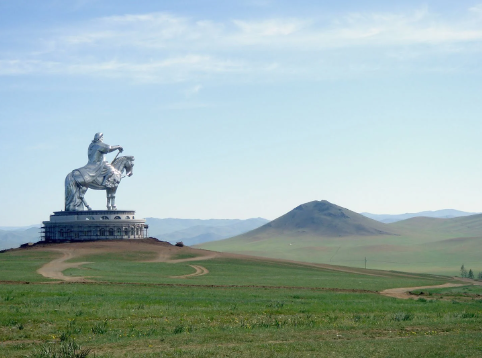
The monumental statues of Genghis Khan are not only iconic representations of one of history’s most formidable leaders, but they also symbolize the rich steppe civilization that flourished in Central Asia. These awe-inspiring structures reflect a deep cultural heritage and a dynamic architectural style influenced by the nomadic lifestyle of the Mongolian people.
1. The Genghis Khan Statue: A Marvel of Modern Engineering
The Genghis Khan Statue is one of the largest equestrian statues in the world, standing at an impressive height of 40 meters (131 feet) and located near Ulaanbaatar, Mongolia. Constructed in 2008, it is made of stainless steel and weighs around 250 tons. The statue depicts Genghis Khan atop his horse, holding a golden whip, symbolizing his power and control over the vast territories he conquered. As part of a larger complex, the statue includes a visitor center and museum dedicated to the Mongolian leader and his legacy.
This grand monument not only serves as a tourist attraction but also as a cultural emblem of national pride for Mongolia. It celebrates the history and achievements of the Mongols, who were once the largest contiguous empire in history. Visitors can take an elevator to the horse’s mane, offering panoramic views of the surrounding steppe and a unique glimpse into the remarkable history of the region.
-
- Visit during the Golden Eagle Festival to explore Mongolian culture.
-
- Check for guided tours to gain deeper insights into Genghis Khan’s legacy.
-
- Wear comfortable shoes for walking around the expansive grounds.
-
- Bring a camera for the stunning views and photo opportunities.
-
- Learn basic Mongolian phrases to enrich your interactions with locals.
2. Steppe Civilization: More than Just Nomadic Life
The steppe civilization represents a unique way of life characterized by the nomadic existence of tribes that roamed the vast grasslands of Central Asia. For centuries, the Mongolian people relied on their herds for livelihood, moving with the seasons to find grazing lands and water sources. This adaptability and resilience fostered a deep connection with nature, leading to a profound understanding of the land’s ecosystems.
Life on the steppe was not solely about survival; it was also rich in culture. Oral traditions, music, and crafts were integral to daily life. The use of yurts, portable dwellings made from felt and wood, allows for mobility and reflects the practical ingenuity of steppe inhabitants. These elements of lifestyle have influenced modern Mongolian culture, as many today still uphold traditions passed down through generations.
-
- Explore traditional crafts, such as felt-making and horse gear crafting.
-
- Attend local festivals to experience steppe culture firsthand.
-
- Learn about the sustainable practices that have evolved over centuries.
-
- Engage with local communities to understand their traditions better.
-
- Consider participating in a homestay to fully immerse yourself in the nomadic way of life.
3. The Cultural Significance of Genghis Khan Today
Genghis Khan’s persona is woven into the fabric of Mongolian identity, influencing contemporary culture, politics, and national ideologies. His legacy as a unifier of warring tribes and a formidable military leader resonates strongly in modern Mongolia. As the nation seeks to balance tradition and modernity, the figure of Genghis Khan serves as a rallying point for national pride and unity.
The commemoration of Genghis Khan in contemporary society can be witnessed across various mediums, such as art, literature, and public events. Today, film and literature often romanticize his life, highlighting his contributions to governance, trade, and communication roads like the Silk Road that connected different civilizations. This cultural revival emphasizes the importance of understanding history in fostering national identity.
-
- Create a timeline of Genghis Khan’s achievements to visualize his influence.
-
- Read books that delve into his strategic insights and policies.
-
- Watch documentaries to gain a new perspective on Mongolian history.
-
- Participate in discussions or forums about Genghis Khan’s impact on modern society.
-
- Visit historical sites connected to his reign for deeper understanding.
In summary, the monumental Genghis Khan statue and the rich tradition of steppe civilization converge to tell a story of resilience, power, and cultural heritage. By exploring these facets, one not only gains knowledge of Mongolia’s past but also an appreciation of its vibrant present. Whether you’re visiting Mongolia or diving into its history from afar, take the time to learn about this extraordinary legacy and its significance today.