George Washington, the first President of the United States, is an enduring symbol of American ideals and values. In the neoclassical art tradition, numerous statues have been created to capture his likeness and communicate his legacy. This blog post explores the significance of these statues and their role in shaping Washington’s image in American culture.
1. The Neoclassical Style: A Reflection of Ideals
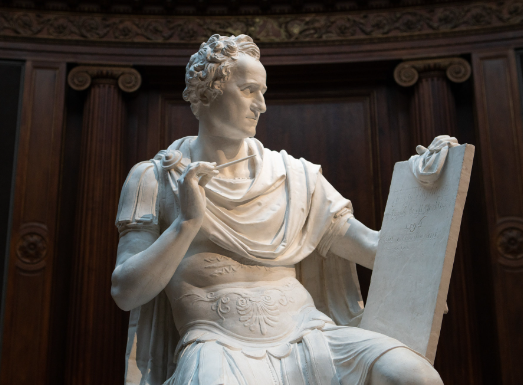
Neoclassicism emerged in the mid-18th century, characterized by a return to classical antiquity’s ideals. This artistic movement emphasized harmony, simplicity, and the importance of moral virtue, making it an ideal vehicle for portraying influential figures like George Washington. Artists sought to evoke a sense of nobility and civic virtue through their works, which were often inspired by ancient Greek and Roman sculptures.
Many statues of George Washington were commissioned during this era to embody the virtues of leadership and democracy. For instance, the statue created by Jean-Antoine Houdon, which stands in the Virginia State Capitol, depicts Washington as a Roman general. The stance and attire communicate both authority and approachability, blending the heroic with the everyday. Such representations contributed to Washington’s timeless status as a national icon.
-
- Research neoclassical art elements to better understand their characteristics.
-
- Analyze different statues of Washington for their artistic techniques and symbolism.
-
- Visit museums that feature neoclassical works to see these details up close.
-
- Explore how the neoclassical style influences contemporary art and sculptures.
2. Iconic Statues of Washington: Cultural Significance
From the nation’s capital to local parks, statues of George Washington serve as constant reminders of his enduring legacy. One notable statue is the colossal Washington Monument in Washington, D.C. Though more a monolith than a statue, it stands as a tribute to the man who led the nation through its formative years. Its height and prominence emphasize Washington’s towering significance in American history.
Another iconic work is the stalwart figure at the entrance of the Virginia State Capitol, a masterpiece by Houdon. This statue captures Washington at a moment of contemplation and reflects his role as a leader deeply engaged with the principles of democracy. Such artworks not only glorify Washington’s contributions but also serve as sites of reflection and dialogue about the American republic’s values.
-
- Identify the various locations where notable statues of Washington are found.
-
- Ponder the cultural narratives these statues uphold in American society.
-
- Consider how the design of each statue contributes to public perception of Washington.
-
- Reflect on the role of public art in shaping historical memory.
3. Controversies and Conversations: Reassessing Washington’s Image
As society evolves, so does the conversation around historical figures, including George Washington. With increased scrutiny on historical contexts and legacies, some statues have faced criticism for their uncritical celebration of individuals with complex legacies. Washington, despite his pivotal role in shaping the nation, owned enslaved people, leaving a complicated mark on his legacy. This duality has sparked debates on whether to remove or recontextualize these statues.
Many artists and activists are now advocating for new monuments that reflect inclusive narratives. These discussions emphasize the importance of acknowledging the darker aspects of Washington’s story while still honoring the principles for which he stood. Thus, rather than erasing history, the goal is to foster a more nuanced understanding that encompasses all perspectives.
-
- Engage with local discussions and forums on monuments and public art.
-
- Study the historical implications of Washington’s actions and beliefs.
-
- Explore modern interpretations of Washington’s legacy through art and literature.
-
- Consider advocating for educational programs about historical figures in art.
4. The Legacy of Neoclassical Art in Modern Contexts
The neoclassical tradition continues to influence artists today, particularly in how we represent national figures like George Washington. Contemporary sculptures often draw upon traditional styles while incorporating modern techniques and materials. This fusion not only reinvents public art but also invites new conversations around culture and identity.
Moreover, the principles of neoclassicism—such as balance and idealism—still resonate in various art forms. Public art installations that invoke classical styles can help bridge the gap between past and present, providing a platform for dialogue on relevant themes like democracy, virtue, and leadership. The reimagining of figures like Washington in modern art creates opportunities for critical engagement with historical narratives.
-
- Explore contemporary artists who are influenced by neoclassical methods.
-
- Attend art exhibitions showcasing modern takes on classical themes.
-
- Participate in discussions about how art can reform social perceptions.
-
- Support local artists who are working within or against traditional styles.
In conclusion, statues of George Washington in the neoclassical art tradition not only preserve historical narratives but also invite ongoing dialogue about their cultural significance. As we explore the complexities of Washington’s legacy, let’s engage with the art and discussions surrounding these iconic pieces. Consider visiting a local statue, participating in community conversations, or even exploring the arts yourself to deepen your understanding of this rich topic.