
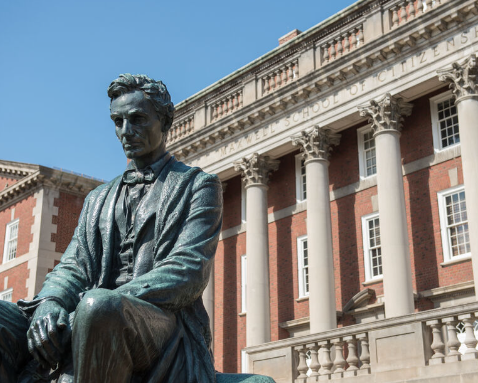
Abraham Lincoln is often celebrated as one of the most significant figures in American history. Statues of this beloved president are frequently found in educational institutions, serving as both historical markers and sources of inspiration for students. In this blog post, we will explore the presence of Lincoln statues in schools and universities, discussing their importance and the messages they convey.
1. The Historical Significance of Lincoln Statues
Lincoln statues in educational settings serve as reminders of his profound impact on American history, particularly around issues of freedom and equality. Many of these statues were erected during the late 19th and early 20th centuries, reflecting a national movement to honor Lincoln’s legacy following the Civil War. By placing these statues in schools and universities, institutions aim to instill a sense of civic responsibility and historical awareness among students.
For instance, the statue of Lincoln located at the Lincoln Memorial University in Tennessee not only commemorates his role in abolishing slavery but also encourages discussions about social justice and civil rights. Such monuments are more than just stone or bronze; they are focal points for conversations about the struggles and triumphs in America’s past. Schools can integrate these discussions into curricula, providing students the opportunity to learn and reflect on historical events critically.
-
- Research the history of your local Lincoln statue.
-
- Invite a speaker to discuss Lincoln’s impact on civil rights.
-
- Host a debate around Lincoln’s policies and their relevance today.
-
- Encourage students to create projects about Lincoln’s life.
-
- Incorporate virtual tours of Lincoln sites into lesson plans.
2. Lincoln Statues as Educational Tools
Beyond their historical significance, Lincoln statues are powerful educational tools that can inspire students to engage with their education actively. These statues often serve as central elements for organized commemorative events like speeches, liberty celebrations, and dedication ceremonies. By utilizing these monuments, educators can foster a deeper understanding of American values like democracy and integrity.
For example, at the University of California, Berkeley, the statue of Lincoln has been a site for various student-led initiatives, including civil rights marches and historical reenactments. These events help students connect with their civic duties while reflecting on the lessons from Lincoln’s life. Additionally, incorporating these monuments into lesson plans can provide unique opportunities for students to explore different historical perspectives and narratives.
-
- Incorporate analytics activities related to Lincoln’s presidency.
-
- Organize student-led tours of Lincoln statues and their significance.
-
- Facilitate cross-disciplinary assignments linking history to literature.
-
- Create art or essays inspired by the statue’s message.
-
- Use the statue’s location for team-building exercises or discussions.
3. The Role of Community Engagement
Lincoln statues also play a crucial role in community engagement, making them essential for fostering relationships between educational institutions and their local communities. These statues can be utilized as platforms for local events, ranging from history fairs to cultural festivals, bringing together students and community members to celebrate shared values and history.
At several institutions, such as Lincoln High School in San Francisco, the statue has become a symbol of commitment to social advocacy. Schools often partner with local organizations to promote dialogues on pertinent social issues inspired by Lincoln’s dedication to equality. This not only enriches students’ learning experiences but also nurtures community connections that can have lasting benefits.
-
- Coordinate community service projects linked to the statue’s themes.
-
- Host local artists to display works inspired by Lincoln.
-
- Create partnerships with local libraries for educational programs.
-
- Encourage students to share their thoughts on educational forums.
-
- Utilize social media to promote community events involving Lincoln statues.
4. Challenges in Commemoration and Interpretation
Despite the positive aspects of Lincoln statues, there are challenges regarding their interpretation and commemoration in educational settings. Some critics argue that these statues may not accurately represent all narratives of American history, particularly regarding Lincoln’s complex legacy in the context of race relations. Educational institutions must address these viewpoints responsibly and intelligently.
To ensure that all voices are heard, schools can facilitate open discussions about the challenges surrounding Lincoln’s legacy. This can include incorporating diverse historical perspectives and questioning the role of monuments in public spaces. An inclusive approach could also lead to the creation of new educational programs aimed at enhancing understanding of difficult historical topics.
-
- Engage students in critical discussions about Lincoln’s policies.
-
- Use diverse sources to present multiple perspectives on history.
-
- Challenge students to think about how history is remembered.
-
- Incorporate feedback from students and community into curriculum development.
-
- Examine recent debates on monuments and their societal implications.
In conclusion, Lincoln statues found in educational institutions serve as more than mere decorations; they are integral to teaching history and fostering civic engagement. Schools and universities have the opportunities to redefine how these statues are perceived and utilized for educational growth. So, think about how you can engage with these important monuments in your community and consider initiating discussions that inspire future generations. A commitment to understanding these historical symbols can lead to a richer educational experience for all.